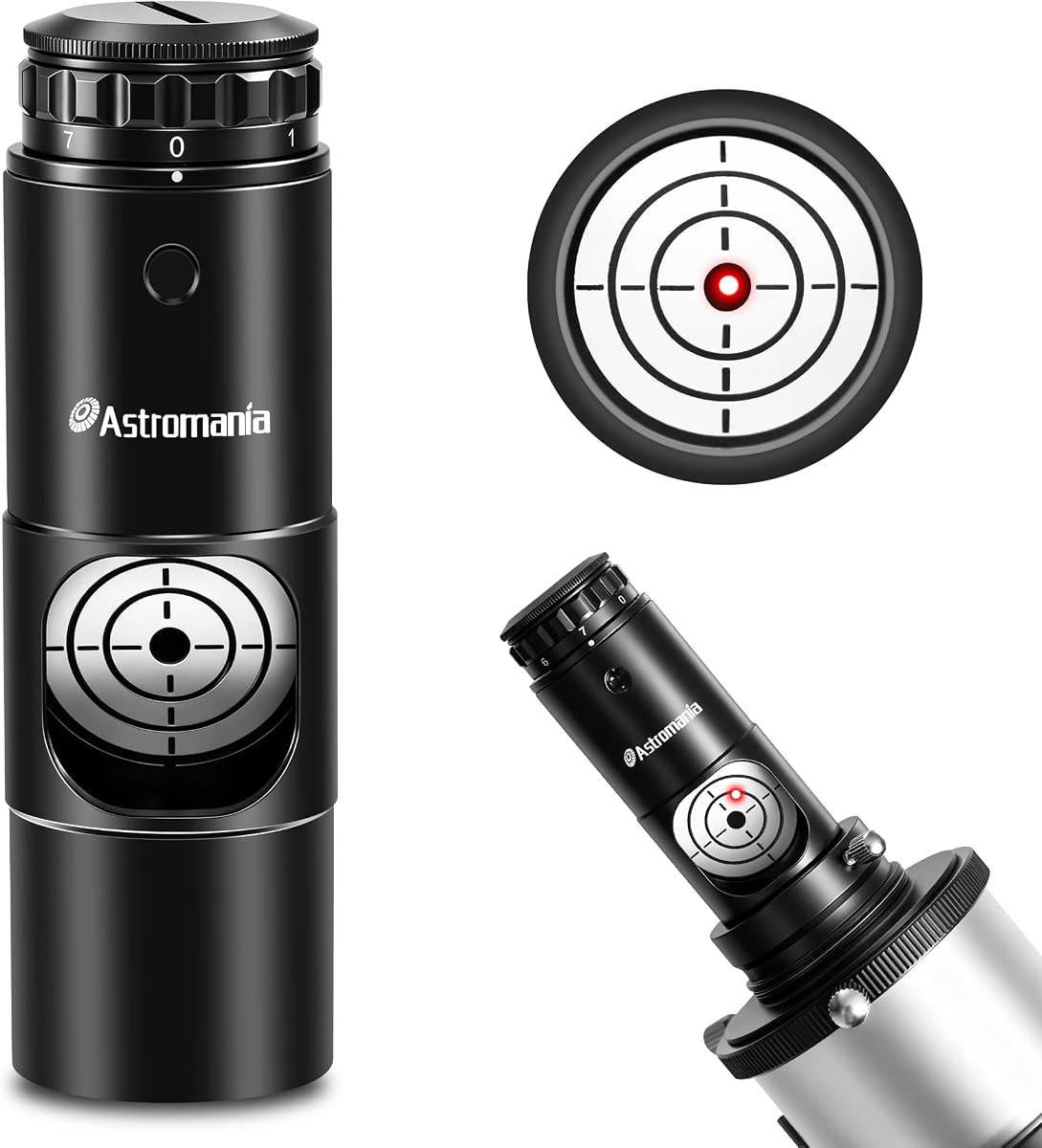
Astromania Laser Collimator 1.25
4.5Editor score
Fits 1.25 inch focusers
Seven brightness levels available
Durable metal construction body
This guide compares the top ten laser collimators for telescope alignment to help you choose the right tool for Newtonian and reflector telescopes.
Choosing the right laser collimator for telescope alignment ensures your Newtonian reflector delivers crisp views. A quality collimator features stable construction and adjustable brightness levels to suit different observing environments effectively.
We compared ten highly rated collimators based on build quality, ease of use, and compatibility with standard focusers. Our analysis highlights which models offer the best precision and value for amateur astronomers seeking reliable alignment tools.
Each selection below shows key specs and real user feedback to guide your decision. Please note that prices and availability may change frequently so verify current details before purchasing your preferred model today.
4.5Editor score
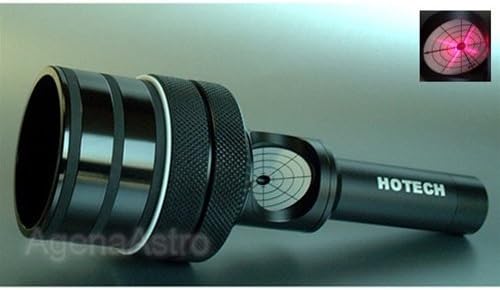
4.7Editor score

The following table provides a side-by-side comparison of all ten laser collimators evaluated in this guide. Review key specifications and compatibility details to find the best fit for your specific telescope setup needs.


The Astromania Laser Collimator for Telescope Alignment stands out as a reliable choice for Newtonian telescope owners. It holds a solid 4.5 star rating based on widespread user feedback and offers versatile compatibility with both 1.25 and 2 inch focusers.
We may earn a commission when you buy through this link, at no additional cost to you.
This collimator features a removable 2 inch adapter making it useful for upgraded telescopes. The seven brightness levels allow you to adjust intensity for bright rooms or dark skies ensuring visibility of the laser dot during alignment tasks.
One trade-off is that the battery is sometimes listed as not included in specific listings requiring you to purchase a CR2032 separately. Also the design lacks a side window on some batches which limits real-time reflection viewing during setup.
Buyers seeking a balance between affordability and functionality should consider this model. It provides accurate alignment without breaking the bank and the metal construction ensures longevity for regular stargazing sessions at observatories or backyards.
The removable 2 inch adapter ensures this unit works with newer 2 inch focusers while fitting standard 1.25 inch slots seamlessly for maximum adaptability.
Seven distinct brightness levels let you match the laser output to your environment preventing glare indoors or ensuring visibility under faint starlight conditions.
We may earn a commission when you buy through this link, at no additional cost to you.
This Astromania model is optimized for telescopes with standard 1.25 inch focusers providing a compact solution for alignment tasks. It shares many features with its larger sibling but sacrifices the 2 inch adapter for a lighter and more affordable package.
We may earn a commission when you buy through this link, at no additional cost to you.
The seven brightness levels and red laser beam ensure visibility in various lighting conditions. The metal body resists wear and tear making it a reliable tool for beginners and experienced astronomers who need quick and precise collimation.
Users should note the lack of a 2 inch adapter meaning it may not fit upgraded focusers without an additional purchase. Battery inclusion varies by listing so check product details before ordering to ensure you have power.
Ideal for budget-conscious stargazers with smaller telescopes this collimator delivers consistent results. Its lightweight nature makes it easy to carry on trips to dark sky sites where portability is key for field observations.
Designed to fit comfortably in your palm this unit allows single person calibration without strain during transport to remote viewing locations.
Precise instructions in German and English simplify the adjustment process even for those new to telescope collimation or technical alignment tasks.
We may earn a commission when you buy through this link, at no additional cost to you.
The SVBONY Laser Collimator offers a robust solution for Newtonian telescopes with a focus on optical stability. Its triple cemented lens design helps maintain a steady red dot which is critical for accurate alignment across various viewing distances.
We may earn a commission when you buy through this link, at no additional cost to you.
Compatibility is broad with a removable 2 inch adapter allowing it to fit both 1.25 and 2 inch focusers. The seven brightness levels ensure you can adjust the beam intensity for day or night use depending on your observing environment.
A minor downside is that the battery is typically not included requiring a separate purchase. Additionally the lack of a side window means you rely on direct view of the laser path rather than reflected return for verification.
This model suits astronomers who value lens quality and durability. The solid metal body ensures long term use and the clear instructions make it accessible for users of all experience levels seeking reliable collimation results.
The triple cemented lens construction improves the stability of the red dot ensuring consistent beam projection during alignment procedures.
With the included 2 inch adapter this collimator works with standard 1.25 inch focusers and upgraded 2 inch setups for versatile use.
We may earn a commission when you buy through this link, at no additional cost to you.
This bundle combines the SVBONY laser collimator with a telescope lens offering added value for visual observers. The 62 degree aspheric eyepiece enhances detail across the field of view making it a strong companion for lunar and deep sky observation.
We may earn a commission when you buy through this link, at no additional cost to you.
The collimator itself features seven brightness levels and a durable metal body. It fits standard 1.25 inch focusers and provides accurate collimation in minutes so you can spend more time viewing targets rather than aligning optics.
It is limited to 1.25 inch focusers which may require adapters for larger telescopes. The bundle configuration changes based on listings so verify the specific lens included when purchasing to ensure it meets your observing needs.
Observers looking for a ready-to-use package will appreciate this combo. The wide angle eyepiece complements the collimator providing both alignment and viewing capabilities in one purchase for enhanced astronomical experiences.
The included 62 degree aspheric eyepiece provides maximum detail and definition across the entire field of view for immersive observations.
Combining collimation tool with an eyepiece saves time and effort giving you both alignment and viewing tools in one convenient bundle.
We may earn a commission when you buy through this link, at no additional cost to you.
The Alstar Laser Collimator is designed for effortless operation by a single user. Its lightweight body fits naturally in your palm allowing smooth movement within 1.25 inch focusers without strain during alignment procedures.
We may earn a commission when you buy through this link, at no additional cost to you.
A side window allows you to view a disk at 45 degrees which helps check if the laser reflects back on itself. The seven brightness levels and red laser beam ensure visibility in different lighting conditions for accurate setup.
It does not include a 2 inch adapter limiting compatibility to standard 1.25 inch focusers unless you buy a separate adapter. Battery inclusion also varies so confirm details before purchasing to avoid delays.
This unit is ideal for beginners needing a straightforward tool. The step by step instructions in German and English make it easy to understand and the metal construction ensures it withstands regular use over time.
The ergonomic design allows one person to complete the entire collimation process quickly without needing assistance to hold the device.
A side window reveals a disk at 45 degrees enabling you to check laser reflection directly for precise alignment verification.
We may earn a commission when you buy through this link, at no additional cost to you.
This Alstar model provides universal compatibility with both 1.25 and 2 inch focusers via an included adapter. The three 120 degree adjustment openings allow fine tuning for precise calibration when initial alignment drifts or changes.
We may earn a commission when you buy through this link, at no additional cost to you.
The seven brightness levels and front emission opening ensure visibility of the beam. The 45 degree side window with central hole lets you monitor the laser reflection for accurate verification without needing additional tools.
The rating reflects a mix of user experiences as calibration can be tricky if not done carefully. Ensure adjustments are made gently to maintain accuracy over time for consistent performance during viewing sessions.
Users needing adaptability for different telescopes will find this a solid choice. The metal construction and clear instructions support reliable use while the side window adds convenience for checking alignment results in the field.
Includes a 2 inch adapter to work with standard 1.25 inch focusers and larger 2 inch setups for flexible use across telescopes.
Three adjustment openings allow fine tuning to maintain precision and correct any drift that may occur after repeated use.
We may earn a commission when you buy through this link, at no additional cost to you.
This bundle adds a cell phone adapter to the collimator making it useful for astrophotography and smartphone imaging. The phone clamp supports devices ranging from iPhone to Samsung ensuring you can capture aligned views with your mobile device.
We may earn a commission when you buy through this link, at no additional cost to you.
The collimator retains standard features like seven brightness levels and a metal body. It fits 1.25 inch focusers with the included adapter for basic alignment tasks before attaching your phone for detailed imaging or documentation.
The phone adapter clamping mechanism uses a steel bolt for secure hold but it limits use to 1.25 inch focusers. Setup requires extra steps compared to standard collimation but the imaging capability is worth it for many users.
Imagers and hobbyists wanting to share views quickly should consider this combo. The combination of collimation and mobile support saves time and provides a direct way to record your telescope's performance on social media.
The included phone clamp allows secure attachment of smartphones for capturing aligned images and sharing views with astronomy communities.
Adjustable locking with steel bolts ensures your device stays in place during imaging preventing slippage while capturing detailed shots.
We may earn a commission when you buy through this link, at no additional cost to you.
This bundle pairs a laser collimator with a Cheshire eyepiece offering two proven methods for aligning Newtonian telescopes. The Cheshire eyepiece requires no batteries and provides a clear mirror with sighting hole for daytime alignment.
We may earn a commission when you buy through this link, at no additional cost to you.
The collimator component offers seven brightness levels and fits 1.25 inch focusers. This dual approach ensures you can align optics accurately regardless of lighting conditions or battery availability on long observing nights.
Availability of the bundle varies and the tools are limited to 1.25 inch focusers without separate adapters. However the combination of laser and mechanical tools provides redundancy and flexibility for thorough and reliable alignment.
Observers valuing proven mechanical and laser alignment should pick this bundle. The high user rating reflects satisfaction with the quality and utility of having both tools ready for any alignment challenge in the field.
Combining laser and Cheshire eyepiece offers redundancy ensuring accurate alignment even if one tool is unavailable or impractical for conditions.
The Cheshire eyepiece needs no batteries providing a reliable fallback for alignment tasks when power sources are limited or forgotten.
We may earn a commission when you buy through this link, at no additional cost to you.
The HoTech SCA Laser Collimator stands apart with its patented self-centering adapter technology. This design eliminates focuser slop which often compromises alignment accuracy ensuring repeatable precise results every time you insert the unit.
We may earn a commission when you buy through this link, at no additional cost to you.
It fits both 1.25 and 2 inch focusers with a built-in self-centering adapter. The unit comes with a CR123 battery and detailed manuals for Newtonian and SCT collimation making it ready to use straight out of the box.
The main trade-off is the higher price compared to standard collimators. This cost is justified by the precision and elimination of mechanical errors which matters for serious imagers and observers seeking optimal optical performance.
Invest in this if you value repeatable and precise alignment. The patented technology addresses a common problem in telescope collimation making it a premium choice for those demanding consistent performance from their optical instruments.
The innovative self-centering adapter technology eliminates focuser slop ensuring precise and repeatable installation every time you collimate.
Detailed manuals and patented design help achieve optimal telescope performance by addressing alignment errors that typical collimators miss.
We may earn a commission when you buy through this link, at no additional cost to you.
The Ocal Pro V4.0 is an electronic collimator offering software-guided calibration circles for precise optical axis adjustments. Each unit is factory centered to pixel-level accuracy ensuring you start with optimal baseline alignment before field use.
We may earn a commission when you buy through this link, at no additional cost to you.
It works with both Newtonian and Schmidt Cassegrain telescopes via versatile mounting options. The all-in-one design allows complete collimation on-the-go making it ideal for field adjustments and mobile astronomy setups without extra tools.
This premium tool requires smartphone connectivity and a higher investment than optical collimators. The complexity may be more than casual users need but advanced users will appreciate the digital precision and repeatable calibration features.
Advanced astronomers seeking digital precision should consider this tool. The factory centered accuracy and software guidance reduce human error making it a cutting-edge choice for those pushing telescope performance to the limit.
Built-in software-guided calibration circles enable quick and precise optical axis adjustments ensuring accurate alignment without manual guesswork.
Factory centered to pixel-level precision ensures you start with optimal baseline accuracy for critical imaging sessions and fine-tuning.
We may earn a commission when you buy through this link, at no additional cost to you.
Selecting the right laser collimator depends on your telescope type, budget, and alignment needs. Consider these factors to choose a model that delivers precise results and fits your observing setup.
Check whether your telescope uses a 1.25 inch or 2 inch focuser to ensure the collimator fits. Many models come with removable adapters for versatility but some are limited to one size. Verify this before purchasing to avoid compatibility issues.
Choose a collimator with an adapter if you plan to upgrade your focuser size later for future compatibility.
Look for collimators offering adjustable brightness levels so you can match the beam intensity to your environment. Seven levels are common and allow you to reduce glare indoors or increase visibility under dark skies effectively.
Adjustable brightness ensures visibility in various lighting conditions without dazzling observers or blinding the laser dot.
Metal construction such as anodized aluminum provides durability and resistance to wear during transport. A sturdy body helps maintain calibration longer and withstands bumps better than plastic alternatives for long-term use.
Prioritize metal bodies for reliable performance that resists damage during field use and handling.
Check whether the required battery is included in the box or must be bought separately. Some models use CR2032 lithium cells while others use CR123 batteries affecting replacement costs and convenience during night sessions.
Confirm battery inclusion before purchasing to avoid delays in starting your first alignment session.
Consider whether the collimator has side windows or crosshairs for checking reflections directly. Some models allow you to see the laser return which simplifies verification during alignment without needing extra tools or second-person help.
Features like side windows or crosshairs make self-alignment easier and more accurate for single users.
Higher-priced models often offer patented precision technologies like self-centering adapters or electronic guidance. Decide if you need this level of accuracy or if a standard collimator will meet your viewing needs and budget.
Invest more only if your observing goals demand repeatable precision beyond standard optical alignment.
Clear instructions in your preferred language help beginners understand how to adjust screws and verify alignment effectively. Look for collimators with detailed manuals or diagrams that simplify the calibration process for all skill levels.
Detailed instructions reduce the learning curve and ensure correct usage for accurate telescope alignment.
A lightweight and compact design makes it easier to carry the collimator to dark sky sites or observatories. If you frequently travel to observe check the weight and size to ensure it fits in your observing kit comfortably.
Compact collimators save space and weight for astronomers who move frequently between observing locations.
Begin by inserting the collimator into your telescope focuser and tightening it gently to avoid slop. Ensure the laser is centered and adjust the brightness level to suit your environment for clear visibility of the beam.
Adjust the telescope mirrors until the laser dot aligns with the center mark or returns to the collimator's center window. Use the adjustment screws on the secondary and primary mirrors to bring the beam back into alignment.
Store the collimator in a protective case when not in use to prevent dust and scratches. Replace batteries if performance decreases and check alignment periodically to maintain precision over time for reliable results.
Collimate your telescope after significant transport or whenever you notice blurry stars. Regular checks ensure optimal performance and prevent prolonged viewing of misaligned optics that can degrade image quality.
Yes most collimators use Class 3R lasers that are safe when handled properly. Avoid pointing the beam directly at eyes and follow manufacturer safety guidelines to ensure safe usage during alignment tasks.
Laser collimators are primarily designed for Newtonian reflectors but some models can help align refractors with focusers. Check product specifications to confirm compatibility with your specific telescope type before buying.
Laser collimators use a light beam to guide alignment while Cheshire eyepieces rely on mechanical markings and reflection. Both methods work well but Cheshire does not require batteries and offers a different approach to verification.
Many collimators include removable adapters for 2 inch focusers but some models are limited to 1.25 inch. Check product details to ensure you have the correct adapter for your focuser size.
Yes beginners can use laser collimators effectively as they simplify alignment with visual cues. Clear instructions and adjustable brightness make the process accessible even for those new to telescope maintenance.
We reviewed ten top laser collimators ranging from budget-friendly options to premium electronic models. Each offers unique features tailored to different telescope types and alignment needs for better viewing experiences.
Prioritize focuser compatibility and build quality to ensure long-term reliability. Consider your budget and whether you need advanced features like self-centering or electronic guidance for your observing goals.
Remember that prices and availability change so verify the latest details before purchasing. Choosing the right collimator will help you achieve sharper views and maximize your telescope's optical performance.