10 Best Hardware Compressors For Home Studios in 2026
This expert guide compares the top hardware compressors for home studios helping you find the best compressor to control dynamics and improve sound quality.
As an Amazon Associate we earn from qualifying purchases. We may earn a commission when you buy through links on this page, at no additional cost to you.As an Amazon Associate we earn from qualifying purchases.Purchases through our links may earn us a commission, at no extra cost to you.
Hardware compressors are essential tools for home studio producers who want professional dynamic control without relying solely on plugins. They add warmth and character to your recordings.
We compared ten top-rated models based on circuit type and feature set and user ratings and build quality. This list covers options from budget rack units to high-end stereo processors.
Each pick shows key specs and real-world performance notes to help you decide. Please note that prices and availability change frequently so check current listings before buying.
Top 3 Picks for Best Hardware Compressors for Home Studios
Best Budget
Audio Compressor, Professional Dual-Channel Black Dynamic Processor with Noise Gate & Sidechain Insert for Studio, Live & Streaming – 1U Rackmount, XLR/TRS Inputs
Top 10 Best Hardware Compressors for Home Studios in 2026 Compared
This table provides a side-by-side overview of all ten selected hardware compressors for home studios to help you compare features and specifications at a quick glance.
ProductsSpecificationsEditor scorePrice
1
Editor's Choice
dbx 266xs Professional Audio Compressor/Gate Dynamic Effects Processor with Sidechain Insert. For Portable, Tour, Studio. 1U Single Rack Space, Silver
Audio Compressor, Professional Dual-Channel Black Dynamic Processor with Noise Gate & Sidechain Insert for Studio, Live & Streaming – 1U Rackmount, XLR/TRS Inputs
Audio Compressor, Professional Dual-Channel Rackmount Vocal Compressor/Limiter with Noise Gate, Sidechain Insert, and XLR/TRS Inputs for Studio, Live & Streaming
dbx 266xs Professional Audio Compressor/Gate Dynamic Effects Processor with Sidechain Insert. For Portable, Tour, Studio. 1U Single Rack Space, Silver
1U single rack space
Sidechain insert included
Program-adaptive expander gates
Separate precision LED displays
The dbx 266xs is a versatile compressor gate that scores high with users for its reliability and ease of use. Its error proof operation makes it ideal for smoothing uneven levels in home studio environments.
Pros
Error proof operation
Smooth release characteristics
Great sounding dynamics control
Quick accurate setup
Separate precision LED displays
Cons
Limited advanced parameters
Not stereo capable
We may earn a commission when you buy through this link, at no additional cost to you.
Key strengths include new gate timing algorithms that ensure smooth release characteristics. The program-adaptive expander gates help you tighten up mixes without sounding artificial.
Trade-offs include a lack of stereo capability which limits its use for stereo bus processing. However, this is acceptable for single channel tracking and mastering applications.
Studio owners seeking a reliable single channel dynamic processor should choose this unit. It delivers great sounding dynamics control for any type of program material.
Error Proof Operation
The unit is designed to be easy to operate without complex menus or confusing controls.
Program Adaptive Gating
This feature ensures the gate responds naturally to the input signal for better performance.
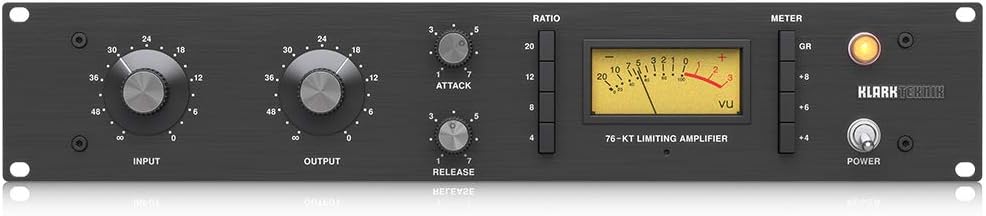
Klark Teknik 76-KT Classic FET-Style Compressor with Class-A Line Level Amplifier and Midas Transformers
Classic FET style
Completely discrete signal path
Class-A line-level output amplifier
Custom-built MIDAS transformers
The Klark Teknik 76-KT is modeled after the iconic 1176LN and offers a classic FET-style sound. It is built with a completely discrete signal path for authentic vintage tone.
Pros
Iconic 1176LN sound
Completely discrete path
Class-A output amp
Midas transformers
Push button ratio selection
Cons
Fixed ratio buttons
No variable control
We may earn a commission when you buy through this link, at no additional cost to you.
The Class-A line-level output amplifier ensures high quality signal output. Custom-built MIDAS input and output transformers add warmth and depth to the audio.
Fixed ratio buttons limit your flexibility compared to units with continuous controls. This design choice simplifies operation but reduces fine tuning options.
Engineers looking for authentic FET compression will appreciate this unit. The push button selection makes it easy to dial in classic ratios quickly.
Vintage FET Tone
Modeled after iconic revisions this compressor delivers the classic sound FET units are known for.
Discrete Signal Path
A completely discrete path ensures transparency and character in your processed audio.
The Warm Audio WA-1B is a 1-channel tube optical compressor designed for smooth and natural dynamics control. Optical compressors are known for their gentle and musical behavior.
Pros
Smooth optical compression
Tube warmth
Single channel design
Rack mountable
Analog signal path
Cons
Lower user rating
Optical limitations
We may earn a commission when you buy through this link, at no additional cost to you.
The unit provides a single channel tube design that adds analog warmth to tracks. Its rack mountable form factor fits easily into standard 1U spaces.
Optical compressors have slower response times which can be a limitation for fast transients. Additionally user ratings for this model are lower than other options.
Producers seeking a specific optical character should consider this unit. It is a solid choice for adding vintage warmth to vocals or instruments.
Optical Compression
Optical compressors use a light source to control gain reduction for smooth results.
Tube Warmth
The tube circuit adds harmonic richness and depth to your recorded audio.
Audio Compressor, Professional Dual-Channel Black Dynamic Processor with Noise Gate & Sidechain Insert for Studio, Live & Streaming – 1U Rackmount, XLR/TRS Inputs
Dual-channel precision
Noise gate included
Sidechain insert
XLR/TRS inputs
This dual-channel compressor offers full control over every sound source at an accessible price point. It is equipped with advanced Overeasy compression and Auto attack/release settings.
Pros
Dual-channel precision control
Overeasy compression
Auto attack/release settings
Noise gate function
Sidechain insert
Cons
Basic features
Less refined circuit
We may earn a commission when you buy through this link, at no additional cost to you.
The unit includes studio-grade connectivity with premium XLR and TRS inputs. It enhances vocal presence using classic VCA circuitry to bring vocals to the front of the mix.
The build quality and components are more basic than high-end units. This is acceptable for budget-conscious users who need reliable dual-channel compression.
Musicians or podcasters needing two independent channels should choose this model. It delivers smooth natural dynamics control for vocals guitars and drums.
Dual-Channel Precision
Two independent channels allow you to process two different sources simultaneously.
VCA Circuitry
Classic VCA circuitry provides clarity and detail for enhanced vocal presence.
ART Solo VLA Single Channel Multi-Voice Compressor
Mastering quality path
Multi-Voice Tube/Solid State
OPTO Optical Isolators
Variable Blend
The ART Solo VLA is a single channel multi-voice compressor known for its mastering quality audio signal path. It stands out for its ability to switch between tube and solid state control.
Pros
Mastering quality signal path
Selectable MultiVoice tube
OPTO analog optical isolators
Variable blend control
Level mode switch
Cons
Single channel only
Complex controls
We may earn a commission when you buy through this link, at no additional cost to you.
It uses OPTO analog optical isolators for smooth gain reduction. The variable blend control allows you to mix uncompressed and compressed signals for custom shaping.
It is a single channel unit which limits parallel processing capabilities. The complex controls may require more time to dial in settings properly.
Producers wanting versatile tube character will find this unit excellent. Its high rating reflects its value and quality for studio use.
Multi-Voice Control
The ability to switch between tube and solid state offers versatile tonal options.
Variable Blend
Blend uncompressed and compressed signals to retain natural dynamics while adding control.
The dbx 286s is a full featured pre-amp and channel strip processor designed for microphones and instruments. It includes four independent effects including compression de-esser and expander gate.
Pros
Full featured pre-amp
Classic dbx compression
Loop-Out for processors
Enhancer and De-esser
Full array of LEDs
Cons
More than compressor
Complex to setup
We may earn a commission when you buy through this link, at no additional cost to you.
Classic dbx compression reduces dynamic range to bring vocals to the forefront of your mix. The enhancer increases detail and definition of high and low frequencies.
It is a complex unit that requires time to learn and set up properly. It is more than a compressor which might be overkill if you need only dynamics.
Recording engineers looking for an all-in-one signal processor should choose this. It ensures vocals stand out with greater clarity and presence.
Channel Strip Processor
Four independent effects in one rack unit save space and simplify your signal chain.
Classic dbx Compression
Reducing dynamic range ensures both loud and quiet elements are heard clearly.
Audio Compressor, Professional Dual-Channel Rackmount Vocal Compressor/Limiter with Noise Gate, Sidechain Insert, and XLR/TRS Inputs for Studio, Live & Streaming
Dual-channel dynamics
Vocal limiter mode
Overeasy compression
Sidechain insert
This dual-channel compressor delivers smooth and consistent level management for vocals and other sound sources. It is designed for studio recording live sound and streaming environments.
Pros
Dual-channel dynamics control
Overeasy compression
Adjustable attack release
LED metering with gate
Classic VCA circuit
Cons
Basic metering
Generic brand
We may earn a commission when you buy through this link, at no additional cost to you.
The built-in Overeasy compression ensures a more natural transition into gain reduction. Professional XLR/TRS connectivity allows easy integration with mixers and interfaces.
The brand is less established compared to legacy audio companies. The metering and build are functional but not premium level.
Streamers and vocalists needing a reliable limiter should consider this model. It provides clean signal routing and reliable performance for professional environments.
Dual-Channel Control
Two channels allow you to compress multiple sources or use one as sidechain.
Classic VCA Circuit
VCA design improves vocal clarity and warmth for front-of-mix presence.
Behringer Classic 2-Channel Precision Stereo Compressor and Limiter with Custom-Built Midas Transformers
2-channel stereo
Midas transformers
Compressor and limiter
2U rackmount chassis
The Behringer 369 captures the legendary sound of the Neve 33609 offering a rich vintage tone that adds glue to mixes. It is developed with engineers who worked with Rupert Neve.
Pros
Legendary sound heritage
Dual channel flexibility
Smooth compression controls
Powerful limiting
Portable design
Cons
Higher price
2U footprint
We may earn a commission when you buy through this link, at no additional cost to you.
It features both compressor and limiter modes for subtle musical compression or aggressive peak control. Custom-built Midas transformers ensure authentic sound and signal quality.
The 2U chassis is large for small rack setups. The higher price point may be prohibitive for entry-level studios.
Mix engineers looking for stereo bus glue should choose this unit. It ensures consistent performance for every recording or mastering session.
Iconic Sound Heritage
Capturing the Neve 33609 tone ensures cohesive mixes with rich vintage character.
Dual Channel Flexibility
Both compressor and limiter modes give you versatile control over dynamics.
ART SCL2 Dual/Stereo Compressor/Limiter Expander/Gate, Black (SCL-2)
Dual or stereo
XLR inputs
Auto/manual attack
LED level meters
The ART SCL2 offers dual channel or linked stereo operation making it versatile for mono or stereo applications. It features selectable Auto/Manual Attack/Release for flexible control.
Pros
Dual channel or linked stereo
1/4-Inch TRS XLR
Stereo mode balance control
Selectable Auto/Manual
Precise LED meters
Cons
Simple features
No sidechain
We may earn a commission when you buy through this link, at no additional cost to you.
It includes balanced XLR inputs and precise LED level meters for visual monitoring. The stereo mode balance control ensures consistent levels across both channels.
It lacks a sidechain insert which limits advanced processing options. The feature set is basic compared to modern multi-feature processors.
Users needing a simple dual or stereo compressor should consider this unit. It is a reliable choice for general dynamic control.
Dual or Stereo Mode
Link channels for stereo processing or use them independently for dual sources.
Auto/Manual Control
Select between automatic settings for ease or manual for precise control.
Warm Audio Bus-Comp 2-channel Stereo VCA Bus Compressor
Stereo VCA bus
Five ratios
Sidechain filter
Cinemag transformers
The Warm Audio Bus-Comp is a stereo VCA bus compressor designed specifically for mix bus applications. It includes five compression ratios to suit different genres.
Pros
Stereo VCA bus compressor
Five compression ratios
Sidechain input filter
Cinemag transformers
Bus compression design
Cons
Stereo only
Fixed ratios
We may earn a commission when you buy through this link, at no additional cost to you.
It uses Cinemag transformers for warm and rich audio quality. The sidechain input filter helps you target specific frequencies for effective compression.
It is stereo only which may limit mono routing options. The fixed ratios might not offer enough precision for all users.
Mixing engineers looking for dedicated bus compression should choose this. It is a solid choice for gluing a mix together.
Stereo VCA Bus
Designed for stereo bus use to glue a mix together with smooth control.
Sidechain Filter
The input filter allows targeted frequency ducking for cleaner mixes.
We may earn a commission when you buy through this link, at no additional cost to you.
Buying Guide – How to Choose the Best Hardware Compressor for Home Studios
Choosing the right hardware compressor involves understanding circuit types and features and how they impact your specific recording needs.
Circuit Type
Different hardware compressors use FET VCA optical or tube circuits. Each offers a unique sonic character from aggressive to smooth. FET units are fast and transparent. VCA units are versatile and reliable. Optical units are smooth and musical. Tube units add warmth and harmonics.
Choose the circuit that matches the tonal color you want to add to your tracks.
Channel Count
Hardware compressors come as single channel dual channel or stereo units. Single channels are ideal for individual sources like vocals or instruments. Dual channels allow you to process two signals simultaneously. Stereo units are best for bus compression or stereo tracks.
Decide if you need to compress one source or multiple sources at once.
Controls and Parameters
Look for units with attack release threshold ratio and makeup gain controls. More parameters give you finer control over the sound. Some units offer auto attack or release or preset modes for simplicity.
Ensure the unit has enough controls to shape dynamics to your liking.
Additional Features
Many modern compressors include sidechain inserts de-essers noise gates or meters. A sidechain insert lets you use external signals to control compression. Noise gates help remove background noise.
Extra features add value and versatility but may increase complexity.
Build Quality
High quality units use durable metal chassis and premium components like transformers. This ensures longevity and consistent performance. Check for rack mountability if you plan to install in a rack.
Invest in a unit with solid build quality to protect your investment.
Input Output Connectors
Ensure the compressor has the inputs and outputs you need. Common connectors include XLR 1/4-inch TRS or RCA. Balanced connections reduce noise over long cable runs.
Match the connectors to your existing studio gear for seamless integration.
Budget
Prices vary widely from affordable rack units to high-end processors. Set a budget based on your needs. Higher price often means better components and sonic quality.
Balance cost with the features and quality you require for your studio.
User Ratings
Read user reviews to see real-world performance. High ratings indicate reliability and ease of use. Look for feedback on sound quality and longevity.
Use ratings to confirm the unit meets expectations before buying.
How to Use and Care for Your Hardware Compressor for Home Studios
Connect your source signal to the input using balanced cables. Set the threshold to determine when compression starts. Adjust attack to control how fast compression kicks in.
Set release to control how quickly the compressor stops. Use makeup gain to bring the signal level back up. Monitor gain reduction LEDs to ensure settings are correct.
Keep the unit in a dry and dust-free environment. Avoid placing it near heat sources. Clean knobs and chassis regularly with a soft dry cloth to maintain performance.
Frequently Asked Questions
What is a hardware compressor?
A hardware compressor is a physical audio processor that reduces the dynamic range of a signal. It is used in studios to control levels and add tone. Unlike plugins it requires physical connections.
Do I need a hardware compressor?
You may want one for analog warmth and transparency. Hardware units often sound richer than digital models. If you record frequently or want to upgrade your signal chain consider adding one.
What is a sidechain?
A sidechain is an input that uses an external signal to trigger compression. It is common for ducking effects where music lowers when voice speaks. It allows precise control over specific frequencies.
How do I set attack and release?
Set attack based on how quickly you want to catch peaks. Use release to control how natural the tail sounds. Faster attack catches transients faster release keeps it smooth.
What is gain reduction?
Gain reduction is the amount of volume decreased by the compressor. It is shown on an LED meter. Higher reduction means more compression is being applied to the signal.
Is a compressor better for vocals?
Hardware compressors add character that plugins may not achieve. They can smooth out vocal levels naturally. Many engineers prefer hardware for lead vocals for its richness.
Can I use it for mastering?
Some hardware compressors are designed for mastering or bus use. Look for stereo units with high quality circuitry. They can glue tracks together and add polish.
How do I clean my compressor?
Use a soft cloth to wipe dust from the surface. Avoid using liquids directly on controls. Check connections regularly to ensure secure cables.
Final Thoughts on Choosing the Best Hardware Compressor for Home Studios
We reviewed ten top hardware compressors ranging from budget options to premium processors. Each offers unique features and sound characteristics for your needs.
Consider the circuit type and channel count when making your choice. Your decision should align with your workflow and audio goals.
Please verify current listings before purchase as availability changes. Check prices and features to ensure the unit matches your requirements.