
EVISTR 64GB Digital Voice Recorder with Playback
4.2Editor score
64GB storage capacity
Voice activated recording
USB Type-C charging
This guide compares the best handheld recorders for journalists including audio quality, battery life, and portability to help you choose the right tool for
Journalists need reliable tools to capture clear audio in any environment. Handheld recorders offer portability and high-quality sound essential for interviews, field reports, and voice memos that professional journalists trust daily.
We evaluated ten top models based on microphone quality, recording formats, battery endurance, and ease of use. Our analysis focuses on features that matter most to reporters working under tight deadlines and demanding conditions worldwide.
Each pick highlights specific strengths like noise reduction, connectivity options, and storage capacity. Prices fluctuate frequently so always verify current deals before purchasing your next recording device for professional journalism work.
4.2Editor score

4.7Editor score
4.2Editor score
The following table provides a side-by-side comparison of all ten selected recorders highlighting key specifications that impact professional journalism workflows and field reporting capabilities.




The Zoom H5 stands out as a top choice for journalists needing versatile recording capabilities. With a strong rating of 4.7, it delivers professional-grade audio suitable for complex field assignments.
We may earn a commission when you buy through this link, at no additional cost to you.
Its interchangeable capsule system allows adaptation to different acoustic environments while four-track recording ensures no critical details are missed during interviews. The included XLR/TRS inputs connect directly to professional microphones.
While it demands careful battery management and carries a higher price, the versatility justifies the investment. The USB interface simplifies file transfers to computers for rapid editing workflows.
Journalists seeking a durable tool that grows with their needs will find the H5 an excellent partner. It balances portability with features typically found in larger recorders.
The XLR/TRS combo connectors allow connection to external mics and instruments with selectable phantom power for diverse recording scenarios.
Four-track simultaneous recording and SD card storage ensure high fidelity captures that can be edited efficiently after field work.
We may earn a commission when you buy through this link, at no additional cost to you.
The EVISTR L357 offers incredible value for budget-conscious journalists needing reliable dictation tools. Its 4.2 rating reflects solid performance in capturing clear audio without expensive features.
We may earn a commission when you buy through this link, at no additional cost to you.
With 64GB storage you can store thousands of hours of recordings making it ideal for long-term projects. Voice activation reduces storage usage by recording only when sound is detected.
Trade-offs include a simpler menu system and lack of advanced editing features. These are acceptable given the low cost and long 35-hour playback time on a single charge.
Students and reporters on tight budgets will appreciate this device practicality. It handles interviews and lectures effectively while remaining portable and easy to operate.
The 64GB memory stores up to 4660 hours of recordings providing ample space for extensive fieldwork and documentation needs.
Adjustable voice activation levels capture only when speaking occurs reducing silent segments and saving valuable disk space.
We may earn a commission when you buy through this link, at no additional cost to you.
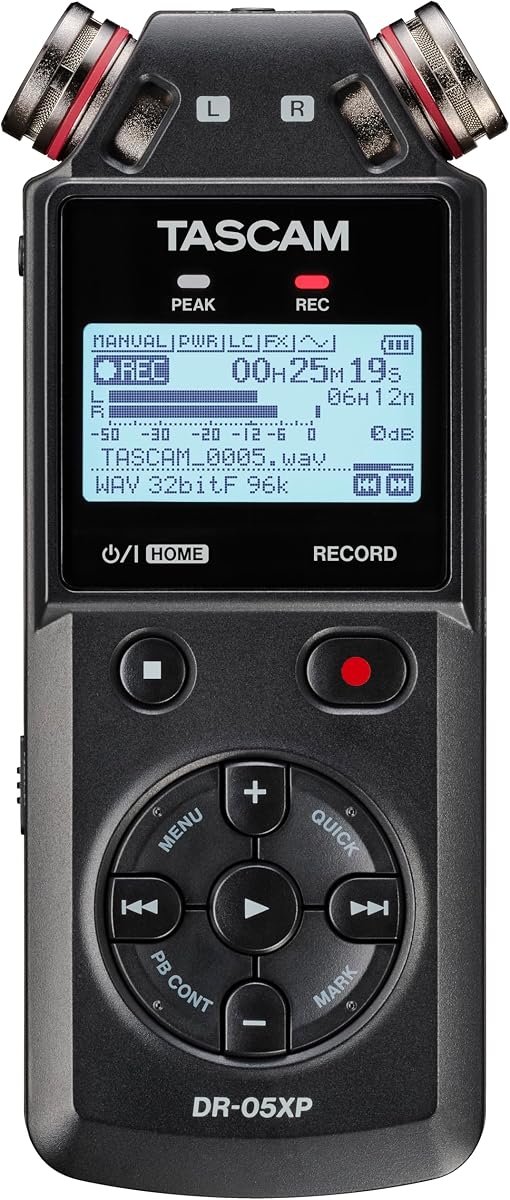
The TASCAM DR-05XP brings professional 32-bit float technology to a portable package. Its 4.2 rating highlights excellent sound quality suitable for demanding journalism environments.
We may earn a commission when you buy through this link, at no additional cost to you.
32-bit float recording captures audio without clipping even in unpredictable volume changes common in live reporting. Omnidirectional microphones handle loud environments up to 125dB SPL effortlessly.
Although batteries and SD cards are not included the USB-C interface allows direct connection to computers for seamless workflow. The 17.5-hour battery life supports long recording sessions.
Journalists requiring high-fidelity audio in compact form will find this device invaluable. It excels where dynamic range and reliability are critical for professional output.
32-bit float allows capturing audio without clipping even in unpredictable volume changes common in live reporting scenarios.
The USB-C interface allows direct connection to computers for seamless file transfer and live streaming capabilities.
We may earn a commission when you buy through this link, at no additional cost to you.
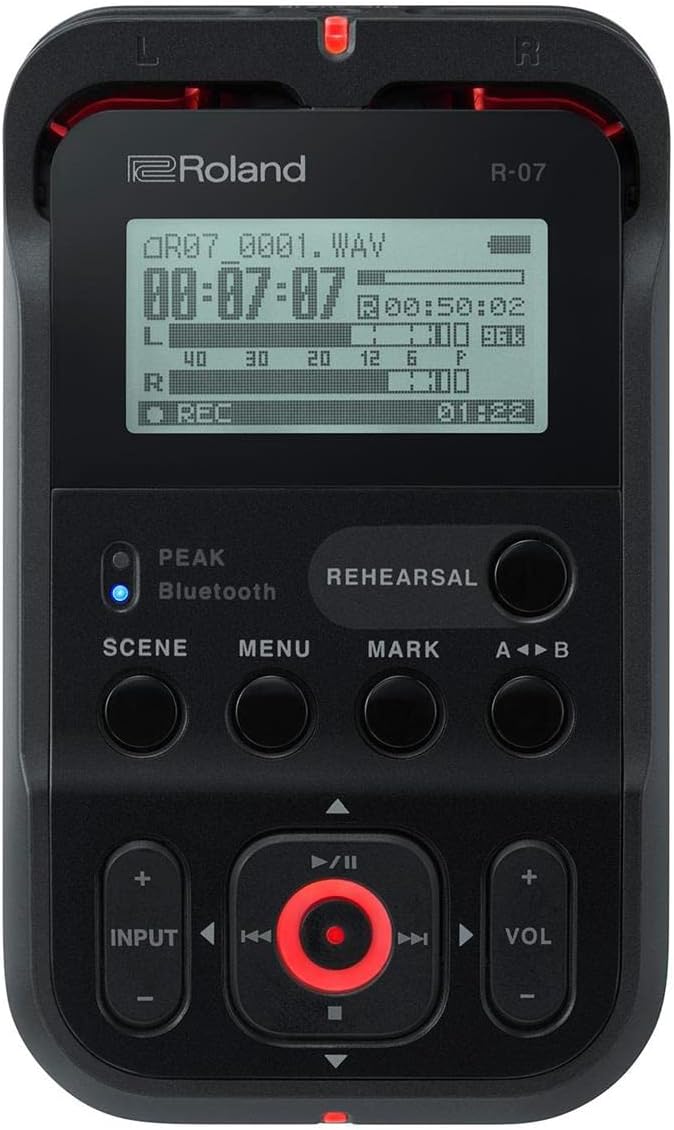
Roland R-07 delivers high-resolution audio with convenient Bluetooth capabilities. A 4.2 rating reflects its balance of portability and professional sound for field journalism.
We may earn a commission when you buy through this link, at no additional cost to you.
Simultaneous MP3 and WAV recording ensures you never lose critical takes while Bluetooth monitoring lets you listen via supported smart devices. One-touch templates simplify setup.
Battery life reaches 16 hours continuous recording which is shorter than competitors but sufficient for most daily assignments. The built-in speaker aids quick playback checks.
Journalists needing wireless features and crisp sound will appreciate this recorder. It simplifies setup for interviews while maintaining high audio fidelity for post-production.
Bluetooth control and low latency wireless monitoring let you listen to content using supported smart devices during recording.
Simultaneous MP3 and WAV recording ensures you never lose critical takes while maintaining compatibility with different devices.
We may earn a commission when you buy through this link, at no additional cost to you.
Tonfarb offers a straightforward solution for quick note-taking and interviews. Its 4.0 rating suggests good functionality for casual recording needs at a budget price.
We may earn a commission when you buy through this link, at no additional cost to you.
One-click recording ensures you never miss moments. The 64GB TF card provides ample storage while password protection safeguards sensitive files from unauthorized access.
While audio quality is basic it meets general journalism needs for voice memos and lectures. The large screen helps navigate menus easily during fast-paced assignments.
Journalists prioritizing convenience and storage capacity will find this device useful. It performs well for daily tasks without requiring complex setup or training.
Even when powered off simply push up the side button to start recording ensuring you never miss important moments.
Password protection safeguards your files perfect for storing personal memos and important audio files when using for professional use.
We may earn a commission when you buy through this link, at no additional cost to you.
Tascam dr 40 maintains a reputation for reliable audio recording. A 4.6 rating indicates strong user satisfaction with its basic voice recording capabilities.
We may earn a commission when you buy through this link, at no additional cost to you.
The silver finish and portable design make it comfortable for extended use. Its straightforward interface simplifies operation for journalists who need quick setup.
While detailed technical specs are less visible here the build quality remains consistent. It serves well as a backup or secondary recorder in field kits.
Journalists needing a simple dependable tool will find it suitable. It delivers consistent performance without unnecessary complexity for daily reporting tasks.
Tascam brand ensures consistent audio quality with easy handling for professional field recording applications and daily use.
Portable design and professional silver finish make it easy to carry during interviews and on-location field assignments.
We may earn a commission when you buy through this link, at no additional cost to you.
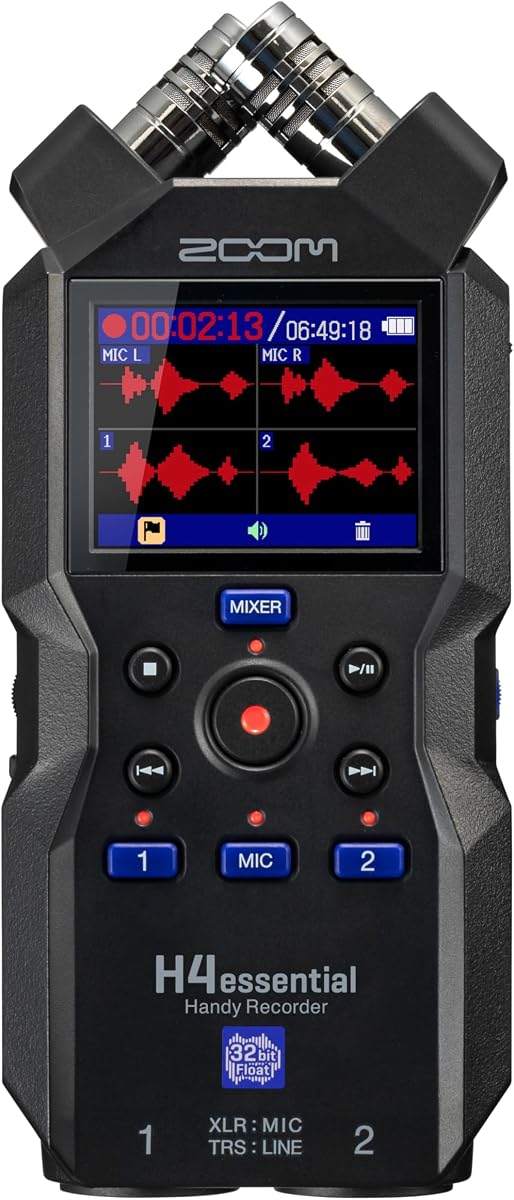
Zoom H4 Essential focuses on accessibility and multi-track recording. Its 4.4 rating highlights excellent usability for creators who need straightforward operation.
We may earn a commission when you buy through this link, at no additional cost to you.
Spoken menu guidance makes it accessible for visually impaired users. XLR/TRS inputs allow connection to mixers while USB-C supports streaming and SD card backup.
Though it lacks some features of premium models it covers essentials efficiently. The ability to record to both USB and SD provides crucial redundancy.
Journalists prioritizing accessibility and ease of use will find this recorder practical. It simplifies complex recording setups for field interviews and live audio capture.
Spoken menu guidance helps make recording more accessible for visually impaired users and easier to navigate for anyone.
Record to SD card while streaming to your computer via USB-C for a reliable backup of every session.
We may earn a commission when you buy through this link, at no additional cost to you.
Pocket AI Voice Recorder integrates AI directly into field workflows. A 4.6 rating reflects strong satisfaction with automated transcription and note-taking capabilities.
We may earn a commission when you buy through this link, at no additional cost to you.
Auto transcription and summaries transform raw audio into actionable text instantly. MagSafe compatibility allows hands-free recording on phones while the 4-day battery supports extended travel.
Reliance on optional subscriptions and connectivity limits pure offline use. However the productivity gains for interviews and meetings are substantial for busy journalists.
Those needing to process audio quickly will benefit most from this device. It bridges the gap between recording and transcription without requiring extra software.
Pocket automatically turns recordings into clear summaries and structured conversation maps so you can quickly review what matters.
Easily attach Pocket to iPhone for convenient hands-free recording on the go without needing to hold your device.
We may earn a commission when you buy through this link, at no additional cost to you.
Zoom H1 Essential provides a streamlined solution for content creators. A 4.0 rating indicates solid basic performance for simple recording tasks and voiceovers.
We may earn a commission when you buy through this link, at no additional cost to you.
Connect via USB-C to use it as a high-quality microphone for calls. The built-in stereo microphones capture clear voice audio for podcasts and interviews.
While it lacks advanced controls it offers reliable audio at a low price. USB functionality simplifies direct streaming without needing external adapters or complex setups.
Journalists needing a lightweight portable option will find this device adequate. It handles interviews and voiceovers efficiently without unnecessary technical complexity.
Connect via USB-C and use it as a microphone for livestreams, remote meetings, and video calls effortlessly.
Lightweight design makes it easy to carry during field assignments and interviews without adding significant bulk to gear.
We may earn a commission when you buy through this link, at no additional cost to you.
Zoom H2 Essential offers nine mic patterns for diverse field scenarios. A 4.4 rating confirms good performance for interviews and ambient sound recording.
We may earn a commission when you buy through this link, at no additional cost to you.
32-bit float recording captures clip-free audio at any volume. Full audio accessibility with audible menu navigation makes it suitable for visually impaired journalists.
Bluetooth sync allows multi-unit recordings when coverage requires multiple angles. Dual USB and SD recording ensures redundancy without relying solely on one storage type.
Journalists needing flexible mic patterns and accessibility will find this model ideal. It adapts well to various acoustic environments while maintaining professional audio standards.
Three built-in microphones with nine selectable recording patterns capture everything from intimate interviews to wide soundscapes.
Full audio accessibility with audible menu navigation in seven languages for blind and visually impaired users.
We may earn a commission when you buy through this link, at no additional cost to you.
Selecting the right recorder involves balancing audio quality, portability, and battery life. This section outlines key factors that impact field performance.
High-quality built-in microphones ensure clear voice capture without needing external gear. Look for omnidirectional or directional capsules depending on interview environments.
Prioritize microphones that handle loud environments without distortion to maintain clarity in noisy locations.
WAV provides lossless quality while MP3 saves space. Many devices support simultaneous recording to ensure safety backups during critical interviews.
Choose formats that balance file size with necessary audio fidelity for your post-production workflow.
Long battery endurance is critical for extended fieldwork. Devices supporting AA batteries offer easy replacement options when away from charging stations.
Verify estimated operation hours to ensure coverage of long interviews or full-day assignments without interruption.
High-capacity memory cards allow storing thousands of hours of audio. This reduces the need for frequent file transfers during active reporting.
Look for expandable storage options that let you upgrade capacity as project needs grow over time.
USB-C and Bluetooth support simplify transferring files and monitoring audio wirelessly. These features speed up workflow between recording and editing.
Ensure the device connects easily to your primary editing computer or mobile device for efficient file management.
Robust build quality protects against drops and weather. Compact designs fit easily into jackets or bags for on-the-go reporting.
Select a model that withstands daily travel without adding excessive weight to your gear load.
Intuitive controls allow quick recording start without missing key moments. Menus should be straightforward to navigate under pressure.
Simple interfaces reduce training time and ensure you can focus on content rather than device mechanics.
Advanced noise reduction filters background hum in busy locations. This ensures voices remain clear in cafés or street environments.
Prioritize devices with adjustable gain or noise gates to handle varying acoustic challenges effectively.
Before every assignment test recording levels using a quick check. Ensure gain settings prevent clipping while capturing sufficient detail for later editing.
Store devices in padded cases to protect against impacts during travel. Avoid extreme temperatures and moisture that could damage sensitive electronics inside the recorder.
Regularly update firmware to access performance improvements and bug fixes. Clean microphones with a soft cloth to remove dust that might affect audio quality.
Most modern recorders have excellent built-in microphones for close interviews. External mics become useful for distant speakers or noisy environments requiring focused sound capture.
Connect via USB-C or remove the SD card. Most devices work as external drives for easy drag-and-drop file management without special software.
AA alkaline batteries are easy to replace in the field. Rechargeable options save money long term but require access to charging before assignments.
Smartphones can record audio but dedicated recorders offer better quality and longer battery life. Use a recorder when audio fidelity is critical for broadcast.
It prevents clipping in unpredictable audio environments. While optional it offers peace of mind for journalists covering loud or dynamic events without gain tweaking.
Use password protection or encrypted storage features where available. Always back up critical interviews to multiple devices immediately after recording to prevent data loss.
WAV ensures lossless quality for broadcast while MP3 saves space. Some devices allow simultaneous recording to both formats for safety and convenience.
Wipe exterior surfaces weekly and inspect microphones for debris. Proper maintenance extends the lifespan and ensures consistent audio performance during critical moments.
The ten recorders highlighted here provide options for every budget and technical requirement. From the Zoom H5 for versatility to the EVISTR for affordability there is a device that fits every reporter's specific needs.
Prioritize microphone quality and battery life when making your decision. These factors most directly impact your ability to capture reliable audio during demanding field assignments.
Remember to verify current pricing and availability before purchasing as costs fluctuate frequently. Investing in the right tool ensures your voice is heard clearly in every story you cover.