
Siraya Tech Tenacious Flexible
4.7Editor score
Rubber-like flexibility
Fast rebound action
Ideal for shock absorption
This guide compares the top ten flexible resins for 3D printing, evaluating durability, elasticity, and print quality to help you choose the best material for
Flexible resin for 3D printing offers a unique combination of elasticity and strength that standard materials cannot match. It allows makers to create functional parts like gaskets, grips, and shock absorbers that bend without breaking. Choosing the right formulation ensures your prints survive real-world stress and maintain their shape over time.
We analyzed ten leading flexible resin products based on shore hardness, elongation at break, and overall print performance. Our comparison considers compatibility with common LCD and DLP printers as well as post-processing requirements. This list highlights materials that balance softness with durability for various prototyping and end-use applications.
Each pick showcases specific strengths such as rapid curing, low odor, or exceptional impact resistance. You will find options ranging from budget-friendly choices to premium formulations designed for industrial use. Keep in mind that product availability and pricing can change frequently, so verify current details before purchasing.
4.7Editor score
4.7Editor score

4.4Editor score
The following table provides a side-by-side overview of all ten products featured in this guide. Each entry includes key specifications and direct links to purchase options on Amazon.



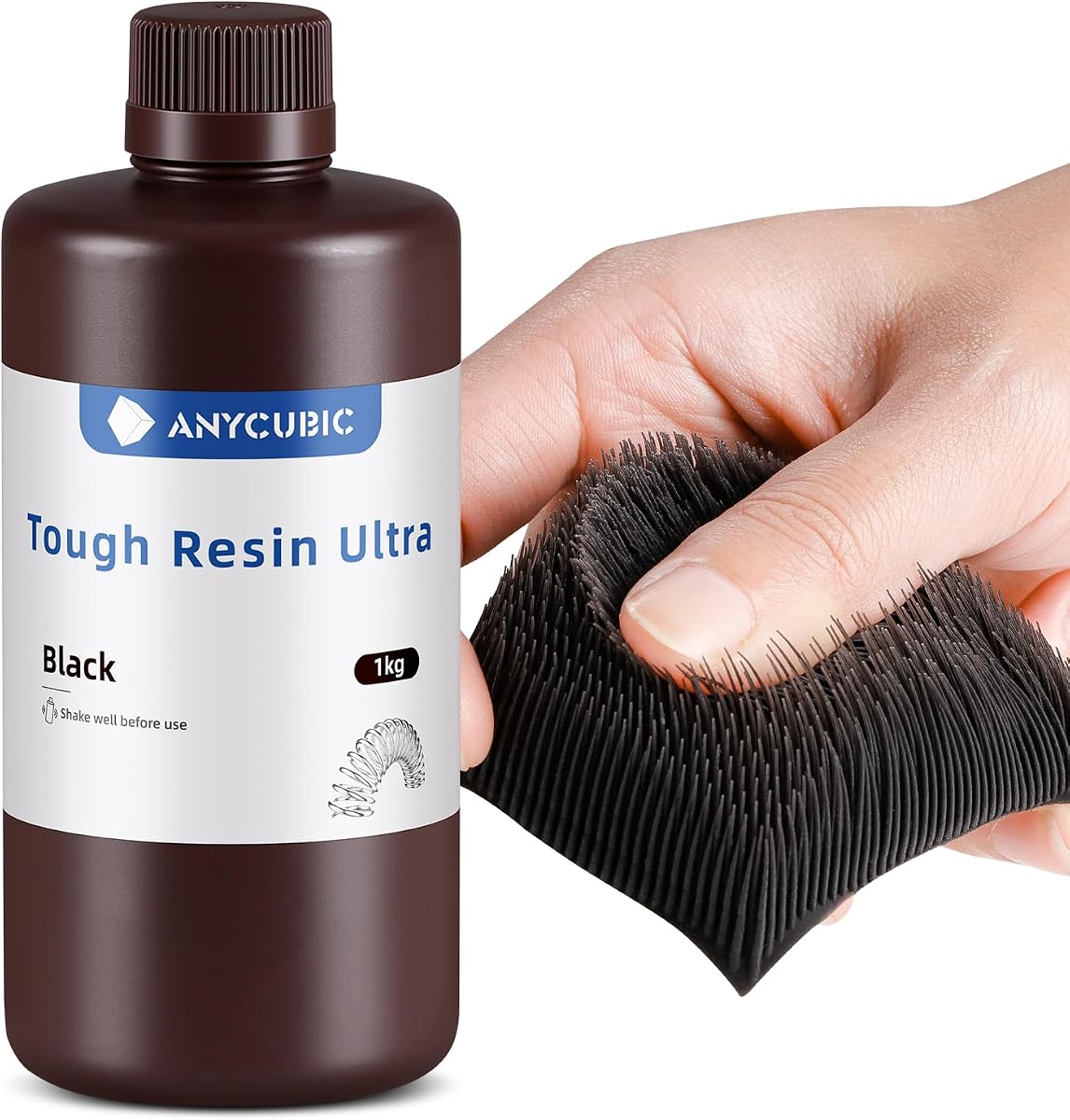
ANYCUBIC Ultra Tough Resin stands out as a top contender in the flexible resin market. With a 4.7 rating, users praise its ability to recover shape after deformation. It is ideal for wearables and functional prototypes requiring high durability.
We may earn a commission when you buy through this link, at no additional cost to you.
The material offers exceptional flexibility and impact resistance. It resists brittleness and corrosion even in damp environments. This makes it suitable for outdoor parts or tools exposed to varying conditions. Its gentle skin sensation enhances wearability for items like earphone covers.
While it performs well, the black color may limit aesthetic options. Mixing with other resins can alter final color results. However, the trade-off is worth the enhanced toughness and flexibility it provides for demanding applications.
Buyers seeking a reliable flexible material for functional parts will find this resin valuable. It balances ease of use with professional-grade performance. We recommend it for anyone needing resilient prints that can withstand repeated stress.
This resin withstands external forces without cracking or permanently deforming.
Cured prints offer a non-irritating surface suitable for direct skin contact.
We may earn a commission when you buy through this link, at no additional cost to you.
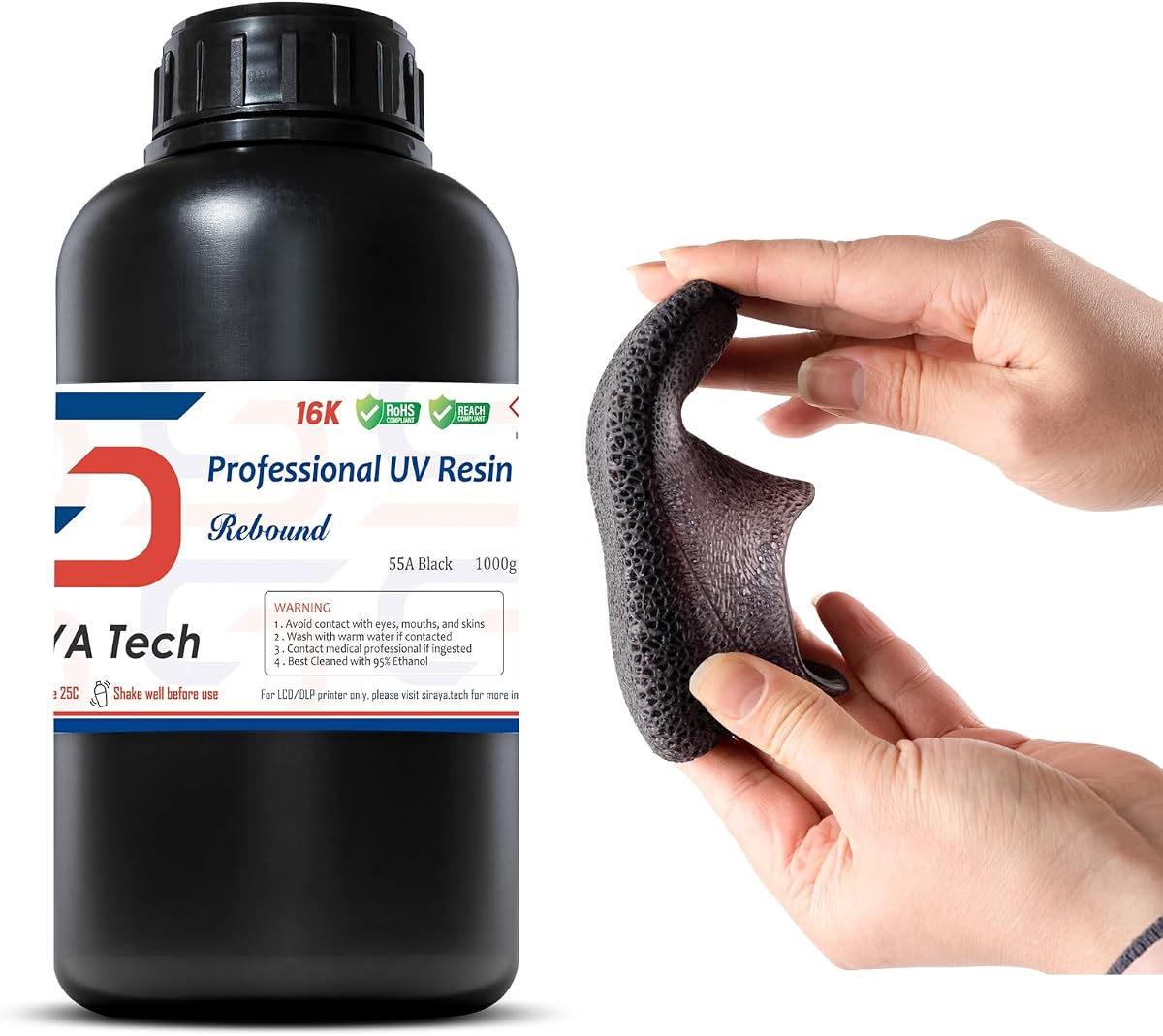
Siraya Tech Tenacious Flexible offers significant value for makers needing rubber-like properties. Rated 4.7, it provides faster rebound than standard resins. It is perfect for soft grips and gaskets requiring constant compression.
We may earn a commission when you buy through this link, at no additional cost to you.
This formulation excels in elasticity and impact resistance. It recovers quickly after extreme bending. The material ensures objects remain resilient under stress. Its properties make it a preferred choice for shock-absorbing components.
The smaller 500g size might require multiple bottles for larger jobs. The black color limits aesthetic customization without mixing. Despite these minor drawbacks, the performance per dollar remains highly competitive.
Budget-conscious users will appreciate its affordability without sacrificing quality. It fits well in projects needing flexibility on a tight budget. We suggest it for prototyping and small batch production of flexible parts.
Designed to return to original shape quickly after bending or compression.
Effective for components needing to absorb impact without damage.
We may earn a commission when you buy through this link, at no additional cost to you.
Superflex 3D Printer Resin is designed for high-performance applications requiring certification. It meets ISO 10993-5 standards when properly cleaned. This makes it suitable for medical or contact-safe prototypes demanding strict compliance.
We may earn a commission when you buy through this link, at no additional cost to you.
Its speed is a major advantage, printing 50um layers in seconds. This enhances productivity and reduces electricity costs. The balanced softness simulates hard flexible prototypes effectively. Clear transparency allows for light transmission in specific designs.
The premium price may not suit every hobbyist budget. The 500g size is smaller than bulk options. However, for professional use, the quality and certification justify the investment.
We recommend this for projects where material safety and speed are priorities. Its ability to pass biocompatibility tests sets it apart. Choose it for specialized parts needing reliable performance and regulatory adherence.
Passes ISO 10993-5 biocompatibility testing for safe human contact.
Increases farm productivity by up to 40 percent through rapid layer curing.
We may earn a commission when you buy through this link, at no additional cost to you.
SUNLU Flexible 3D Printer Resin targets users needing soft flexible items. Its 70A hardness allows for significant bending without breaking. It is suited for general prototyping requiring low rigidity and high durability.
We may earn a commission when you buy through this link, at no additional cost to you.
The material features a smooth non-sticky finish after curing. It has minimal odor and good stability against weak acids. The leak-proof bottle design helps prevent transport damage. Compatibility extends to almost all LCD printers.
Some users report lower success rates compared to higher-rated options. Proper cleaning and curing are essential for best results. It may require patience to achieve the desired surface quality.
For those seeking a larger quantity at a standard price, this is a viable choice. It balances cost and flexibility for everyday tasks. We suggest it for non-critical prototypes needing soft textures.
Provides a dry non-sticky surface that feels pleasant to the touch.
One kilogram bottle reduces the need for frequent replenishment.
We may earn a commission when you buy through this link, at no additional cost to you.
ANYCUBIC Tough Resin 2.0 emphasizes structural integrity over extreme flexibility. It offers high precision and minimal shrinkage for thin models. Ideal for industrial parts needing strength without compromising detail resolution.
We may earn a commission when you buy through this link, at no additional cost to you.
The upgraded formula resists breaking under cyclic vibrations. It maintains performance even after drops. The low odor composition improves workplace comfort significantly. Grey color suits technical prototypes needing neutral tones.
Flexibility is moderate compared to softer options like SunLU. It suits rigid requirements more than stretchy ones. Users needing extreme bending might prefer other entries in this list.
We recommend this for functional engineering prototypes requiring tight tolerances. It delivers strong results for parts under stress. Choose it when durability and accuracy outweigh pure elasticity.
Resists breakage and peeling better than standard resin formulations.
Reduces volatile organic compounds for a more comfortable workspace.
We may earn a commission when you buy through this link, at no additional cost to you.
SUNLU High Toughness Resin focuses on preventing breakage during printing. With elongation five times higher than standard resin, it offers exceptional durability. It is designed for structural parts needing long-lasting resilience.
We may earn a commission when you buy through this link, at no additional cost to you.
Low viscosity and high flowability ensure shorter curing times. Reduced shrinkage minimizes distortion for better accuracy. The resin cleans easily with alcohol or ethanol. It is compatible with most standard printers.
While very strong, it is not the softest option available. It suits applications needing rigid flexibility rather than soft rubber. Users must clean prints thoroughly to maintain quality.
We suggest this for makers needing strong, unbreakable prototypes. It improves success rates by resisting cracks after washing. Choose it for solid models requiring high tensile strength.
Maintains accurate size and shape during curing to prevent distortion.
Offers a more comfortable printing environment with reduced scent.
We may earn a commission when you buy through this link, at no additional cost to you.
ELEGOO Tough 3D Printer Resin delivers strong resilience and flexibility. With a Shore hardness of 84.7D, it is durable yet bendable. It withstands tension and stress while maintaining its shape.
We may earn a commission when you buy through this link, at no additional cost to you.
The material can be drilled without cracking. It resists brittleness and corrosion even in humid environments. Its high elasticity ensures excellent performance under extreme temperatures. Fine texture adds to aesthetic quality.
The hardness level is higher than softer rubbers. It is better for tools than for soft grips. Some may find the D-scale less flexible than A-scale options.
We recommend this for high-performance models and tools. It suits end-use products needing structural integrity. Choose it for engineering prototypes that face physical abuse.
Can be machined or drilled without fracturing.
Offers strong physical properties resistant to stress.
We may earn a commission when you buy through this link, at no additional cost to you.
Siraya Tech Rebound 55A provides high elasticity for soft prototypes. With 55A hardness, it is softer than Tenacious Flex. It is ideal for shock-absorbing components requiring quick recovery.
We may earn a commission when you buy through this link, at no additional cost to you.
Printing is easy with standard cleaning methods. It does not require A/B mixing. Initial tests show good resilience over compression cycles. Long-term durability is still being evaluated.
The lower hardness might limit load-bearing applications. It focuses on rebound rather than rigidity. Users should test for specific cycle requirements before bulk use.
We suggest this for protective equipment prototypes. It works well for seals needing elasticity. Choose it when softness and rapid recovery are critical.
Recovers shape significantly faster than standard elastic resins.
Requires no special mixing or complex post-processing steps.
We may earn a commission when you buy through this link, at no additional cost to you.
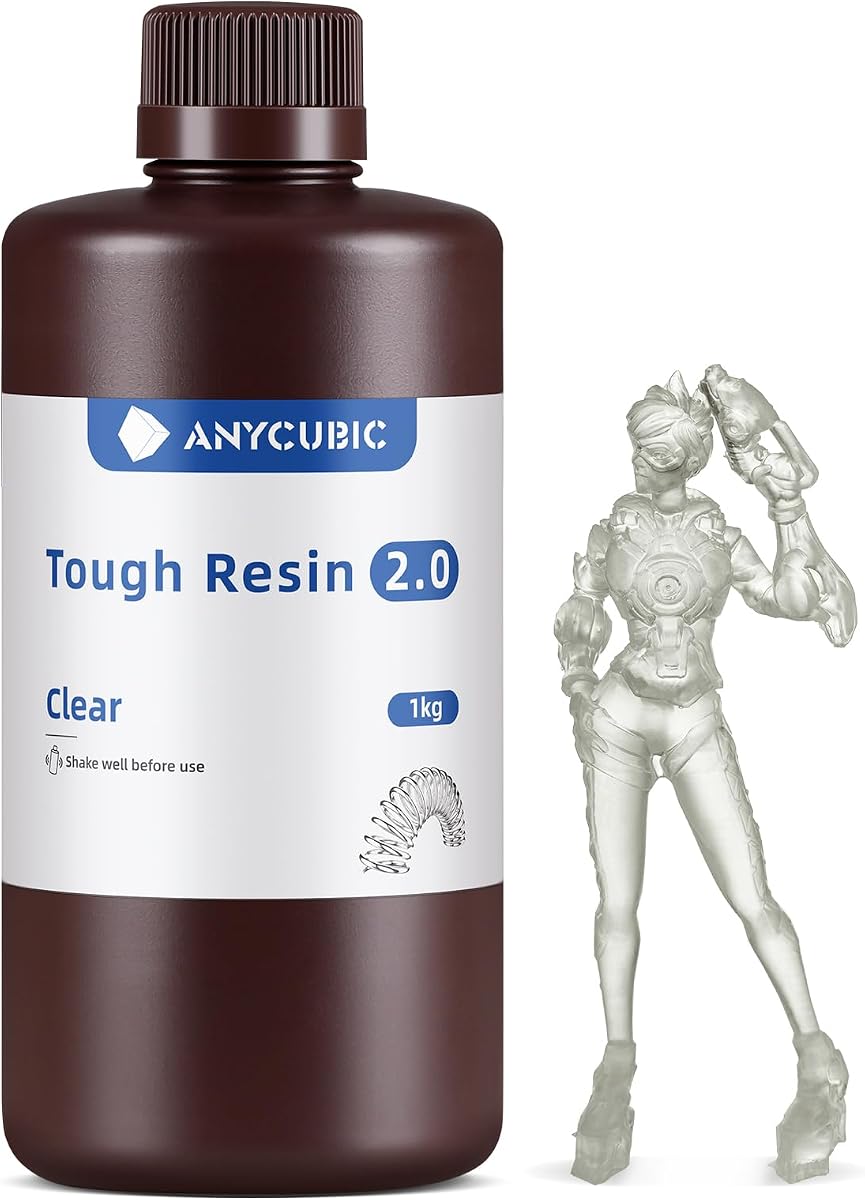
ANYCUBIC Tough Resin 2.0 Clear combines toughness with transparency. It offers minimal shrinkage for high precision. This suits parts needing visibility alongside structural integrity.
We may earn a commission when you buy through this link, at no additional cost to you.
Its stretch resists cyclic vibrations effectively. It is low odor and environmentally friendly. Compatible with a wide range of equipment. Clear version allows light transmission in designs.
Flexibility is moderate compared to softer alternatives. It may need care to prevent yellowing over time. Users should weigh clarity against extreme flexibility needs.
We recommend this for optical or technical prototypes. It fits applications needing clarity and strength. Choose it when clear material durability is required.
Provides transparency while maintaining high precision details.
Ensures high-quality prints with minimal dimensional changes.
We may earn a commission when you buy through this link, at no additional cost to you.
Flexible & Upgraded Tough Resin simulates rubber and TPU. With 90A hardness, it balances toughness with some flexibility. Ideal for parts needing tear resistance without extreme softness.
We may earn a commission when you buy through this link, at no additional cost to you.
It withstands repeated folding without breaking. The formula provides high precision with low odor. Suitable for shock-absorbing components and ergonomic grips. It is designed for makers needing realistic rubber properties.
The hardness limits extreme bending applications. It is less pliable than softer resins. Users seeking soft tactile feel may prefer lower A-shore options.
We recommend this for industrial prototyping. It suits protective cases and shoes soles. Choose it when rubber-like durability is the primary goal.
Mimics real rubber and TPU properties effectively.
Designed to stay flexible under repeated stress without wear.
We may earn a commission when you buy through this link, at no additional cost to you.
Selecting the right flexible resin involves evaluating several technical factors to ensure optimal print quality and durability.
Shore hardness defines the material's stiffness and softness. Lower A numbers like 55A are softer and more rubber-like while higher numbers like 90A are firmer. Choosing the correct hardness ensures your parts function as intended.
Select a hardness level that matches the flexibility required for your application.
Elongation at break measures how much the resin can stretch before breaking. Higher percentages indicate better stretch potential. Look for values over 100 percent for flexible items.
Higher elongation values mean your prints can withstand more stress without snapping.
Ensure the resin works with your printer's wavelength. Most flexible resins use 405nm UV light. Verify compatibility with LCD or DLP machines before purchasing.
Always check the resin's specified wavelength range against your printer's capabilities.
Flexible resins often require careful washing and curing to achieve full strength. Some may need longer curing times. Follow manufacturer guidelines to avoid tacky surfaces.
Proper post-processing is essential for achieving the best mechanical properties.
Low shrinkage rates ensure dimensional accuracy. Flexible resins should have minimal distortion. Check product descriptions for shrinkage claims to maintain part geometry.
Minimizing shrinkage helps maintain precise tolerances during printing.
Flexible resins can have a distinct odor. Look for low-odor formulas for better comfort. ISO certifications indicate safety for skin contact.
Choose low-odor resins to create a more pleasant printing environment.
Some flexible resins cure faster than others. Faster curing improves productivity. Balance speed with print quality to avoid errors.
Select a resin with curing times that suit your production pace.
Most flexible resins come in black, grey, or clear. Color choice affects aesthetics and light transmission. Verify availability before purchasing.
Ensure the available colors meet your project's visual requirements.
Store flexible resin in a cool dark place to prevent premature curing. Keep the bottle sealed tightly to avoid moisture contamination. Always wear gloves and eye protection when handling uncured resin.
Calibrate your printer for flexible settings before printing. Use lower layer times and slower movement for best results. Clean the build plate thoroughly to ensure proper adhesion.
After printing, wash parts with isopropyl alcohol for at least 10 minutes. Cure under UV light for the recommended time to maximize hardness. Store finished parts in a cool dry environment.
For soft grips and comfortable handles, a shore hardness of 70A to 80A is ideal. This range offers a rubber-like feel while providing enough structure for functional use.
Flexible resin usually cleans with standard isopropyl alcohol. However, some formulas may need a longer wash cycle to remove all residue. Always follow the manufacturer's instructions for optimal results.
Yes, flexible resin can often be mixed with other types to adjust properties. However, mixing may affect color and cure times. Test small batches before committing to a full print.
Sticky prints often result from insufficient curing or improper washing. Ensure you cure under enough UV exposure and wash thoroughly. Residual uncured resin on the surface can cause tackiness.
Unopened flexible resin typically lasts a year or more when stored correctly. Keep it away from direct sunlight to prevent premature reaction. Once opened, use it within a few months for best performance.
Many flexible resins are safe after full curing. Some have ISO certifications for biocompatibility. Always ensure proper curing and post-processing before using parts near skin.
Flexible resin often needs slower printing speeds and longer exposure times. Reduce travel speed and layer height to improve accuracy. Consult your specific resin's datasheet for recommended parameters.
Use a flexible spatula to gently pry parts from the build plate. Heating the bed slightly can help release stuck parts. Flexing the plate may also assist in removal.
We have reviewed ten excellent flexible resins suitable for various needs. Top picks include ANYCUBIC Ultra Tough for overall quality and Siraya Tech Tenacious for budget value. Each option offers unique benefits for your projects.
Consider your specific application when choosing. Some need extreme softness while others require durability. Balance cost and performance to find the perfect fit.
Prices and availability can change quickly. Verify current details and stock before purchasing to ensure you get the best deal available.