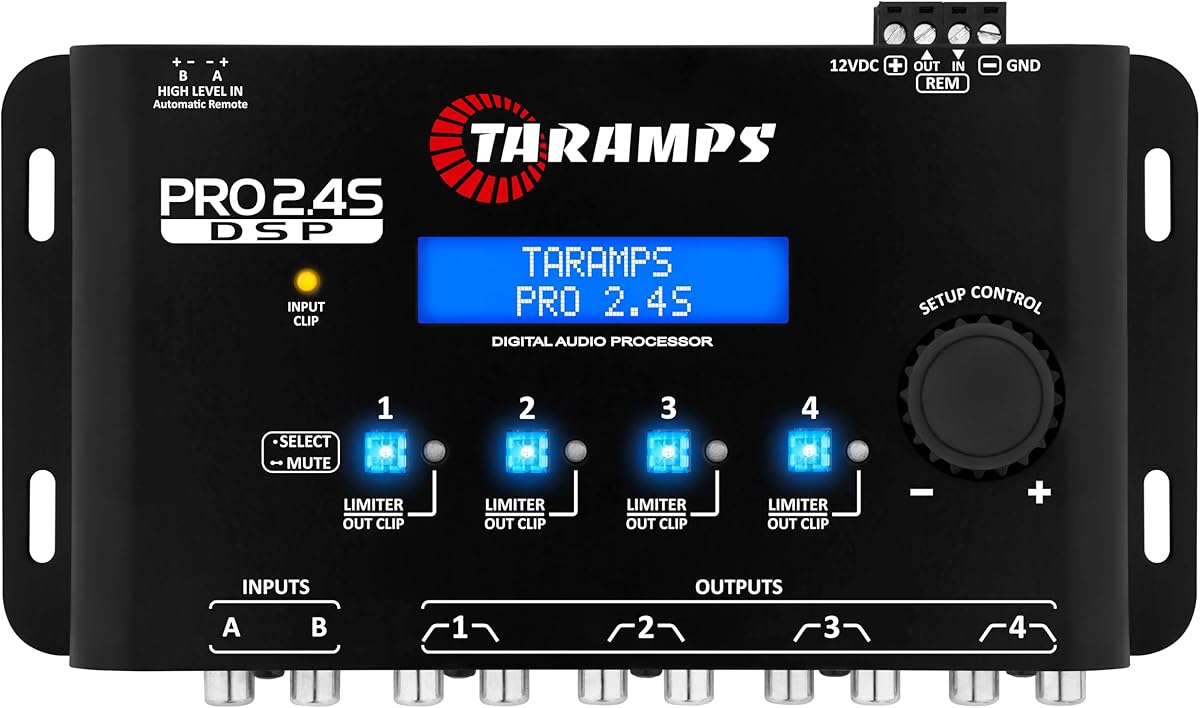
Taramps PRO 2.4S Car Audio DSP Equalizer
4.6Editor score
Compact four channel design
Anti pop system included
RCA and high level inputs
Discover the best Digital Signal Processor Dsp for Car Audio to enhance sound quality, adjust equalization, and optimize your vehicle audio system performance
Choosing the right digital signal processor is essential for anyone serious about car audio performance. These devices allow precise control over equalization, crossover points, and time alignment to transform factory systems into high fidelity setups.
We analyzed ten top rated models based on channel count, input options, app connectivity, and equalization depth. Each unit offers unique strengths for different budgets and installation needs, from basic upgrades to professional grade tuning.
Each pick highlights key features, pros, and cons to help you decide quickly. Prices and availability may change over time so check current listings before purchasing to ensure you get the best value for your specific audio project.
4.6Editor score
4.6Editor score

4.6Editor score
This table compares all ten selected models side by side. Review channel counts, input types, equalization bands, and unique features to find the processor that matches your system complexity and tuning requirements.




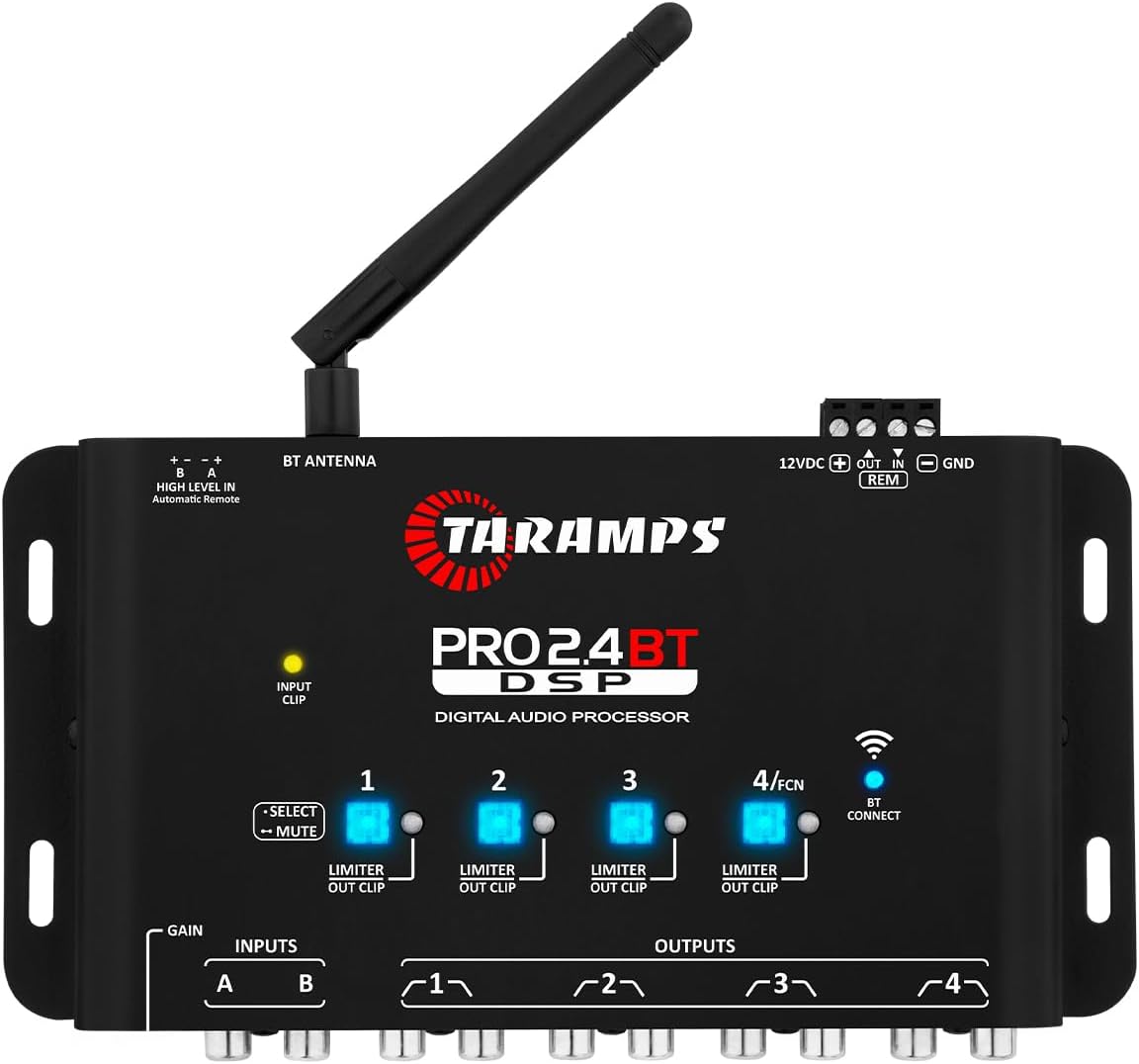
The Taramps Pro 2.4 BT stands out as a top choice for car audio enthusiasts seeking professional tuning without complex wiring. Its high rating reflects reliable performance and ease of use through Bluetooth connectivity.
We may earn a commission when you buy through this link, at no additional cost to you.
This processor offers exceptional flexibility with a 15 band graphic equalizer and parametric EQ options. High level inputs make it ideal for factory systems while the app lets you adjust every channel remotely.
Setup requires understanding the app interface which may take time for beginners. The external Bluetooth antenna is necessary for stable connections but ensures you can tune without opening doors constantly.
Buy this if you want precise control over your sound system without expensive pro gear. It delivers balanced output and seamless integration for most daily drivers and custom builds.
Bluetooth 5.4 allows you to adjust EQ and crossovers directly from your phone for a smoother workflow during installation and fine tuning.
High level input with auto turn on means you can connect to speaker wires from OEM head units without needing extra converters or wiring.
We may earn a commission when you buy through this link, at no additional cost to you.
The PRV DSP 2.4X offers solid performance for those who prefer wired connections and physical feedback. It scores highly for its intuitive interface and built in equalization tools that simplify initial tuning.
We may earn a commission when you buy through this link, at no additional cost to you.
With 15 bands of graphic EQ and parametric controls you can shape sound effectively for component speakers or subwoofers. The remote sequencer helps automate startup sequences for amps and other accessories.
Lack of Bluetooth means you must adjust settings manually through the unit which can be inconvenient for frequent changes. Crossover slopes are fixed which limits advanced tailoring compared to app controlled models.
This model suits DIYers who want reliable processing without mobile dependency. It works well for standard four channel systems needing basic time alignment and tone shaping.
The 16×2 LCD display shows real time adjustments which helps verify changes without relying on a connected device or software.
Sequencer feature allows triggering other gear like amplifiers sequentially for clean power up and avoiding noise or pops.
We may earn a commission when you buy through this link, at no additional cost to you.
The PRV DSP 2.8X expands on the 2.4X by offering eight output channels for more complex speaker configurations. It retains the same intuitive interface while supporting larger setups with separate subwoofers and tweeters.
We may earn a commission when you buy through this link, at no additional cost to you.
With 15 bands of graphic EQ and parametric controls you can shape sound effectively for component speakers or subwoofers. The remote sequencer helps automate startup sequences for amps and other accessories.
Lack of Bluetooth means you must adjust settings manually through the unit which can be inconvenient for frequent changes. Crossover slopes are fixed which limits advanced tailoring compared to app controlled models.
This model suits DIYers who want reliable processing without mobile dependency. It works well for standard four channel systems needing basic time alignment and tone shaping.
Eight outputs allow independent control of front rear and sub channels enabling multi amp setups without additional hardware.
The 16×2 LCD display shows real time adjustments which helps verify changes without relying on a connected device or software.
We may earn a commission when you buy through this link, at no additional cost to you.
The PRV Bluetooth 2.4X BT focuses on simplicity for factory radio upgrades. It includes built in speaker crossover presets to match PRV drivers which speeds up setup for specific builds.
We may earn a commission when you buy through this link, at no additional cost to you.
High level input lets you connect directly to speaker wires without extra adapters. Bluetooth app control allows remote adjustments for crossover points and timing without opening doors.
User feedback suggests occasional connection drops which may require resetting the device. Parametric EQ is limited compared to full processors so advanced tuning might be restricted.
Choose this if you use PRV speakers and want a quick OEM integration solution. It balances convenience and performance for those prioritizing plug and play setup.
High level input and speaker presets reduce wiring complexity so you can keep factory infotainment while upgrading speakers.
Exclusive crossover presets for PRV speakers ensure filters match driver specs which improves sound quality without manual calculation.
We may earn a commission when you buy through this link, at no additional cost to you.
The Taramps PRO 2.4S is an affordable option for basic four channel setups. It includes essential features like graphic EQ and high level inputs which make it accessible for entry level builders.
We may earn a commission when you buy through this link, at no additional cost to you.
Anti pop system eliminates turn on and turn off noise which enhances daily driving experience. Built in limiter protects your speakers from clipping and distortion during loud listening sessions.
Without Bluetooth you must use wired control which can be less convenient for fine tuning. Crossover slopes are limited but sufficient for most standard speaker configurations.
Buy this if you need a reliable processor at a lower price point. It delivers balanced sound and protection for budget focused custom installations.
The integrated Anti Pop System eliminates unwanted turn on and turn off noises so your speakers start smoothly.
Small form factor fits easily in tight spaces behind panels without requiring custom brackets or extensive wiring.
We may earn a commission when you buy through this link, at no additional cost to you.
The Banda Audiopart X8AiR is designed for audiophiles needing extreme precision in tuning. Its 79 band equalizer per channel allows surgical adjustments to frequency response for unmatched clarity.
We may earn a commission when you buy through this link, at no additional cost to you.
32 bit 96kHz processing ensures minimal distortion and accurate signal reproduction across all channels. Bluetooth app control gives full access to time alignment and crossover settings remotely.
Premium pricing may not fit basic setups but pays off for high end systems. App reliance means you need a smartphone for any changes which may slow quick tweaks.
Choose this if you demand professional level control and have multi amplifier setups. It delivers immersive sound with balanced highs mids and deep bass.
32 bit 96kHz DSP ensures minimal distortion and accurate signal reproduction across all channels for audiophile quality sound.
79 bands of EQ per channel let you fine tune every frequency detail to fix acoustic issues and optimize speaker response.
We may earn a commission when you buy through this link, at no additional cost to you.
The Taramps PRO 2.8S supports complex eight channel systems with advanced limiters for dynamic control. It offers high level inputs and auto turn on which simplifies factory system integration.
We may earn a commission when you buy through this link, at no additional cost to you.
RMS and Peak limiters protect speakers and amps from overdrive while maintaining clarity. Precise delay and phase controls help align speakers for better imaging and soundstage.
Larger size may require careful mounting in confined spaces. Lack of Bluetooth means wired control which is less convenient for frequent adjustments.
This model suits those managing multi amp systems needing robust protection. It balances flexibility and power for serious car audio builds.
Adjustable RMS and Peak Limiters provide advanced dynamic control for high-performance car audio systems preventing distortion.
Precise delay and phase controls help align speakers for improved imaging clarity and soundstage within your vehicle.
We may earn a commission when you buy through this link, at no additional cost to you.
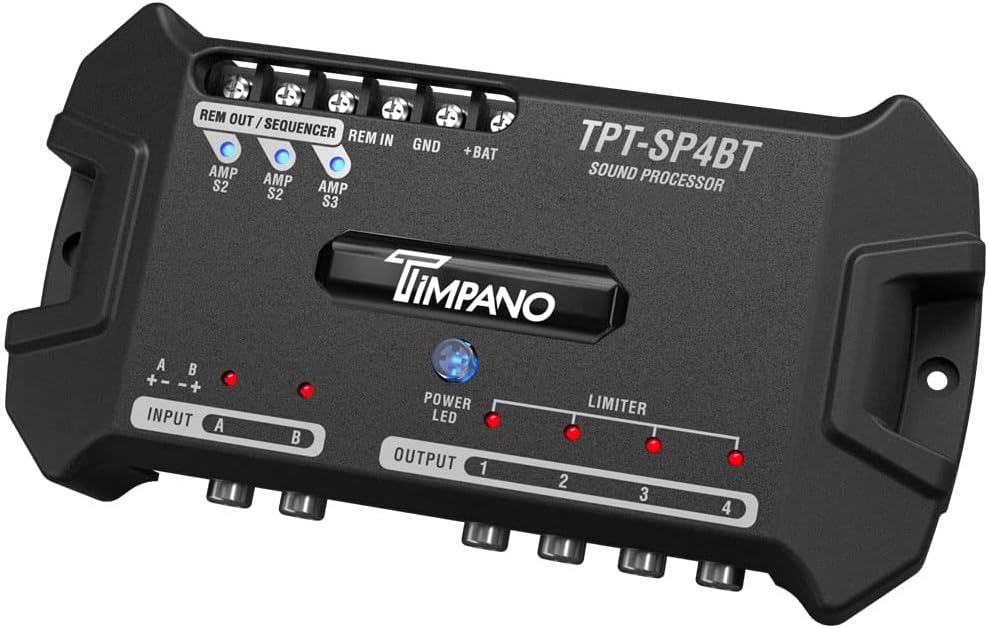
The Timpano TPT-SP4BT stands out with a built-in voltmeter that tracks battery health in real time. Bluetooth app control allows you to adjust settings remotely without opening the door.
We may earn a commission when you buy through this link, at no additional cost to you.
Remote sequencer triggers up to three products automatically for clean startup. Frequency generator and pink noise tools help with accurate measurement and speaker alignment.
App dependency can slow setup if your device disconnects frequently. EQ bands are limited compared to advanced models but sufficient for general tuning needs.
Buy this if you want monitoring tools alongside tuning capabilities. It suits those seeking extra diagnostics during installation and daily use.
Battery Voltmeter feature lets you view electrical health directly from the processor ensuring your system stays stable.
Sequencer feature makes it possible to configure programmed startup and shutdown of up to three products via remote connections.
We may earn a commission when you buy through this link, at no additional cost to you.
The Dayton Audio DSP-408 is ideal for users comfortable with computer based tuning. It offers eight outputs and ten bands of parametric EQ for detailed adjustments across channels.
We may earn a commission when you buy through this link, at no additional cost to you.
GUI software provides visual control over crossover points and alignment which simplifies complex routing. Optional Bluetooth dongle adds wireless access if you prefer mobile control.
PC dependency means you need a laptop for setup which limits flexibility compared to standalone apps. Extra cost for Bluetooth dongle adds to total expense.
This unit suits home and car audio enthusiasts who want robust software tools. It balances performance and flexibility for custom integration projects.
Easy to use Graphical User Interface allows visual tuning which simplifies complex routing and alignment tasks.
Built in input output mixing lets you blend multiple sources which adds flexibility for multi source setups.
We may earn a commission when you buy through this link, at no additional cost to you.
The Stetsom STX2448 introduces a unique floating mode that changes how audio streams are processed. It includes subharmonic bass generation which enhances low frequency response without extra amps.
We may earn a commission when you buy through this link, at no additional cost to you.
Improved encoder button allows rotation and click actions for intuitive navigation through menus. Input level adjustment with clip LEDs protects your system from signal distortion and overload.
Manual interface lacks app control which requires time to master menus. Floating mode offers more freedom but may be overkill for simple systems.
Buy this if you want advanced signal flow options and deep bass enhancement. It suits enthusiasts who value unique processing capabilities.
The DSP Floating mode provides different flows and features compared to standard DSPs which expands configuration possibilities.
Subharmonic Bass feature adds low frequency extension which improves perception without needing extra subwoofers.
We may earn a commission when you buy through this link, at no additional cost to you.
Selecting the right processor involves considering channel needs input options and tuning flexibility. These factors determine how well you can optimize your system for clarity and power.
Channel count determines how many speakers or subwoofers you can control independently. Four channels suit basic setups while eight channels allow for separate front rear and sub tuning.
Choose more channels if you plan to add more speakers later or need separate amplification for different drivers.
Inputs define how you connect the processor to your head unit. High level inputs work with factory speaker wires while RCA inputs connect to aftermarket units.
Ensure the DSP supports your existing system to avoid extra wiring or converters that may reduce signal quality.
Equalization bands shape frequency response for balanced sound. Graphic EQ is easier while parametric EQ offers precise control for correcting acoustic issues.
More bands provide finer tuning but require more knowledge to use effectively. Match depth to your skill level and system complexity.
Connectivity options like Bluetooth or wired interfaces determine how you tune settings. Wireless control offers convenience while wired ensures stable connections.
Decide based on how often you adjust settings. Frequent tuning benefits from apps while occasional changes work with manual knobs.
Protection features like limiters prevent damage from overdrive and clipping. RMS and peak limiters keep power levels safe for speakers.
Look for units with built-in limiters and clip indicators to avoid costly repairs from voltage spikes or distortion.
Installation requirements vary by unit. Some need remote triggers or sequencers for power management while others fit in tight spaces.
Plan mounting locations early to ensure airflow and access for adjustments. Compact sizes are easier to hide behind panels.
Budget dictates feature availability. Basic models handle core tasks while premium ones offer deep EQ and wireless control.
Balance cost with needed features. Investing slightly more often yields better longevity and tuning flexibility.
Software support ensures you can update and troubleshoot issues. Check for regular app updates and responsive documentation.
Better support means smoother setup and better long-term usability if features change over time.
Connect the processor between the head unit and amplifiers using RCA or high level inputs. Secure all wiring with zip ties to prevent noise from loose cables.
Tune initial settings using presets before applying fine adjustments. Use pink noise to match speaker levels and phase for balanced output.
Keep the unit clean and ventilated to avoid overheating. Update app software regularly for new features and security improvements.
Yes installing a DSP lets you correct factory settings that cause poor sound. It aligns speakers and equalizes frequency for clarity and improved imaging even with stock head units.
Most modern processors support high level inputs to connect with factory speaker wires. This means you can upgrade speakers without replacing your OEM head unit entirely.
Four channels are sufficient for front speakers and a subwoofer. Eight channels are better if you plan separate rear channels or multiple subs for full flexibility.
Bluetooth control adds convenience for adjusting settings without opening doors. It is not strictly necessary but highly useful for frequent tuning after initial setup.
A DSP can shape subwoofer response with precise crossover and phase control. This leads to tighter more controlled bass without distortion at high volumes.
Time alignment uses delay settings to sync sound arrival at your ears. Set distances from each speaker and use pink noise to match arrival times.
Basic tuning requires a microphone and a smartphone with an SPL meter app. Professional tuning may need a calibrated mic and software for detailed analysis.
Many processors allow export and import of configurations through apps. This lets you share presets with other users or backup your own tuning.
The Taramps Pro 2.4 BT stands out as an editor's choice for its balance of features and ease of use. It suits most setups needing reliable tuning without complexity.
Prioritize input options and channel count to match your current and future system plans. High level inputs and enough outputs prevent costly upgrades down the road.
Prices and availability change so verify current listings before purchasing. Investing in quality processing ensures lasting sound improvements across all driving conditions.