
N Type Lightning Arrestor 0 to 6 GHz
4.7Editor score
50 Ohm impedance
DC to 6 GHz range
Replaceable discharge tube
This comprehensive guide compares the top 10 antenna lightning arrestor models for 2026, evaluating surge protection, connector types, and signal integrity for
Protecting your communication equipment from sudden voltage spikes is essential for anyone using outdoor antennas. A quality antenna lightning arrestor diverts dangerous energy safely to ground, preserving your radios and transceivers from costly damage during storms.
We analyzed ten highly rated surge protectors based on their design, impedance matching, and weather resistance. Each entry offers distinct connector types and frequency ranges to suit different setups ranging from CB radios to advanced cellular boosters.
Every product pick details key specs, installation requirements, and real-world application scenarios. Please note that availability and pricing fluctuate regularly, so verify current details before purchasing to ensure you get the right fit for your needs.
4.7Editor score
4.6Editor score

4.8Editor score
The following table provides a side-by-side comparison of all ten selected models, highlighting their connector types, frequency ranges, impedance values, and key protective features to help you make an informed decision.


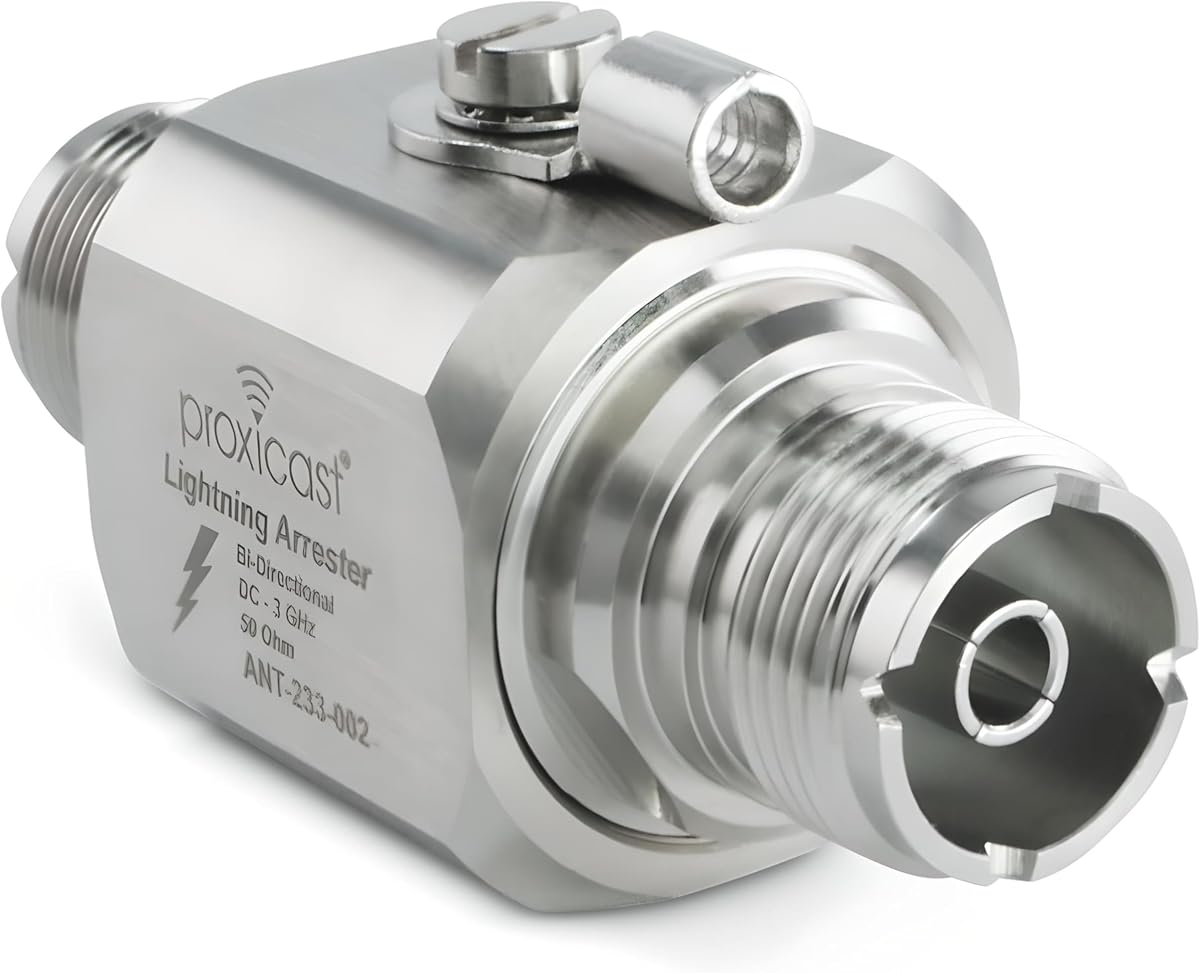
The Proxicast ProGrade model stands out as a robust choice for VHF and UHF antenna systems. It carries a strong rating among users who value consistent protection against surges. Its gas discharge tube technology effectively handles multiple strikes without degradation.
We may earn a commission when you buy through this link, at no additional cost to you.
Key strengths include its very low RF insertion loss which ensures signals remain strong. The 50 Ohm impedance matches standard coaxial lines perfectly. It also offers a pass-through feature for DC power, essential for modern setups.
Trade-offs involve the need for an external ground wire which is not included. Users must ensure proper installation near the entry point for maximum safety. The finish is durable but standard for outdoor equipment.
Ham operators and CB radio enthusiasts will appreciate its straightforward design. It provides essential safety without complicating the feedline. For most base stations, this unit delivers reliable peace of mind during storm season.
This unit is specifically tailored to safeguard two-way radios and amateur equipment from sudden voltage spikes.
Its bulkhead mountable design allows quick integration into existing antenna systems without special tools.
We may earn a commission when you buy through this link, at no additional cost to you.
This Diamond model targets mobile and base station needs with high voltage protection. Its wideband capability supports a broad range of frequencies effectively. The replaceable element adds long-term value to the investment.
We may earn a commission when you buy through this link, at no additional cost to you.
Key strengths include its extremely low loss which keeps signal integrity high. It can handle impressive impulse wave discharge capacities without failing. The construction is weather-resistant for permanent outdoor mounting.
Trade-offs involve compatibility which is best optimized for Diamond SP-Series antennas. Users with other brands may find it less seamless to integrate. The cost is higher than generic options but reflects quality.
Radio operators seeking professional-grade surge protection will find this suitable. It minimizes equipment failure risks during electrical storms. Trust its performance for critical communication links.
Compatible with Diamond SP-Series antennas this arrester provides reliable surge protection for coaxial transmission lines.
Both feature a replaceable surge arrester element ensuring continued protection after an event.
We may earn a commission when you buy through this link, at no additional cost to you.
This N-Type variant is ideal for modern setups involving cellular and data devices. It protects 4G and 5G modems along with access points effectively. The 230V tube handles surges reliably in outdoor environments.
We may earn a commission when you buy through this link, at no additional cost to you.
Key strengths include its DC to 6 GHz performance supporting high frequencies. Low insertion loss ensures data speeds remain unaffected. It is rated for outdoor use and easy to mount on panels.
Trade-offs include the need for external grounding which is not always simple. Users must follow safety protocols to ensure the ground path is solid. The rating is slightly lower than some competitors.
IoT and wireless network owners should consider this for feedline safety. It keeps routers and boosters safe from voltage spikes. Proper installation guarantees it works as a vital safety layer.
Safeguards 4G and 5G cellular modems, routers, boosters, and other radio devices effectively.
High quality construction ensures it withstands weather exposure for long-term protection.
We may earn a commission when you buy through this link, at no additional cost to you.
This model offers exceptional value for those needing wideband protection. It covers GPS, cellular, and ham frequencies at a low cost. Users appreciate its ability to protect diverse equipment efficiently.
We may earn a commission when you buy through this link, at no additional cost to you.
Key strengths include its low insertion loss which maintains signal quality. The 50 Ohm impedance ensures standard coaxial compatibility. It uses a replaceable discharge tube for longevity after events.
Trade-offs involve basic construction that may lack premium finishes. External grounding is required and the cable is not included. Some users note minor issues with the packaging quality.
Budget-conscious operators looking for solid basic protection will enjoy this. It handles lightning surges effectively without a high price tag. Great for entry-level setups needing essential safety.
Provides reliable wide-band performance from DC to 6 GHz at a very competitive price point.
Protects HAM radio equipment, GPS receivers, and various cellular boosters and amplifiers.
We may earn a commission when you buy through this link, at no additional cost to you.
This UHF arrestor delivers solid performance for CB and amateur radio users. Its low VSWR ensures minimal signal distortion. The brass nickel-plated body offers good durability against corrosion.
We may earn a commission when you buy through this link, at no additional cost to you.
Key strengths include easy installation with standard PL-259 connectors. It provides low insertion loss for clear communications. The design is straightforward for base station setups.
Trade-offs include a frequency range up to 500 MHz which may limit 5G use. Grounding cable is required and adds to the setup work. The finish is good but standard.
Radio enthusiasts needing a reliable protector for lower frequencies should choose this. It safeguards base stations effectively during storms. Proper grounding ensures optimal performance and safety.
The UHF lighting surge protector has good quality constructions with brass nickel plated body.
A great UHF lightning protection solution for Ham radio, CB Radio, and 2-Way Base Stations.
We may earn a commission when you buy through this link, at no additional cost to you.
This arrester offers reliable protection for various wireless systems. Its brass nickel-plated design ensures high corrosion resistance. Users find it effective for satellite and walkie-talkie stations.
We may earn a commission when you buy through this link, at no additional cost to you.
Key strengths include a low VSWR and high interference immunity. The PTFE insulator protects the inner core effectively. It is easy to install through an enclosure wall.
Trade-offs involve the requirement for a separate ground wire. Some users note it is a generic brand without major support. Performance is good but standard for the price.
Anyone needing a robust general-purpose protector will find this useful. It handles unpredictable electrical surges well. Correct installation is key to ensuring safety and longevity.
The lightning arrester is brass nickel-plated outer conductor which improves hardness and corrosion resistance.
The coaxial surge arrester can be widely compatible with GSM base stations, satellite reception, and RF systems.
We may earn a commission when you buy through this link, at no additional cost to you.
This unit is a simple solution for basic surge protection needs. It features a convenient ground screw on the side. Users appreciate its low cost for entry-level setups.
We may earn a commission when you buy through this link, at no additional cost to you.
Key strengths include easy installation between radio and antenna. It provides essential diversion for dangerous lightning strikes. The PL-259 connectors fit most common systems.
Trade-offs involve limited specs compared to high-end models. Surge capacity is lower which may not suit high-power rigs. It is a basic unit without advanced features.
Operators on a tight budget needing a simple guard will choose this. It covers essential safety for ham and CB antennas. It is a good starting point for storm protection.
PL-259 Male/Female on each end with a ground screw on the side for easy grounding.
For CB Antennas, Ham Radio, 2 way, and other base setups requiring surge diversion.
We may earn a commission when you buy through this link, at no additional cost to you.
This model is ideal for professional outdoor deployments like IoT and smart systems. It maintains signal strength with less than 0.1 dB loss. Users find it robust for permanent outdoor mounting.
We may earn a commission when you buy through this link, at no additional cost to you.
Key strengths include its heavy-duty brass-plated construction. It handles a wide range of frequencies from 2G to 5G. The ground lug simplifies bonding to the building system.
Trade-offs involve a higher cost compared to standard units. Ground cable is required for full protection. The unit is built for specific professional environments.
Installers and infrastructure builders will appreciate its reliability. It protects valuable devices like boosters and miners effectively. It is a premium choice for critical networks.
Ideal for IT installers, IoT infrastructure builders, smart agriculture deployments, and fleet tracking systems.
Protects all devices connected to your antenna from lightning strikes and provides a safety measure for your investments.
We may earn a commission when you buy through this link, at no additional cost to you.
This model suits TV and satellite antenna systems effectively. Its 75 Ohm impedance matches standard coaxial cables like RG6. Users value its ability to protect internet connections from surges.
We may earn a commission when you buy through this link, at no additional cost to you.
Key strengths include a low insertion loss for clear signals. It is designed for outdoor use with reliable construction. The 230V gas tube provides strong surge diversion.
Trade-offs include impedance specific to 75 Ohm systems only. It may not fit standard 50 Ohm radio equipment. Grounding wire is required for full safety.
Satellite and cable internet subscribers will find this highly suitable. It ensures uninterrupted connections during storms. Proper installation near entry points is essential.
Designed for TV, satellite, AM, FM antennas and cable internet use with F-Type connectors.
High quality construction and outdoor rating suitable for in-line use with coaxial cables.
We may earn a commission when you buy through this link, at no additional cost to you.
This model offers high power protection for demanding ham setups. It supports a wide range from DC to 3000 MHz. Users trust its quality for critical communications during storms.
We may earn a commission when you buy through this link, at no additional cost to you.
Key strengths include a 200W rating and strong impulse wave handling. The N-Type female connectors fit many base antennas. It maintains signal quality while protecting gear.
Trade-offs involve a higher price point than basic units. It requires external grounding for proper safety. The design is robust but standard for premium gear.
Radio operators needing high power surge protection will prefer this. It safeguards expensive transceivers effectively. It is a top choice for professional base stations.
Impulse wave discharge 1000 V and DC to 3000 MHz frequency range ensure reliable safety.
This Lightning surge protector for antenna by Diamond is a trusted standard for ham radio equipment.
We may earn a commission when you buy through this link, at no additional cost to you.
Selecting the right surge protector depends on your specific antenna type, frequency needs, and installation environment. Understanding key factors helps you secure the best value and protection.
Ensure the arrestor matches the connectors on your antenna and radio, such as UHF, N-Type, or F-Type. Mismatched types require adapters which can degrade signal.
Always check the product description for connector types like SO-239 or PL-259 before purchasing.
Most radio systems use 50 Ohms while TV and satellite use 75 Ohms. Using the wrong impedance can cause signal reflection and loss.
Choose a unit that matches your coaxial cable system impedance for optimal performance.
Verify the arrestor covers the frequencies you use, from DC up to 6 GHz or beyond. Narrow bandwidth units may not protect modern cellular or 5G setups.
Look for wideband models if you plan to use multiple devices on one line.
Low insertion loss ensures your signal strength remains strong. Units with high loss can degrade data speeds or communication clarity.
Prioritize models with less than 0.5 dB loss for best results.
Higher impulse wave discharge capacities offer better protection against direct hits. This ensures the unit survives multiple storms without failure.
Check specifications for amp capacity or voltage ratings to gauge durability.
Outdoor models should have weather-resistant materials like brass or nickel plating. This prevents corrosion from rain or humidity over time.
Select units specifically rated for outdoor use to ensure longevity.
All arrestors need a proper ground path to divert energy. Ensure you can install a ground wire nearby for effective safety.
Check if a ground lug is included or if you must buy cables separately.
Budget models offer basic safety while premium ones include replaceable elements and better materials. Consider the cost of your gear versus the protector price.
Invest in a reliable unit if your equipment is expensive or essential for safety.
Install the arrestor as close as possible to the point where the coaxial cable enters your building. This location ensures any surge is diverted before it reaches sensitive indoor electronics. Always use the recommended connectors to avoid signal leakage.
Connect the ground lug on the arrestor to a dedicated ground rod or building ground system. The wire used should be short and straight to minimize resistance. Proper grounding is critical for the unit to function correctly during a strike.
Regularly inspect the arrestor for signs of corrosion or physical damage after storms. If the unit includes a replaceable tube, check its status periodically. Ensure all coaxial connections are tight to prevent water intrusion or signal degradation.
While it provides significant protection, no arrestor can guarantee 100% safety during a direct hit. These devices divert excess voltage to ground but extreme energy levels can still overwhelm them. Proper grounding and equipment distance from the entry point improve reliability significantly.
Attach a short ground wire to the ground lug on the arrestor's side. Run this wire directly to a ground rod or the building's electrical ground system. Keep the path as short and straight as possible to reduce resistance and improve safety.
High-quality models feature low insertion loss, meaning minimal impact on signal strength. However, cheap or mismatched units can cause some attenuation. Look for specs under 0.5 dB to ensure your data or audio remains clear.
You should use separate arrestors for each line to ensure dedicated protection. Combining them on one unit may not provide consistent protection for different devices. This approach reduces risk and simplifies troubleshooting during storms.
Some units have replaceable tubes that allow continued use after a surge. However, inspecting the device is essential to ensure it still functions correctly. If the model lacks a replaceable element, consider replacing it after a major storm.
The difference lies in impedance matching for different types of coaxial cables. 50 Ohm units fit radio setups while 75 Ohm units suit TV and internet systems. Using the wrong type can cause signal loss and damage.
Outdoor models are generally more robust with weather-resistant materials to handle exposure. Indoor units protect equipment at the entry point but may lack durability if exposed to elements. Always choose outdoor-rated options for the feedline.
Most arrestors are simple enough for DIY installation using basic tools. However, grounding requires proper understanding to ensure safety. If you are unsure about grounding connections, consulting a professional is recommended to avoid risks.
We reviewed ten top models ranging from budget basics to premium professional gear. Each offers unique strengths for different antenna systems including CB, Ham, and cellular setups. The Proxicast ProGrade and Diamond models lead in reliability and features.
Prioritize proper grounding and impedance matching to ensure your chosen unit works correctly. Cheap units may save money now but cost more in damaged gear later. Always choose a model that matches your specific frequency and connector needs.
Keep in mind that prices and stock fluctuate regularly across retailers. Check current details before making your final decision to get the best deal. Protecting your investments is essential for uninterrupted communication and safety.