
Dorhea 7 Pack 3.3V DC-DC Buck Converter
4.2Editor score
Affordable 7 pack value option
Simple 3 pin easy connection design
Built in overheat protection circuit
This guide compares the best 5V to 3V voltage regulator modules for stable power conversion in electronics projects and embedded systems design.
Finding the right voltage regulator is crucial for protecting sensitive electronics. These modules step down higher voltages safely to ensure stable operation for microcontrollers.
We evaluated ten top rated options based on efficiency, size, and output stability. Our analysis focuses on real world performance for hobbyists and professionals alike.
Each pick highlights specific strengths like current capacity or compact design. Prices fluctuate often so check current listings before making your final purchase decision.
4.2Editor score

4.6Editor score
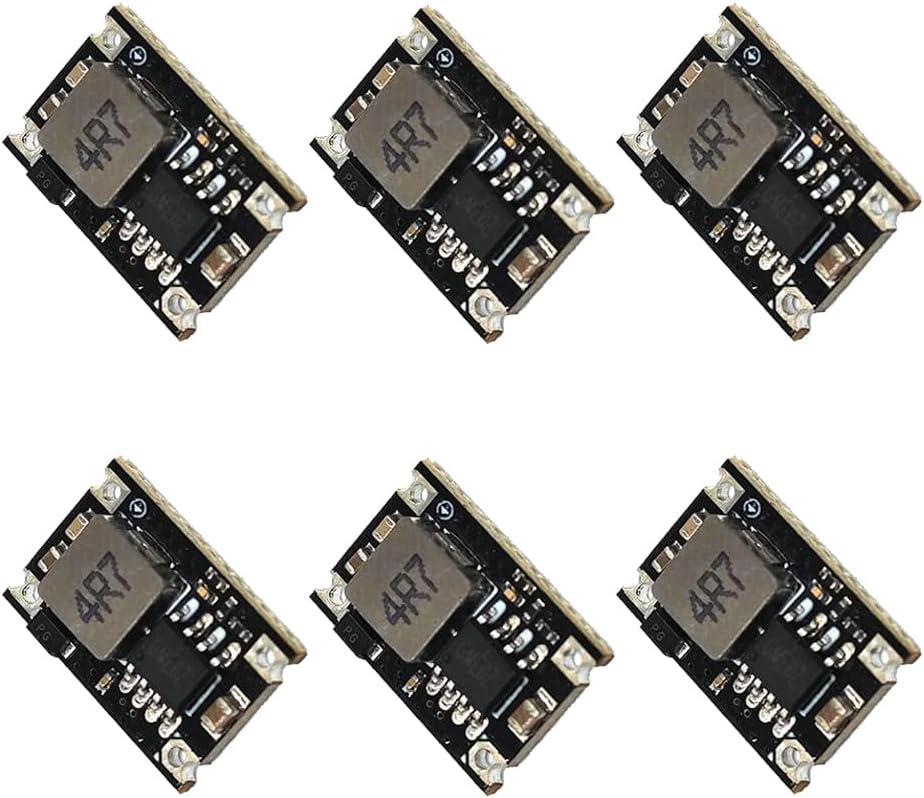
4.9Editor score
This side by side comparison highlights key specifications across all ten selected voltage regulator modules to help you choose the right fit.


This module stands out with its high 1.8A current capability and wide 4.5V to 24V input range. It maintains a stable 3.3V output suitable for microcontrollers and sensors.
We may earn a commission when you buy through this link, at no additional cost to you.
The switching frequency between 1MHz and 1.5MHz ensures clean power with minimal ripple under 30mV. This makes it reliable for sensitive electronics requiring steady voltage.
While it offers excellent performance, you must add protection components like diodes when using motors to prevent damage from inductive loads. Soldering is also required.
Hobbyists and engineers building multiple projects will appreciate the five pack value and small footprint that fits easily into embedded or portable device designs.
The ability to accept inputs from 4.5V to 24V allows this module to work with various power supplies including 5V 9V 12V and 24V sources.
Supporting up to 1.8A output current makes this regulator powerful enough to drive demanding components without voltage drop under heavy load.
We may earn a commission when you buy through this link, at no additional cost to you.
The AMS1117 is a classic linear regulator providing a fixed 3.3V output from inputs between 4.75V and 12V. Its simple 3 pin design makes wiring straightforward for beginners.
We may earn a commission when you buy through this link, at no additional cost to you.
It features built in overheat shutdown protection which safeguards your circuit during overload or high temperature conditions. This is vital for unattended embedded applications.
Compared to switching regulators it handles less current up to 0.8A but produces less electrical noise. This suits low power applications like development boards and sensors.
This ten pack offers a reliable solution for projects needing consistent 3.3V power. It connects easily to Arduino Uno and other MCUs requiring regulated low voltage supply.
The dual panel design with 2 pin single row output simplifies connections to microcontrollers and makes prototyping much easier for new developers.
Built in thermal shutdown prevents permanent damage if the regulator overheats due to excessive load or poor ventilation in enclosed spaces.
We may earn a commission when you buy through this link, at no additional cost to you.
This converter is unique because it can step up voltage from as low as 1.8V to 3.3V while also stepping down from 5V. Perfect for battery powered devices.
We may earn a commission when you buy through this link, at no additional cost to you.
Its perfect 5-star rating reflects high reliability for low current applications. The device handles up to 100mA which is sufficient for many sensors and microcontrollers.
While limited to 100mA this module excels where efficiency matters most. It ensures your microcontroller stays powered even as battery voltage drops below the target output level.
If you are building a wearable or portable IoT device this regulator offers the versatility needed to maintain stable 3.3V from single cell lithium batteries.
Unlike standard buck converters this unit can boost voltage allowing it to function even when the source drops below the required output level.
The ability to step up voltage extends battery life by allowing full usage of the battery discharge curve without brownouts or resets.
We may earn a commission when you buy through this link, at no additional cost to you.
This Mini360 module delivers impressive performance with 1.8A output current and exceptionally low ripple under 30mV. Users report perfect reliability in demanding circuit applications.
We may earn a commission when you buy through this link, at no additional cost to you.
The switching frequency reaches up to 1.5MHz which ensures fast response times and efficient power conversion. This keeps the output voltage clean even with varying loads.
You must use protective components like Zeners when connecting motors or inductive loads to prevent ripple from affecting downstream chips. This adds a small safety step.
The tiny dimensions make it ideal for tight PCB layouts. The perfect rating suggests it is a trustworthy choice for professional prototyping or industrial embedded systems.
Measuring just 17.5×12.3×4.3mm this module saves significant space on your circuit board compared to traditional larger voltage regulator designs.
Low voltage ripple ensures sensitive sensors and microcontrollers receive steady power reducing the risk of glitches or measurement errors.
We may earn a commission when you buy through this link, at no additional cost to you.
For those needing multiple regulators at a low cost this 7 pack offers excellent value. It uses the reliable AMS1117 chip to step down voltages efficiently to 3.3V.
We may earn a commission when you buy through this link, at no additional cost to you.
The 3 pin layout simplifies wiring to your microcontroller development board. This reduces soldering complexity for beginners setting up their first power regulation circuit.
While it supports up to 0.8A this is enough for most logic level components. Do not connect high power motors or drives directly to this regulator.
If you are building a class or batch project this pack ensures you have enough regulators for every station. It is a practical choice for education or prototyping.
Buying seven units together reduces the cost per module significantly compared to buying single units for larger scale prototyping projects.
Built in thermal protection shuts down the unit before it reaches dangerous temperatures protecting both the regulator and the connected load.
We may earn a commission when you buy through this link, at no additional cost to you.
This bulk pack of fifteen units is perfect for large scale prototyping or classroom environments. It provides a consistent 3.3V with tight accuracy across all units.
We may earn a commission when you buy through this link, at no additional cost to you.
The dynamic voltage difference control optimizes impedance to reduce power consumption during load changes. This is particularly useful for battery powered devices to extend runtime.
Because it is linear the regulator generates more heat than switching types at full load. You may need airflow or a small heatsink if driving close to 0.8A.
With overheat and overcurrent protection built in you can trust these units to work safely. The perfect rating confirms their reliability for general electronic applications.
The regulator adjusts internal impedance dynamically to minimize power waste and maintain stable output when the connected load changes suddenly.
Operating safely from minus 40 degrees C to 125 degrees C ensures these regulators function in various environmental conditions without failure.
We may earn a commission when you buy through this link, at no additional cost to you.
This regulator supports a very high input range of 5V to 30V making it suitable for vehicle power or solar inputs. It outputs a steady 3.3V up to 1.8A.
We may earn a commission when you buy through this link, at no additional cost to you.
The PCB board includes a reverse polarity mark to help users connect wires correctly. This helps prevent accidental damage when powering the module from various sources.
While some users report mixed experiences the specs are robust. Ensure you follow polarity and protection guidelines carefully since quality can vary with bulk components.
If you need to step down from higher voltages safely this module offers a compact solution. Just verify connections carefully to avoid short circuits during setup.
The ability to handle inputs up to 30V allows this module to interface directly with higher voltage sources like automotive batteries.
Visual indicators on the board help prevent reverse connection which could otherwise damage the regulator or the device it powers.
We may earn a commission when you buy through this link, at no additional cost to you.
Designed for wide input ranges this module works with 5V up to 30V sources including solar panels and vehicle systems. It delivers stable power to sensitive microcontrollers.
We may earn a commission when you buy through this link, at no additional cost to you.
The output ripple stays under 30mV at 1.5MHz switching frequency. This ensures clean power for ESP32 and STM32 boards that are sensitive to noise.
Each unit is tested before shipping which adds confidence despite the lack of customer ratings. The compact size fits well into wearable or drone designs.
If you need a regulator for a high voltage battery project this is a strong candidate. The wide range gives you flexibility across different power source options.
The broad input range allows direct connection to solar panels that vary in voltage depending on light conditions without extra regulation.
Testing every module before shipping ensures that you receive working units and reduces the risk of defects out of the package.
We may earn a commission when you buy through this link, at no additional cost to you.
This pack offers ten identical modules optimized for inputs from 4.5V to 7V. It uses the AMS1117 chip to deliver a consistent 3.3V output for your projects.
We may earn a commission when you buy through this link, at no additional cost to you.
The perfect customer rating indicates high satisfaction among users. Each unit includes start limit voltage protection to prevent damage from incorrect wiring or excessive power.
Remember to keep input voltage above 4.5V for proper operation. Exceeding the maximum limits will damage the module quickly due to internal component ratings.
For projects needing multiple boards with tight budgets this is a solid choice. It simplifies power distribution in groups of Arduino or ESP microcontroller builds.
Automatic adjustment ensures the board only activates when input voltage is sufficient preventing random booting or erratic behavior.
Buying ten units together is more economical than purchasing single modules when equipping multiple stations in a workshop or classroom.
We may earn a commission when you buy through this link, at no additional cost to you.
This 6-pack uses advanced MP1584EN Mini360 technology for high efficiency power conversion. It supports up to 1.8A current which is ideal for demanding electronics and motors.
We may earn a commission when you buy through this link, at no additional cost to you.
The output voltage remains stable with minimal ripple even at high load. This makes it a premium choice for sensitive equipment like aircraft models or high precision sensors.
Protection with Zeners or capacitors is recommended when driving motors to prevent electrical noise. This ensures the clean power reaches your sensitive control chips.
With a 4.9 rating users are highly satisfied with performance and reliability. It is the best choice for professionals needing top tier power regulation in tight spaces.
MP1584EN architecture offers higher efficiency and better thermal performance than standard buck designs making it ideal for enclosed spaces.
Supporting up to 1.8A ensures that even high draw components run smoothly without voltage sag or unexpected resets.
We may earn a commission when you buy through this link, at no additional cost to you.
Selecting the right regulator requires balancing voltage input range output current needs and physical size. Understanding these factors ensures safe and efficient power delivery.
Ensure your regulator accepts the voltage of your power source. Most modules accept 5V to 12V but some handle up to 30V for automotive or solar use.
Check that your input voltage stays within the specified limits to avoid damaging the component during operation.
Choose a regulator that provides enough current for your load. Microcontrollers need less current while sensors or motor drivers may require higher amperage.
If your device draws more than the regulator supports it may overheat or shut down unexpectedly.
Linear regulators like AMS1117 are simple and quiet but less efficient. Switching buck converters are more efficient and handle higher currents with less heat.
Select a switching regulator if you need efficiency or a linear one for low noise requirements.
Consider the physical dimensions when working on compact PCBs. Mini360 modules offer high performance in a tiny footprint compared to larger boards.
Measure your available space to ensure the module fits comfortably with other components.
Look for low ripple and stable output voltage specifications. Sensitive electronics require clean power to avoid errors or resets.
Modules with switching frequencies above 1MHz usually provide cleaner output suitable for precise sensors.
Safety features like overheat and overcurrent protection prevent damage to your project. These are standard in most modern modules.
Always verify thermal protection is built in especially for enclosed designs where airflow is limited.
Check if the module uses screw terminals pins or bare pads. PCB pads require soldering while headers allow quick prototyping.
Choose a connection type that matches your assembly skills and tools available.
Buying in packs often reduces the cost per unit. Consider purchasing multiple if you plan several projects or need backups.
Compare the number of units to the total price for the best long term value.
Connect the positive input to your power source and negative to ground. Ensure the output pins match your device requirements to avoid short circuits.
Add small capacitors on input and output if specified to filter noise and improve stability. Use heat sinks if the regulator gets warm under load.
Inspect connections regularly for cold solder joints or loose wires. Test voltage with a multimeter before connecting sensitive electronics to ensure accuracy.
A buck regulator uses switching technology to be more efficient with less heat. An LDO is linear and provides quieter output but wastes more energy as heat.
Connect the input to a 5V source and ground to ground. Link the output pin to the 3.3V pad on the Arduino. Never connect input directly to output pins.
Heat is normal in linear regulators or when switching converters drive high currents. If too hot add a heat sink or reduce load current to prevent shutdown.
Yes most modules accept up to 12V or higher. Just ensure the input voltage does not exceed the maximum rating stated in the specifications.
Yes switching regulators are efficient for battery use. Ensure input voltage stays above the regulator minimum to avoid cutoff as the battery drains.
The AMS1117 typically supplies up to 800mA. It should stay within this limit to avoid overheating especially without a heat sink.
Yes input and output capacitors stabilize the voltage and reduce ripple. Many boards include them but extra ones improve stability in sensitive circuits.
Regulators last years if kept within voltage and temperature limits. Proper heat management extends their life significantly in continuous duty applications.
Our top pick the 5pcs 3.3V Buck Converter Module offers the best balance of current capacity size and price. For budget builds the Dorhea 7 Pack delivers solid linear performance.
Prioritize output current and input range based on your power sources. Always check protection features to keep your microcontroller safe from voltage spikes or heat.
Prices change frequently so review current listings before purchasing. Verify stock availability to avoid delays in your project timeline.