
Phrozen Sonic Mini 8K S
4.4Editor score
22 micron XY resolution
7.1 inch mono LCD
Compact tabletop design
Finding the right 3D printer for Dnd miniatures requires balancing detail, speed, and cost. High resolution ensures intricate faces and armor, while fast speeds allow for quick campaign prep. Beginners need user-friendly interfaces, and pros demand reliability for consistent results across multiple models.
We evaluated ten top-rated machines based on build quality, print resolution, and community support. Our analysis includes FDM and resin options, comparing speed, ease of calibration, and material compatibility. Each product was assessed for its ability to handle small details typical of tabletop gaming figures.
Every pick highlights key strengths and trade-offs to match your specific needs. Whether you prioritize multi-color printing or maximum detail, this list covers the spectrum. Prices and availability change frequently, so verify current deals before purchasing to ensure you get the best value for your setup.
4.4Editor score

4.5Editor score

4.5Editor score
As an Amazon Associate we earn from qualifying purchases.
This table offers a side-by-side comparison of all ten products. It highlights key specifications like resolution, speed, and build volume to help you quickly identify the model that fits your printing needs for tabletop gaming miniatures.






The Bambu Lab A1 stands out as a top choice for Dnd miniatures due to its high speed and precision. With an impressive acceleration of 10000 mm/s², it delivers blazing-fast prints while maintaining exceptional accuracy. This makes it ideal for hobbyists who want quick turnaround times without sacrificing detail on small figures.
We may earn a commission when you buy through this link, at no additional cost to you.
Its full-auto calibration system eliminates manual hassles, ensuring optimal performance for every print. The active flow rate compensation further enhances consistency, producing smooth layers critical for detailed miniatures. The user-friendly interface and simplified touchscreen make it accessible for beginners while still offering advanced features.
While the AMS lite is required for multi-color printing, it is a flexible addition if you plan to add color later. The 1-Clip quick swap nozzle allows convenient maintenance, and the active motor noise canceling ensures a quiet environment. This balance of speed, ease, and quality makes it a strong contender.
Anyone looking for a reliable FDM printer for miniatures should consider the A1. It bridges the gap between beginner ease and professional performance. With its robust features and high ratings, it remains a top recommendation for those seeking efficiency and precision in their tabletop gaming prep.
The A1 maintains exceptional accuracy and detail in your prints, crucial for small Dnd figures.
Full-auto calibration ensures precise Z-offset and bed-leveling, reducing failed prints significantly.
We may earn a commission when you buy through this link, at no additional cost to you.
The Bambu Lab P2S Combo offers high-speed precision with speeds up to 600 mm/s, maintaining exceptional accuracy. It comes with the AMS 2 Pro for seamless multi-color printing, which is great for colorful miniatures. The PMSM Servo Extruder ensures every layer stays sharp and smooth.
We may earn a commission when you buy through this link, at no additional cost to you.
Its adaptive airflow system balances cooling and heat retention, ideal for overhangs and engineering materials. The AMS 2 Pro includes built-in filament drying, keeping spools ready for flawless prints. Setup is quick, taking just 15 minutes, making it effortless for beginners and pros alike.
While the price is higher, the productivity gains and multi-color capability justify it for serious hobbyists. The AI failure detection and quick-swap nozzles add convenience. The only drawback is needing the combo for multi-color, but this is standard for such advanced features.
This printer is perfect for those wanting speed and versatility in Dnd miniature production. It supports over one million models on MakerWorld and integrates smoothly with Bambu Studio. Its robust features make it a top-tier choice for complex, colorful gaming pieces.
The AMS 2 Pro enables seamless multi-color and multi-material printing with filament drying included.
Adaptive Airflow System balances cooling and heat, keeping overhangs crisp or maintaining 50°C chambers.
We may earn a commission when you buy through this link, at no additional cost to you.
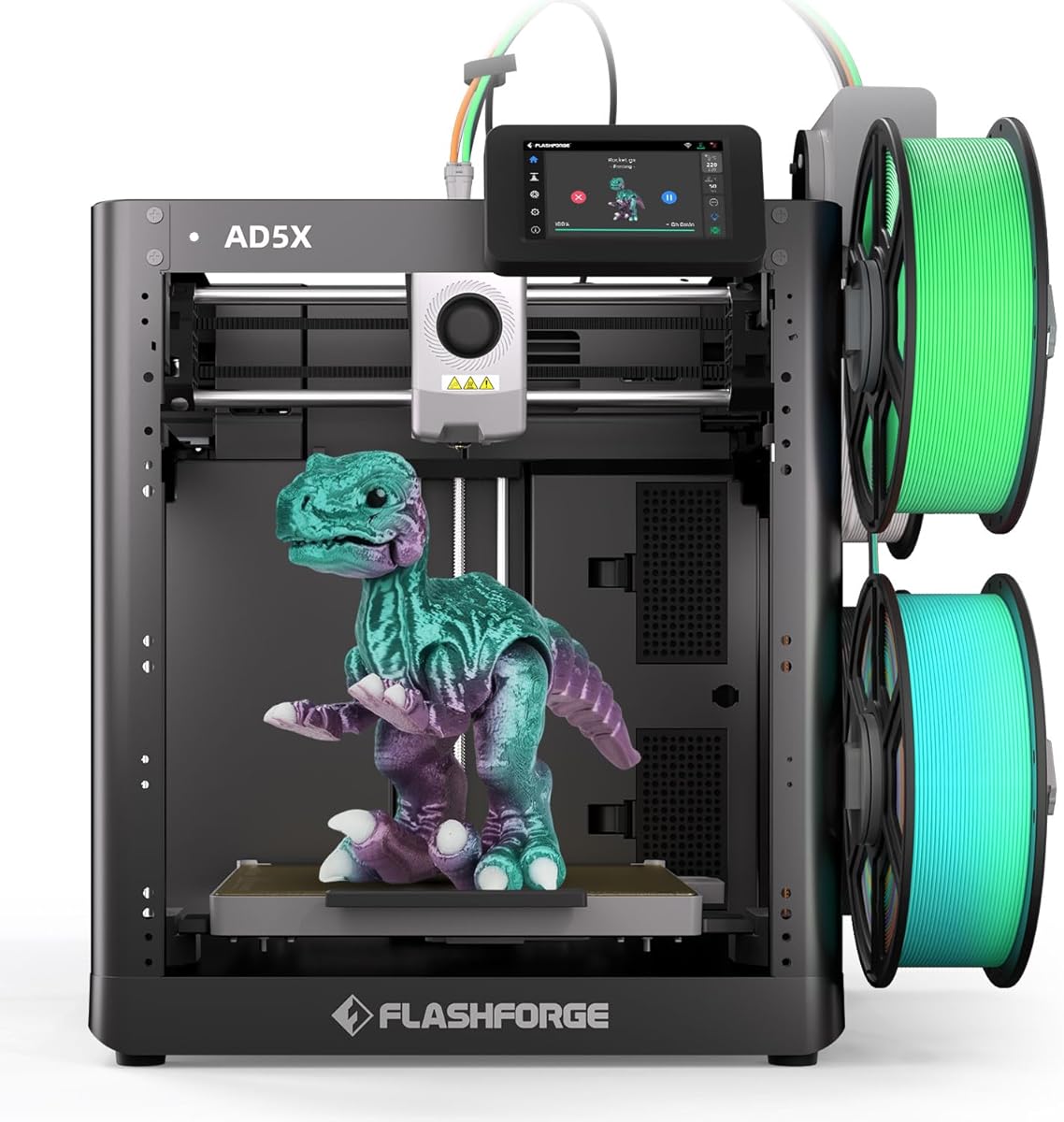
The FLASHFORGE AD5X features an innovative multi-color printing capability, allowing up to four colors simultaneously. With a maximum speed of 600mm/s and acceleration of 20000mm/s, it delivers rapid precise printing. This enhances creativity for artists and hobbyists wanting vibrant models.
We may earn a commission when you buy through this link, at no additional cost to you.
Its Intelligent Filament System ensures seamless management, automatically detecting and refilling filament to minimize downtime. The all-metal Core XY structure enhances stability, reducing vibrations for smoother prints. It supports flexible TPU printing, expanding versatility for various project requirements.
While the rating is slightly lower, the features offer significant value for those needing multi-color at speed. The large printing size handles diverse tasks well. The main trade-off is potential complexity with the IFS system, but it boosts productivity once set up.
This printer is ideal for users wanting colorful Dnd miniatures without multiple passes. It accommodates a wide range of materials and offers robust reliability. For those seeking high-speed multi-color options, the AD5X is a strong competitor in its class.
Advanced multi-color technology allows users to create vibrant and intricate designs with four colors simultaneously.
The Intelligent Filament System detects and refills filament automatically, minimizing interruptions during projects.
We may earn a commission when you buy through this link, at no additional cost to you.
The Phrozen Sonic Mini 8K S is ideal for beginners wanting precision in Dnd miniatures. With an XY resolution of 22 microns and an 8K mono LCD, every nuance of your work comes to life. It offers sufficient space for creativity with a printing volume of 16.5 x 7.2 x 17 cm.
We may earn a commission when you buy through this link, at no additional cost to you.
It supports open-source software and slicers like Lychee and Chitubox, giving freedom to realize ideas without restrictions. The sophisticated Z-axis calibration ensures even and accurate printing, taking your craft to a new level. Its attractive value makes it a top budget pick.
While resin printing requires post-processing, the detail is unmatched for small figures. The compact design fits easily on a tabletop. The main limitation is the build volume, but it is perfect for standard miniature sizes. This makes it highly suitable for hobbyists on a budget.
Anyone prioritizing detail and affordability should consider this resin printer. It balances value with high resolution, making it accessible for new users. With its wide compatibility and precision, it remains a leading choice for detailed tabletop gaming miniatures.
Immerse yourself in a world of detail with 22 micron XY resolution where every nuance comes to life.
Support for open source software and slicers like Lychee ensures you can realize ideas without restrictions.
We may earn a commission when you buy through this link, at no additional cost to you.
The Bambu Lab P1S offers vibrant multi-color printing capabilities, perfect for showcasing creativity. It achieves speeds up to 500mm/s with 20000 mm/s² acceleration, letting you focus on creating instead of waiting. Its fully enclosed body improves performance for advanced filaments.
We may earn a commission when you buy through this link, at no additional cost to you.
Automatic bed leveling ensures high-quality successful prints effortlessly, and setup takes just 15 minutes. It supports a wide range of filaments including PLA, PETG, TPU, and ASA. The user-friendly design ensures a hassle-free assembly experience for all skill levels.
While multi-color requires connecting the AMS, the versatility is high. The enclosed design helps with temperature control for robust materials. The only limitation is avoiding carbon or glass fiber reinforced polymers. This makes it ideal for standard Dnd miniature needs.
This printer is great for hobbyists wanting speed and multi-color options. It reduces wait time and offers a smooth workflow. With its reliability and ease of use, it remains a top choice for efficient and colorful gaming piece production.
Lightning-fast printing speed of 500mm/s lets you focus on creating, not waiting for masterpieces.
Fully enclosed body improves print performance for advanced filaments while maintaining easy setup.
We may earn a commission when you buy through this link, at no additional cost to you.
The FLASHFORGE Adventurer 5M Pro reaches speeds up to 600mm/s with an all-metal CoreXY frame. Integrated vibration compensation eliminates ghosting, ensuring smooth high-precision surface finishes. It features a 3-second quick-swap nozzle system for effortless changes across multiple sizes.
We may earn a commission when you buy through this link, at no additional cost to you.
Its dual filtration system and fully enclosed chamber ensure a clean printing environment. Powered by low-noise motion control, it operates quietly under 50dB. The built-in camera allows real-time monitoring, making it suitable for home or classroom use.
While the rating is moderate, its high speed and ease of use are strong. The auto leveling ensures precise calibration every time. The main trade-off is a mid-range price, but the features offer good value for reliable prints.
This printer is ideal for those needing speed and a clean setup. It supports engineering materials and offers smart control options. For Dnd miniatures requiring smooth finishes, it delivers consistent results with minimal fuss.
Integrated vibration compensation algorithms eliminate ghosting and ringing for smooth high-precision finishes.
Built-in camera for real-time monitoring allows you to track progress and adjust settings easily.
We may earn a commission when you buy through this link, at no additional cost to you.
The FLASHFORGE AD5X brings creative vision to life with vibrant multicolored prints in 4 colors. With speeds up to 600mm/s and acceleration up to 20000mm/s², it delivers ultrafast printing while maintaining exceptional accuracy. Its Intelligent Filament System allows printing with multiple materials simultaneously.
We may earn a commission when you buy through this link, at no additional cost to you.
Full auto leveling sensor measures multiple points to ensure consistent distance between nozzle and bed. The CoreXY motion structure offers high rigidity, reducing errors caused by vibration. Vibration suppression algorithms minimize layer alignment shifts for better overall print quality.
While the rating is moderate, the productivity boost is significant for multi-color needs. The compact design saves space and arranges spools side by side. The main trade-off is the IFS complexity, but it is ideal for flexible placement.
This printer is perfect for users wanting to save time on multi-color projects. It supports a wide selection of materials and offers reliable performance. For tabletop gaming miniatures, it delivers vibrant results efficiently.
Intelligent Filament System allows you to print in multiple colors and materials simultaneously for productivity.
With its lightweight modular design and IFS, four spools offer significant space savings.
We may earn a commission when you buy through this link, at no additional cost to you.
The Bambu Lab A1 Mini offers unparalleled speed and precision with acceleration of 10000 mm/s². It delivers blazing-fast printing while maintaining exceptional accuracy and detail in your prints. The combo includes AMS lite for multi-color printing, making vibrant prints accessible and reliable.
We may earn a commission when you buy through this link, at no additional cost to you.
Full-auto calibration takes care of all processes automatically, ensuring optimal performance. Active flow rate compensation ensures consistently smooth prints. Setup takes just 20 minutes thanks to its pre-assembled design. It operates quietly with active motor noise cancellation at ≤48 dB.
While the build volume is smaller than the full A1, it is ideal for miniatures. The included AMS lite reduces extra costs. The main limitation is the size, but it is compact and efficient. It is a great option for small batches.
This printer is suitable for beginners needing speed and multi-color capability. Its reliable performance and quiet operation make it a solid choice. For tabletop gaming prep, it offers a seamless printing experience with detailed results.
Enjoy a quiet printing environment with active motor noise cancellation, ensuring ≤48 dB noise levels.
Setup for your first print takes just 20 minutes thanks to its pre-assembled design.
We may earn a commission when you buy through this link, at no additional cost to you.
The Snapmaker U1 features four independent toolheads enabling true multi-color printing without manual swaps. Its automatic tool changer reduces tool change time to just 5 seconds. This minimizes wasted material during changes, reducing filament waste by up to 5X.
We may earn a commission when you buy through this link, at no additional cost to you.
It combines rigid and flexible materials with water-soluble supports in a single print. Automatic toolhead offset calibration ensures smooth and dimensionally accurate print quality. It supports a wide range of materials including PLA, TPU, ABS, and more.
While the price is higher, the productivity gains are significant. The large build volume of 270 X 270 X 270 mm accommodates complex models. The main trade-off is complexity, but it is suitable for professionals and hobbyists.
This printer is perfect for users needing high-end multi-material capabilities. It simplifies steps from setup to finished print. For Dnd miniatures with complex features, it delivers reliable results with less waste.
Automatic tool changer reduces tool change time to just 5 seconds without manual filament swaps or purging.
Combines rigid and flexible materials in a single print without manual intervention for design freedom.
We may earn a commission when you buy through this link, at no additional cost to you.
The Anycubic Kobra X comes born with 4 colors built-in and can expand up to 19 breathtaking colors. It reduces filament waste by optimizing travel paths and supports mixed printing of rigid and flexible filaments. It features a hardened steel nozzle for precision.
We may earn a commission when you buy through this link, at no additional cost to you.
LeviQ 3.0 ensures 100% bed flatness for flawless first layers. Smart AI monitoring includes spaghetti detection and foreign object detection. The vast library of models offers perfect options for home use or schools. Setup is ready to print 15 mins after pickup.
While filament is not included, the features offer great versatility. The large print size of 260mm allows diverse projects. The main trade-off is additional cost for expansion. It is an innovative 3D printer for colorful Dnd needs.
This printer is ideal for users wanting expandable color options. It offers easy setup and remote control. For colorful miniatures, it delivers a smooth workflow and reliable quality.
Turn every idea into reality with 19 colors using 4 ACE 2 Pro units.
Vast library of 10000 models to choose from for convenient operation and remote control.
We may earn a commission when you buy through this link, at no additional cost to you.
Selecting the right printer requires understanding key factors like resolution, speed, and material compatibility. This guide outlines essential considerations to help you pick a machine that fits your specific needs and budget.
Resolution is critical for miniatures as fine details define faces and armor. Resin printers often offer higher XY resolution for intricate models. FDM printers need small nozzles to achieve similar detail. Check manufacturer specs for micron levels and ensure compatibility with your desired detail level.
Prioritize printers with 22 micron or better for high-fidelity miniatures. Ensure the machine supports fine layers for smooth surfaces.
Fast printing reduces turnaround time for multiple miniatures needed for campaigns. Look for printers with high acceleration and mm/s ratings. Ensure speed does not sacrifice quality for small parts. Many modern printers balance both effectively with advanced calibration.
Choose printers with acceleration above 10000 mm/s² to speed up production without losing detail on small models.
Build volume determines how many miniatures you can print at once. Standard tabletop sizes usually suffice for individual figures. If batch printing is a priority, consider larger beds. Ensure the size matches your storage space on your workbench.
Select a build volume that aligns with your batch needs. Small units fit easily, while larger ones allow multiple pieces in one go.
User-friendly interfaces simplify setup and ongoing operation. Auto-calibration features save time and reduce failed prints. Touchscreens and mobile apps help manage jobs remotely. For beginners, look for models with minimal assembly required.
Pick printers with automatic leveling and simple touch interfaces. These reduce frustration and ensure a smooth workflow for hobbyists.
Miniatures often require specific materials for durability and finish. PLA is standard for ease, while PETG offers flexibility. Resin printers provide different finish qualities for painting. Ensure the printer supports the filaments or resins you plan to use.
Verify supported materials like PLA, TPU, or resin types. This ensures the printer can handle both rigid and flexible needs for your projects.
Multi-color options allow vibrant miniatures without painting. Systems like AMS or IFS handle multiple spools automatically. This feature can be more expensive but saves time on manual changes. Decide if color variety justifies the added cost for your style.
Consider printers with built-in multi-color systems if you need varied palettes. Otherwise, standard single-color printers remain efficient for detailed monochrome models.
Calibration impacts print success rates significantly. Automatic systems reduce manual tweaking of bed levels. Quick-swap nozzles simplify maintenance during different projects. Regular upkeep ensures consistent quality and longevity for your machine.
Choose printers with auto-calibration and easy maintenance features. These save time and prevent errors during your printing sessions.
Budget ranges widely from entry-level to premium machines. Consider total cost including accessories like AMS or resin tanks. High-performance models often save money in the long run. Balance features against your specific usage frequency.
Evaluate overall value beyond initial price. Investing in quality can reduce failures and improve results over time.
Always start by leveling the print bed manually or using auto-calibration features. Ensure the bed is clean to prevent adhesion issues. Use a scraper to remove supports carefully and protect the nozzle. Keep filament dry to avoid moisture ruining your prints.
For resin printers, wear gloves and masks to handle uncured resin safely. Wash models with IPA and cure them under UV light. Regularly clean the resin tank and FEP film to maintain clarity. Replace screens or tanks when scratches appear to ensure quality.
Keep firmware updated for better performance and bug fixes. Monitor prints during first layers to catch errors early. Store spools in airtight containers to preserve material quality. Regular maintenance like cleaning nozzles extends the printer's lifespan.
Resin printers typically offer higher XY resolution like 22 microns for intricate details. However, high-end FDM models with small nozzles can also achieve excellent results. Consider your preferred workflow and safety needs when choosing.
Use printers with automatic tool changers like the Snapmaker U1 to minimize purging. Efficient systems optimize travel paths and reduce material waste during color changes. This saves costs and improves print quality for multi-colored models.
Many printers like Bambu Lab require an AMS for multi-color functionality. Some models like Kobra X come with native color options built-in. Check product specs to understand what accessories are included or separate.
A 0.2mm nozzle offers high detail for small features on miniatures. However, it may slow down printing compared to 0.4mm. Balance detail requirements with speed needs for your specific project needs.
Automatic calibration usually takes a few minutes for most modern printers. Manual calibration can take longer but ensures precision for your specific bed. Look for models with auto-leveling to save setup time.
Most FDM printers operate safely indoors with proper ventilation. Some require enclosures and filtration systems to manage emissions. Check for low-noise features and safe materials like PLA to ensure a healthy workspace.
3D printed miniatures can be primed and painted like traditional ones. Resin prints provide smoother surfaces but may need cleaning first. FDM prints may require sanding to hide layer lines before painting.
Regular cleaning of the build plate, nozzle, and firmware updates are essential. Lubricate moving parts and check belts for tension. Replace worn parts like nozzles or tanks when necessary to maintain performance.
The top picks include the Bambu Lab P1S for speed, the Phrozen Sonic Mini 8K S for detail, and the Snapmaker U1 for versatility. Each offers unique strengths that cater to different preferences in gaming prep and hobbyist workflows.
Prioritize resolution for intricate miniatures and speed if you produce in bulk. Multi-color options add creativity but may come with additional costs or complexity. Match your choice to your specific needs to get the most value from your investment.
Always verify current prices and availability before purchasing as deals change frequently. Check for included accessories and warranty terms to ensure a smooth experience. With the right printer, you can bring your tabletop characters to life efficiently.