
SONICAKE EQ Pedal, 10-Band Equalizer Guitar Bass Effects Pedal
4.4Editor score
Ten band precision
True bypass circuit
Adjustable gain range
This guide compares the top ten Bass Equalizer Pedal options for tone shaping, frequency control, and durability to help musicians choose the right gear for
Finding the right bass equalizer pedal can transform your sound significantly. Whether you need precise frequency control or a simple boost for live shows, these pedals offer essential tools for shaping your tone. A good unit provides reliable performance without coloring your natural sound unnecessarily.
We evaluated ten top-rated models based on frequency range, build quality, and user feedback. Our comparison focuses on how each pedal handles different instruments and genres. We looked at slider precision, bypass types, and overall durability to ensure you get a pedal that lasts through many gigs and practice sessions.
Each pick in this list highlights unique strengths and potential drawbacks. You will find options ranging from budget-friendly units to premium professional models. Keep in mind that product availability and pricing can change frequently, so verify current details before making your final purchase decision today.
4.4Editor score

4.6Editor score

4.6Editor score
This side-by-side comparison helps you quickly identify which pedal fits your specific needs. We highlight key specs like band count, boost cut range, and power requirements for every model listed below.




The BOSS GEB-7 stands out as a top choice for bassists needing precise tone shaping. With a strong rating and proven track record, it delivers consistent performance across various genres. This pedal offers full range response that works well even with extended range instruments.
We may earn a commission when you buy through this link, at no additional cost to you.
Its seven bands provide enough detail to cut or boost specific frequencies without muddying your sound. The level control knob allows you to use it as a boost pedal for solos. This versatility makes it ideal for both studio recording and live stage performances.
One trade-off is the need for an external power supply, which adds to the overall setup cost. However, the durability and sonic clarity justify this extra requirement for most professionals. The metal housing ensures it can withstand the rigors of touring.
If you prioritize tone accuracy and reliability, this pedal is a solid investment. It is particularly recommended for players who need detailed control over their instrument's output. Overall, it remains a benchmark for graphic equalizers in the bass category.
The seven bands allow you to target specific problem frequencies effectively. This helps in clearing up muddy low ends or adding clarity to high mids.
The dedicated level knob lets you set a clean boost without engaging the EQ sliders. This feature is useful for jumping out in mix during solos.
We may earn a commission when you buy through this link, at no additional cost to you.
The SONICAKE EQ Pedal offers ten bands of equalization at a very accessible price point. It is designed to shape tone precisely using hands-on control for every band. This unit is great for players who need detailed tone shaping without breaking the bank.
We may earn a commission when you buy through this link, at no additional cost to you.
Its adjustable gain range of plus or minus fifteen dB gives significant flexibility for boosting or cutting frequencies. The true bypass circuit ensures your original tone remains clean when the pedal is off. This transparency is crucial for maintaining your instrument's natural character.
While the sliders are functional, some users find the plastic feel less robust than metal alternatives. Additionally, like many pedals, the power adapter is not included in the box. These factors are minor considering the overall value and performance provided.
This pedal is perfect for beginners or those on a tight budget who still want pro features. It fits easily into most pedalboards due to its compact size. We recommend it for anyone needing a cost-effective ten-band solution.
Ten bands allow for very specific adjustments across the audio spectrum. This helps in dialing in a perfect tone for different recording environments.
Its small footprint makes it easy to fit into crowded pedalboards. This is beneficial for players with limited space for effects units.
We may earn a commission when you buy through this link, at no additional cost to you.
The Donner EQ Pedal is a well-built unit offering ten bands of equalization for guitar and bass. It features a durable aluminum alloy design that ensures long-lasting performance on the road. The true bypass feature keeps your signal transparent when the pedal is disengaged.
We may earn a commission when you buy through this link, at no additional cost to you.
You get a fifteen dB boost cut range on each slider, allowing for significant tonal shaping. The output level slider helps you match volume levels when engaging the effect. This makes it useful for both tone correction and creating solo boosts.
One downside is that it does not come with a power adapter, which is a common omission in this price range. Also, the brand is newer compared to legacy options like BOSS. However, the build quality is surprisingly robust for the cost.
This pedal is a great choice for players looking for a reliable ten-band EQ without a high price tag. It handles signal transmission without noise or loss of strength. We suggest it for home studios or small venue gigs.
The aluminum-alloy design resists damage from drops and heavy use. This durability is essential for touring musicians who need reliable gear.
True bypass ensures that your tone remains untouched when the pedal is off. This prevents unwanted noise or signal loss during bypass.
We may earn a commission when you buy through this link, at no additional cost to you.
The Rowin Bass Equalize Pedal is one of the smallest bass EQ options available. It features a five-band graphic EQ with a master volume knob for overall level control. This compact size saves valuable space on your pedalboard setup.
We may earn a commission when you buy through this link, at no additional cost to you.
It offers a wide adjustable range of plus or minus eighteen dB per band. This allows for significant tonal changes without needing complex settings. The true bypass circuit ensures your tone stays clean when the pedal is off.
While five bands are fewer than ten, they cover the essential frequencies for bass effectively. The build is sturdy with a classic aluminum alloy design. However, you will need to purchase a power adapter separately as it is not included.
This pedal is ideal for players with limited space who still want precise control. It is well built for high-quality performance despite its small size. We recommend it for minimalists or those needing a simple boost tool.
The small size helps keep your pedalboard uncluttered and portable. This is beneficial for traveling musicians with limited gear space.
Eighteen dB of boost or cut provides deep control over your tone. This helps in fixing room acoustics or matching specific bass frequencies.
We may earn a commission when you buy through this link, at no additional cost to you.
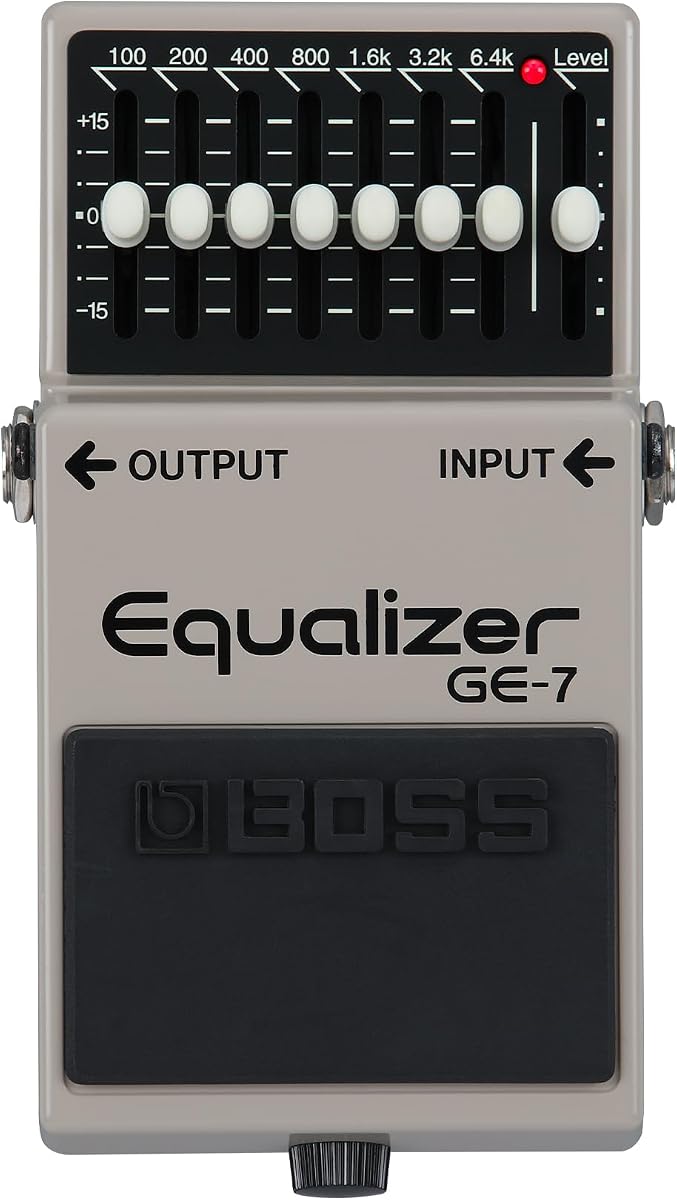
The BOSS GE-7 is a compact graphic equalizer known for its high user satisfaction. It features seven bands of adjustable sliders tailored for optimized frequencies. This pedal is often used by guitarists but can work for bass with careful setting.
We may earn a commission when you buy through this link, at no additional cost to you.
It includes a level slider for balancing overall volume or boosting sound. The maximum tonal flexibility of plus or minus fifteen dB per band allows detailed shaping. This pedal comes with a five-year warranty, reflecting its durability and build quality.
While optimized for guitar frequencies, it can still be used effectively for bass. You might need to tweak settings slightly to match low-end response perfectly. The high rating suggests users trust its performance in various setups and bands.
If you already own this pedal or need a reliable seven-band unit, it is a safe choice. The warranty offers peace of mind for long-term use. We suggest it for players prioritizing brand trust and consistency.
The specific frequency centers match typical guitar needs. For bass, this means focusing on clarity rather than deep sub-bass.
A five-year warranty shows confidence in the product's durability. This protects your investment against defects or manufacturing issues.
We may earn a commission when you buy through this link, at no additional cost to you.
The STRICH 10-Band EQ Pedal is designed for portability and versatile use. It features ten independent frequency bands with a master band for overall control. The aluminum alloy construction ensures it remains intact even after accidental drops.
We may earn a commission when you buy through this link, at no additional cost to you.
Each band offers a plus or minus twelve dB range with quick setting points. This makes it easy to set up tones quickly before a gig. The true bypass design delivers transparent tonal quality without unwanted noise or loss.
While the range is slightly less than fifteen or eighteen dB, it covers most needs. The sliders glide effortlessly for nuanced adjustments during your performance. The balanced weight distribution ensures smooth operation on any board.
This pedal is a good option for musicians who travel often and need reliable gear. It is compatible with various guitar and bass models effectively. We recommend it for players needing a compact ten-band solution.
Quick setting points allow for rapid tone adjustments on stage. This helps in adapting to different room acoustics instantly.
High-quality aluminum alloy offers excellent durability for touring. This material resists wear and keeps the pedal looking professional.
We may earn a commission when you buy through this link, at no additional cost to you.
This generic Bass EQ Pedal features dedicated frequency centers for precise tone shaping. It has a professional 5-band graphic EQ with an eighteen dB gain adjustment range. The metal shell provides a solid and sturdy construction for longevity.
We may earn a commission when you buy through this link, at no additional cost to you.
The compact design saves space on your pedalboard while delivering powerful control. True bypass switching preserves your natural bass signal and minimizes coloration. It is ideal for various genres including rock, metal, and funk performances.
Although it lacks a recognized brand name, the build quality seems robust. The absence of a power adapter means you need to buy one separately. However, the wide gain range allows for deep tonal adjustments when needed.
This unit is a great value for bassists looking for a simple five-band EQ. It works well for tightening low-end response or boosting mids. We suggest it for players needing a reliable backup pedal.
The rugged metal housing protects against impact and wear. This ensures the pedal lasts through many live performance tours.
Eighteen dB of adjustment gives significant control over tone. This helps in tailoring sound for specific recording or live needs.
We may earn a commission when you buy through this link, at no additional cost to you.
The Bass EQ Seeker offers a five-band graphic EQ with master level control. It provides plus or minus eighteen dB for each band to shape your tone. The true bypass design ensures a transparent tone without signal loss during transmission.
We may earn a commission when you buy through this link, at no additional cost to you.
Its full metal shell provides a solid and sturdy construction for durability. Indicator lights clearly show the working state of the pedal for easy use. The signal remains fully intact passing through with no buzzing or noise issues.
While it has a lower rating than other models, it remains functional for many users. The power adapter is not included, so you must purchase one separately. The frequency centers are standard for effective bass management.
This pedal is a solid choice for budget-conscious players needing basic EQ. It helps keep your signal clean when the pedal is disengaged. We recommend it for those who prioritize transparency over advanced features.
True bypass ensures the signal remains fully intact during transmission. This prevents loss of strength or unwanted electric noise.
Indicator lights help you see the pedal's status instantly. This is useful during dim stage lighting or quick adjustments.
We may earn a commission when you buy through this link, at no additional cost to you.
The MXR Ten Band EQ is a professional-grade unit designed for serious musicians. It allows you to cut or boost ten different frequencies by up to twelve dB. The LEDs provide high visibility even in direct sunlight during outdoor shows.
We may earn a commission when you buy through this link, at no additional cost to you.
It supports eighteen-volt operation for increased headroom and dynamic response. This ensures your tone remains clean even at high volumes. The dual outputs let you run two separate signal chains for versatile setups.
While it is more expensive than many options, the build quality justifies the cost. True bypass switching keeps your tone clean when the pedal is off. It is widely used in professional studios and touring rigs around the world.
If you need top-tier performance, this pedal is an excellent investment. The dual outputs allow for complex routing options. We recommend it for professionals who demand the highest audio quality.
Eighteen-volt operation ensures clean signal at high levels. This prevents distortion and maintains dynamic range effectively.
Two output jacks let you run separate chains for flexibility. This is great for stereo setups or complex live rigs.
We may earn a commission when you buy through this link, at no additional cost to you.
The EROK EQ Pedal combines a ten-band equalizer with a standalone boost circuit. It covers a wide range from 31.25Hz to 16kHz with plus or minus fifteen dB gain. This professional unit delivers precise tone shaping for six or seven-string instruments.
We may earn a commission when you buy through this link, at no additional cost to you.
It features separate EQ and boost footswitches for flexible working modes. You can run EQ only, boost only, or both together. The built-in boost enhances input signal without unwanted tone coloration during solos.
The premium true bypass design preserves your original raw tone completely. Low noise circuit eliminates unwanted hum during transmission for clean audio. The all frequency sliders have built-in LED lights for quick visibility.
This pedal is perfect for players needing a compact all-in-one solution. It fits neatly into most standard pedalboards and daily setups. We recommend it for those wanting boost and EQ in one unit.
Separate footswitches allow three flexible working modes easily. This gives you more control during live performances or practice.
Advanced circuit eliminates unwanted hum during signal transmission. This ensures clean audio for recording or live stage use.
We may earn a commission when you buy through this link, at no additional cost to you.
Choosing the right bass equalizer pedal involves considering your specific needs, budget, and existing gear. This section breaks down the most important factors to help you make an informed decision.
The number of bands determines how precisely you can shape your tone. Five-band units are simple and cover basic needs while ten-band options allow detailed adjustments. Check the frequency centers to ensure they match your instrument's output range.
Opt for ten bands if you need specific control over mid and high frequencies for clarity.
Look at the plus or minus dB range available for each slider. A wider range like eighteen dB gives more flexibility for extreme tone shaping. Standard ranges of fifteen dB are sufficient for most musical styles and genres.
Ensure the range suits your needs for boosting solos or cutting problematic frequencies.
True bypass ensures the signal remains fully intact when the pedal is off. This maintains your original tone without coloration or signal loss in the chain. Buffered bypass can help with long cable runs but may alter tone slightly.
Choose true bypass if preserving your raw instrument tone is your top priority.
Aluminum alloy or full metal housing provides rugged protection for road use. Look for pedals that can withstand drops and frequent transport without failure. Sturdy construction ensures the sliders and electronics last over many years.
Prioritize metal shells if you tour regularly or handle equipment roughly.
Compact designs save valuable space on your pedalboard for other effects. Measure your board dimensions before buying to ensure a proper fit. Smaller units are often easier to transport but may have fewer controls.
Select a compact model if space is limited or you travel frequently.
Most pedals require a standard 9V center negative power supply. Check if an adapter is included in the box to avoid extra costs. Some units may need higher voltage for increased headroom and performance.
Verify power specs to ensure compatibility with your existing power supply.
Some pedals offer boost functions, dual outputs, or indicator lights. These features add versatility but may increase the price and size. Consider what extra tools will actually benefit your specific playing style.
Choose units with added features if they solve a specific need for you.
Budget options exist but may lack the durability of premium units. Check the warranty period to protect your investment against defects. Higher prices often reflect better materials and brand reputation.
Balance your budget with the expected lifespan and reliability of the pedal.
Connect your bass directly to the input of the pedal and run output to your amp. Ensure all sliders are flat before turning power on to avoid loud pops or spikes in volume. Start with small adjustments to hear how specific frequencies affect your sound.
For live gigs, set your EQ before the sound check. You may need to adjust levels based on the room's acoustics and how your instrument cuts through the mix. Use the boost function to make solos stand out without changing your base tone.
Store your pedal in a dry place when not in use to protect internal components. Keep sliders clean by avoiding excessive force when adjusting them. If using a pedalboard, secure the pedal with adhesive velcro or straps to prevent movement during transport.
You can use many guitar EQ pedals on bass, but frequencies may not be optimized. Bass pedals cover lower ranges for better control over low-end response. Using a guitar EQ works for high-mid shaping but might lack sub-bass detail.
True Bypass is important if you want to preserve your natural tone when the pedal is off. It ensures the signal remains fully intact without added noise. For simple setups, it is often preferred over buffered options.
Low frequencies around 60Hz to 100Hz define your bass weight. Mid frequencies from 200Hz to 1kHz help with presence. Highs above 3kHz add brightness and snap for slap techniques.
Most pedals require an external 9V power supply that is not included. You should check the product details before buying. Some premium models may need different voltage for optimal performance.
Five bands are enough for general tone shaping and simple fixes. Ten bands allow precise control for studio work or specific tonal needs. Choose more bands if you need detailed adjustments per frequency.
A boost function increases your signal volume without changing the tone. It helps your bass stand out during solos or specific song sections. Some EQ pedals include this as an added feature for live play.
Ensure true bypass is used when disengaged to minimize hum. Use shielded cables and a clean power supply to reduce interference. Proper grounding of your rig also helps eliminate unwanted electrical noise.
Yes, metal pedals typically offer better protection against physical impacts. They are ideal for touring musicians who transport gear frequently. Look for aluminum alloy housings for a balance of weight and strength.
We have explored ten top-rated bass equalizer pedals ranging from budget to premium models. Each option offers unique strengths such as ten-band precision or durable metal housings. The BOSS GEB-7 and SONICAKE stand out for reliability and value respectively.
When choosing, prioritize the number of bands and build quality that fits your needs. A pedal with true bypass ensures you keep your natural tone intact. Consider whether you need a boost function or just frequency control.
Prices and availability change so verify the current listings before purchasing. Always check for compatible power supplies and warranty coverage. With the right pedal, you can achieve a polished sound for any performance.