
Dual-Port PCIe Gigabit Network Card
4.4Editor score
Intel 82575/82576 chipset
Low profile bracket included
Supports PXE boot and WoL
Explore the top dual RJ45 port network cards for servers and workstations. We compare performance, compatibility, and reliability to find the right NIC for
Dual RJ45 port network cards are essential for expanding connectivity in servers and workstations. They provide redundant links, higher throughput, and balanced traffic across multiple cables. Choosing the right adapter ensures stable performance for critical business applications and data transfers.
We evaluated ten real products based on controller chips, port speeds, and operating system support. Our analysis covers Intel-based models, PCIe lane requirements, and bracket options for different chassis sizes. Each entry highlights specific strengths and compatibility notes for informed purchasing.
Each pick shows detailed specifications, user ratings, and key features from verified listings. Prices change frequently so check current listings before deciding. This guide helps you match hardware specs to your network infrastructure for optimal results.
4.4Editor score

4.1Editor score
4.5Editor score
This side-by-side comparison lists all ten network cards with their key specs. We highlight controller types, port speeds, and supported operating systems to help you narrow down choices quickly based on your specific server or workstation needs.


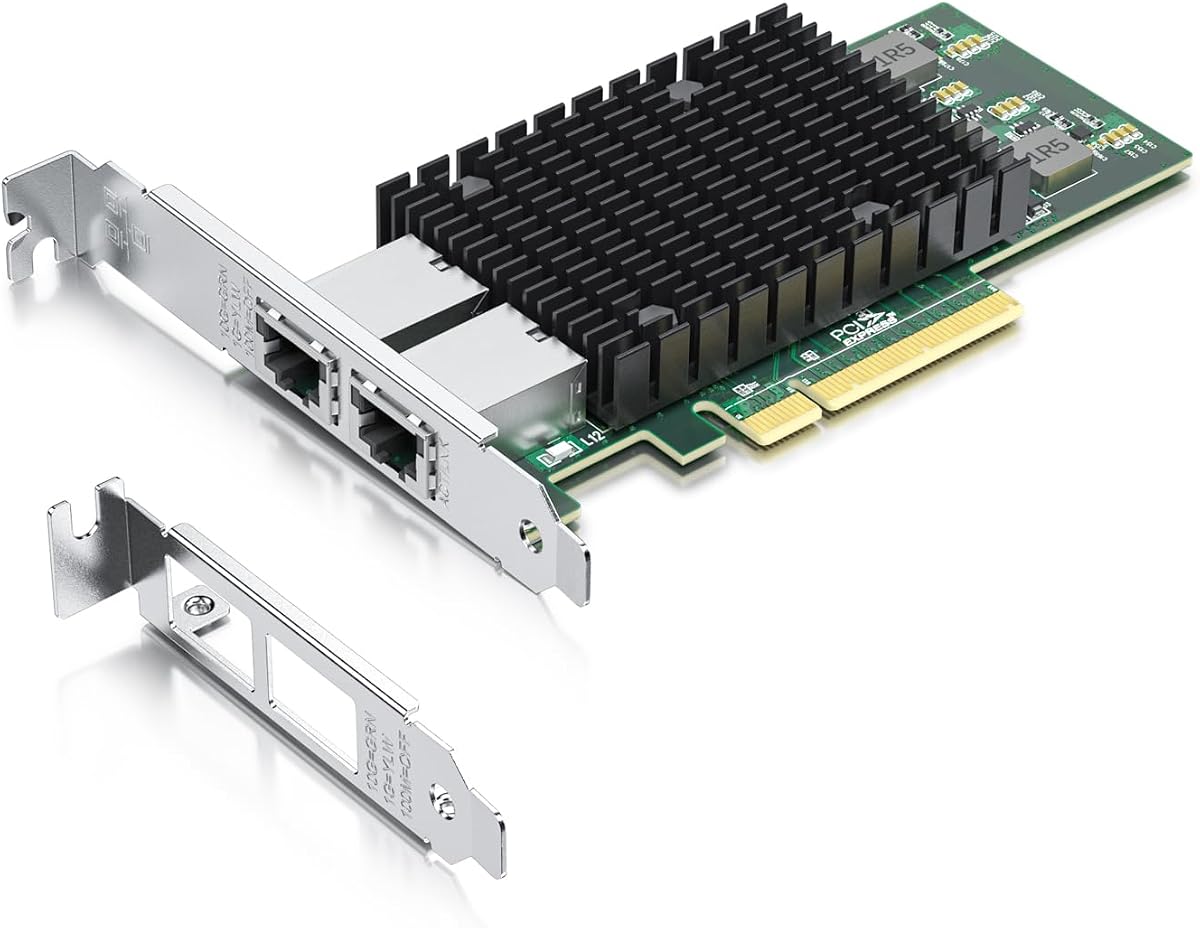
This 10Gtek card uses the reliable Intel X540 controller for stable dual 10Gbps connections. Rated 4.1 stars by users, it is a strong choice for data centers needing affordable 10GbE upgrades. The adapter supports Windows and Linux servers with full offload capabilities.
We may earn a commission when you buy through this link, at no additional cost to you.
The Intel X540 controller enables intelligent offloads that reduce CPU usage during heavy traffic. Dual copper ports connect to Cat6A cables up to 100 meters. It fits PCIe x8 and x16 slots with brackets for standard or low profile cases.
Note that Windows 11 requires manual driver setup before use. Hot swapping is not supported, so power down before installation. These trade-offs are acceptable for the price and reliability in server environments.
Buy this if you need reliable 10GbE connectivity for servers without high cost. It is ideal for data centers, NAS, and virtualization hosts running Windows or Linux with PCIe slots.
The original X540 chip ensures stable data transmission with offloads that prevent packet loss during high load operations.
Compatible with both PCIe x8 and x16 slots, allowing installation in a wide range of server and workstation chassis types.
We may earn a commission when you buy through this link, at no additional cost to you.
This card uses the Intel I226-V controller for dual 2.5Gbps ports. Rated 4.6 stars, it is perfect for modern desktops needing faster than 1G. speeds without expensive 10G gear. It supports Windows 10 and 11 with low profile brackets.
We may earn a commission when you buy through this link, at no additional cost to you.
The I226-V chip has better error rates and packet stability over longer cables than its predecessor. It reduces active power for energy efficiency. The adapter fits PCIe x1 slots and offers wide Linux kernel support.
Ensure your motherboard supports the I226-V chip before purchasing as BIOS settings may need adjustment. The x1 lane is fine for 2.5G but limits higher speeds. These limits are acceptable for most home office uses.
Buy this if you need reliable 2.5G speeds for gaming PCs or file servers. It is ideal for users who want stable connectivity without upgrading to 10G hardware.
The I226-V controller handles longer cable runs with lower error rates, ensuring consistent data packet delivery over Cat5e or Cat6 cables.
Reduced active power consumption makes this adapter ideal for always-on workstations or small servers where heat and electricity matter.
We may earn a commission when you buy through this link, at no additional cost to you.
The VIMIN 10G card offers dual 10Gbps ports with an Intel X540-T2 controller. Rated 4.5 stars, it is great for servers needing high speed connections. It includes heat sinks and gold connectors for stable long term performance.
We may earn a commission when you buy through this link, at no additional cost to you.
The heat sink helps maintain optimal temperature during heavy usage. The gold finger interface reduces interruption risks. It fits PCIe x8 and x16 slots with standard and slim brackets. Compatible with Windows and VMware.
Note that it only supports 10Gbps or 1Gbps speeds not 2.5G or 5G. This limits flexibility if your switch has intermediate rates. These limits are acceptable if your infrastructure is fully 10G ready.
Buy this if you need high speed 10G networking at a low cost. It is ideal for home labs, media servers, and small businesses needing fast local transfers.
A built-in heat sink keeps the controller cool during high data loads, reducing throttling risks in compact server cases.
The gold finger interface ensures strong contact with the motherboard slot, minimizing connection faults over time.
We may earn a commission when you buy through this link, at no additional cost to you.
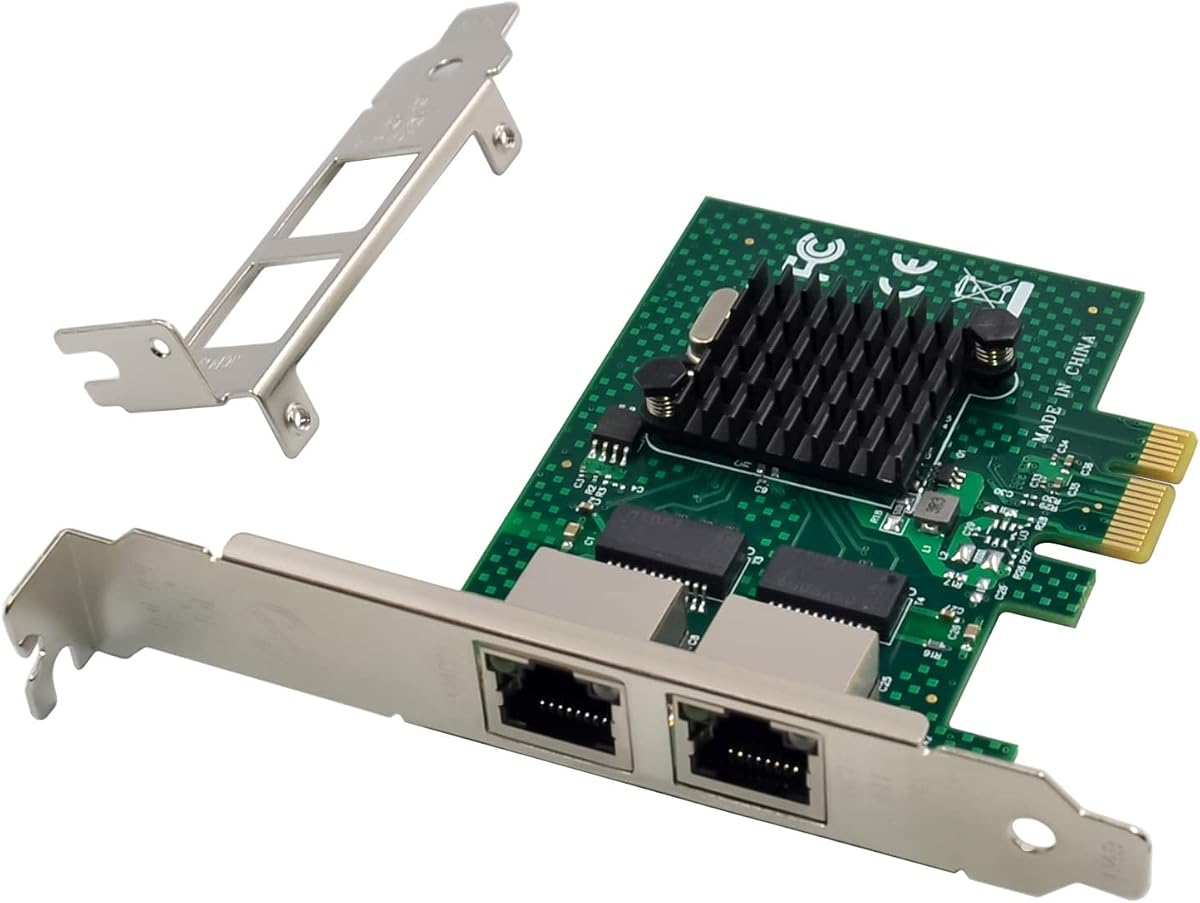
This dual port card uses Intel 82575/82576 chips for 1Gbps speeds. Rated 4.4 stars, it is the cheapest reliable choice for adding Ethernet ports. It supports PXE boot and has a low profile bracket.
We may earn a commission when you buy through this link, at no additional cost to you.
The Intel chip supports iSCSI boot, WoL, and VLAN filtering. It fits any PCIe slot from x1 to x16. A heat sink keeps it cool. Compatible with Windows, Linux, and older VMware versions.
It does not support VMware ESXi 7.0 or above which may be an issue for newer virtualization hosts. The PCIe 2.1 is fine for 1G but limits future upgrades. This is acceptable for basic tasks.
Buy this if you need extra 1G ports on a tight budget. It is ideal for legacy systems, file servers, and basic networking needs without virtualization.
Built-in PXE support lets you boot network install operating systems without needing local drives on servers.
An alloy heat sink removes excess heat to keep the card stable in enclosed server chassis.
We may earn a commission when you buy through this link, at no additional cost to you.
This 10Gtek adapter uses Intel 82576 for 1Gbps reliability. Rated 4.4 stars, it is a solid choice for basic network redundancy. It supports iSCSI boot and has brackets for small cases.
We may earn a commission when you buy through this link, at no additional cost to you.
The Intel chip provides offloads for stable server performance. Dual RJ45 ports connect to Cat5 cables. It fits PCIe x1 slots. Compatible with Windows and Linux with VMware ESX support.
It does not support VMware ESXi 7.0 or above. Hot swap is not supported so power down to install. These limits are fine for most legacy or home server uses.
Buy this if you need cheap 1G ports for basic redundancy. It is ideal for small offices, home servers, and file storage systems.
The original Intel 82576 chip ensures stable data handling and supports advanced features like iSCSI boot.
Both low profile and standard brackets are included so you can fit the card in various chassis sizes.
We may earn a commission when you buy through this link, at no additional cost to you.
This NIC uses Intel 82576 for 1Gbps with QoS technology. Rated 4.5 stars, it offers good stability for Linux and Windows servers. It comes with dual profile brackets and wide OS compatibility.
We may earn a commission when you buy through this link, at no additional cost to you.
QoS technology streamlines traffic for better online experience. The adapter fits PCIe x1 slots. It supports CentOS, Ubuntu, Debian and more. Low profile bracket included for slim cases.
It does not support VMware ESXi 7.0 and Mac OS. The 1G speeds are fine for general use but not for high throughput. These limits are acceptable for most workstations.
Buy this if you run Linux and need reliable gigabit ports. It is ideal for home servers, NAS, and workstations needing extra connectivity.
QoS technology prioritizes critical traffic so voice and video data stay smooth during heavy network usage.
Drivers work with major distributions like Ubuntu, Debian, and CentOS making it easy to install on Linux systems.
We may earn a commission when you buy through this link, at no additional cost to you.
This Gigaplus card uses X540 for dual 10Gbps. Rated 4.6 stars, it is excellent for server upgrades. The QR code makes driver installs easy. It supports Windows and VMware fully.
We may earn a commission when you buy through this link, at no additional cost to you.
The X540 chip prevents packet loss and keeps servers stable. Dual ports offer redundant paths. Includes standard and low profile brackets. PCIe x8 slot required for full speed.
It only works in PCIe slots not legacy PCI. Hot swap is not supported. These limits are fine for most new systems. The QR code helps simplify setup.
Buy this if you want reliable 10G without driver headaches. It is ideal for servers and workstations needing fast reliable links.
Scan the QR code on the card to download drivers quickly without visiting Intel websites manually.
The X540 controller delivers reliable 10Gbps speeds with minimal packet loss even under heavy load.
We may earn a commission when you buy through this link, at no additional cost to you.
This H!Fiber card uses X540-BT2 for dual 10Gbps. Rated 4.5 stars, it supports QoS for better traffic control. It has original Intel chips and wide Linux support with low profile bracket.
We may earn a commission when you buy through this link, at no additional cost to you.
QoS technology streamlines traffic for smoother online experience. The Intel X540-BT2 ensures stable performance. Supports Windows and Ubuntu with 30 day returns. Includes both brackets for installation.
It does not support 2.5G or 5G speeds between 1G and 10G. It is not for Mac OS. These limits are acceptable for 10G environments.
Buy this if you need QoS control for 10G networks. It is ideal for virtual servers needing advanced traffic management.
QoS technology prioritizes critical data so key applications stay smooth during busy network times.
The genuine X540-BT2 controller ensures reliable performance with full compatibility across many operating systems.
We may earn a commission when you buy through this link, at no additional cost to you.
This X4 card uses 82576 for 1Gbps with SR-IOV. Rated 4.5 stars, it is great for virtual machines. It supports PXE boot and VLAN filtering with heat sink cooling.
We may earn a commission when you buy through this link, at no additional cost to you.
SR-IOV support allows multiple VMs to share the physical NIC efficiently. The Intel chip ensures stable data handling. PCIe x4 slot required. Fits standard or low profile cases.
It does not support VMware ESXi 7.0 or above. Hot swap is not supported. These limits are acceptable for most virtualization setups.
Buy this if you need SR-IOV for virtualization on a budget. It is ideal for Proxmox and ESX environments.
SR-IOV support lets virtual machines access the physical NIC directly improving virtualization performance.
An alloy heat sink keeps the card cool during long virtual server operations.
We may earn a commission when you buy through this link, at no additional cost to you.
This NetXtreme card uses BCM5720 for 1Gbps. Rated 4.6 stars, it supports newer VMware ESXi versions. It is designed for enterprise servers and HPC clusters with low profile bracket.
We may earn a commission when you buy through this link, at no additional cost to you.
The Broadcom chip supports ESXi 7 and 8 well. Compatible with Windows Server and many Linux distros. Ideal for container platforms and cloud data centers. Includes low profile bracket.
It supports PCIe 1.0 and 2.0 interfaces only. It does not offer 10G speeds. These limits are acceptable for general enterprise use.
Buy this if you need stable gigabit for VMware clusters. It is ideal for enterprise servers needing proven networking.
Full support for VMware ESXi 7 and 8 makes this card a safe choice for virtualized server environments.
Designed for high-performance computing clusters and cloud data centers needing reliable server connectivity.
We may earn a commission when you buy through this link, at no additional cost to you.
Selecting the right dual RJ45 port network card requires understanding your speed needs, PCIe slot availability, and operating system compatibility. This guide explains the key factors to consider for a successful upgrade.
Determine if you need 1Gbps, 2.5Gbps, or 10Gbps speeds based on your network switches and application demands. Higher speeds like 10Gbps require Cat6a cabling and specific controllers while 1Gbps cards work with Cat5e.
Choose a card that matches your existing infrastructure to avoid bottlenecks or wasted spending.
Intel and Broadcom chips are known for stable performance and driver support. Original chips ensure better offloads and compatibility with virtualization platforms. Avoid unknown or generic chipsets that may fail under heavy load.
Look for controllers like X540 for 10G or 82576 for 1G to ensure reliable data handling.
Check your motherboard for available PCIe slots and their lane count. 10G cards often need x8 slots while 1G cards work in x1. Verify the slot generation to ensure bandwidth sufficiency for your chosen card.
A mismatched slot may limit speed or prevent installation entirely.
Confirm driver availability for your OS version including Windows Server, Linux distros, or VMware ESXi. Some cards lack support for newer ESXi versions or macOS. Read product notes for specific OS limitations before purchasing.
Select a card that explicitly lists your OS to avoid driver issues after installation.
Ensure the card includes a low profile bracket if you use small form factor cases. Full height brackets are needed for standard servers. Some cards provide both options to fit various chassis sizes.
A missing bracket may require buying one separately which adds time and cost to your upgrade.
Look for features like PXE boot, WoL, VLAN filtering, or SR-IOV if you run virtual machines or need remote management. These features enhance network flexibility but may come at a higher price.
Choose a card with the features you need to avoid paying for unused capabilities.
Check the warranty length and return policy for peace of mind. Many brands offer 3 year warranties with lifetime tech support. Good support helps resolve installation issues quickly.
A strong warranty protects your investment against hardware failures or driver problems.
Shut down your computer and unplug power before installing the card. Remove the case cover and locate an open PCIe slot. Insert the card firmly and secure it with a screw to prevent movement.
Install drivers from the manufacturer or Intel website. Check BIOS settings to ensure the NIC interface is enabled. Configure IP addresses and network settings in your OS to match your router or switch.
Keep the server or workstation well ventilated to avoid overheating. Check cables for damage and ensure they are properly seated. Periodically update drivers to maintain compatibility and security.
No you should use Cat6a or higher cables for 10G speeds to maintain reliable connections up to 100 meters. Cat5e may work at 10G for short distances but is not guaranteed for full speed.
Most of these network cards do not support hot swapping so you must power down your system before installation. Always check the product specifications to confirm if hot swap is supported.
The 82576 controller supports 1Gbps speeds while the X540 supports 10Gbps speeds. The X540 has higher bandwidth and different offload features for faster network operations.
Some models like the 10Gtek and Gigabit cards do not support VMware ESXi 7.0 or above. The NetXtreme BCM5720 model does support newer ESXi versions so check before buying.
Some cards require manual driver setup for Windows 11 even if they list it as compatible. Check the product notes for installation guides or contact support before purchasing.
No these cards use PCI Express (PCIe) slots not legacy PCI slots. Ensure your motherboard has the correct PCIe slot type and lane count for proper installation.
We have reviewed ten network cards ranging from 1Gbps to 10Gbps. The 10Gtek 10G card stands out for reliability and value while the Gigabit cards suit budget needs.
Prioritize controller reliability and OS compatibility over brand alone. If you need 10G speeds ensure your infrastructure supports it before buying.
Prices and stock change so check current listings and warranties before finalizing your purchase to get the best deal today.