
Berkeley Varitronics Octopus 4G LTE Cellular Signal Meter
4.6Editor score
True RSRP measurements
No SIM required
Made in USA
Finding the right cellular signal meter for antenna aiming is crucial for optimizing your wireless connectivity. A good device provides real-time feedback on signal strength, ensuring your antenna is positioned for maximum performance across various bands.
We compared ten leading products based on their frequency range, sensitivity, ease of use, and portability. Our analysis covers tools suitable for everyone from hobbyists to professional installers working with LTE, PCS, and other cellular technologies.
Each pick highlights key specifications and real-world applications to help you make an informed decision. Please note that product availability and pricing may change over time, so always verify current details before purchasing.
4.6Editor score

4.3Editor score

4.4Editor score
As an Amazon Associate we earn from qualifying purchases.
This table provides a side-by-side comparison of the top ten cellular signal meters for antenna aiming, highlighting key specifications to help you quickly identify the best fit for your needs.


The SureCall Five-Band RF Signal Meter is a top-tier choice for installing and aiming antennas for cell phone signal boosters. With a rating of 4.3 stars, it is praised for its ability to cover five critical cellular bands including PCS, Cellular, AWS, and LTE. This specificity makes it ideal for users who need precise feedback on booster systems.
We may earn a commission when you buy through this link, at no additional cost to you.
Its high receiving sensitivity of -110dBm ensures that it can detect even weak signals, allowing for fine-tuned antenna alignment. The rechargeable design using four AAA NiMH batteries provides convenience and reduces long-term costs. Additionally, the controllable backlight feature ensures usability in low-light conditions such as attics or basements where antennas are often installed.
While the battery life ranges from 2.5 to 3.5 hours which is decent but not exceptional, the convenience of rechargeable cells offsets this trade-off. The focus on specific bands means it may not be as versatile for general RF analysis outside cellular systems, but for its intended purpose, it excels.
This device is perfect for home and business owners installing signal boosters who want a dedicated tool that eliminates guesswork. If you need a reliable meter specifically for boosting cellular signals in the US, this is a highly recommended investment.
The five-band coverage aligns perfectly with major carriers ensuring accurate tuning for boosted signal performance.
Rechargeable batteries and a backlight make it practical for real-world installations in various lighting conditions.
We may earn a commission when you buy through this link, at no additional cost to you.
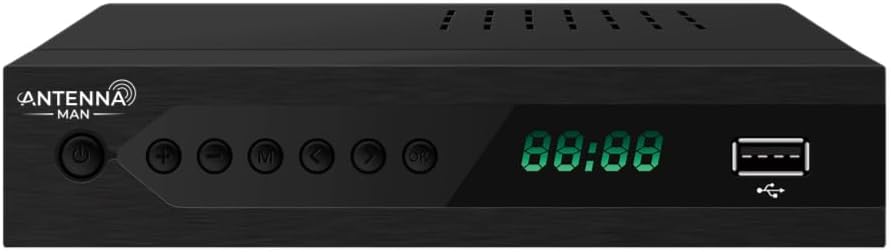
The Antenna Man Signal Meter serves as a practical solution for those focusing on over-the-air TV signals and basic cellular aiming. It functions as an ATSC digital converter box with a built-in TV tuner and recording capabilities. With a rating of 3.8 stars, it is valued for its straightforward operation and real-time signal strength display which aids in quick alignment.
We may earn a commission when you buy through this link, at no additional cost to you.
The plug-and-play nature of this device means you do not need complex configurations to get started. It allows you to see immediate feedback as you move your antenna helping you find the strongest signal direction. This makes it a useful tool for hobbyists or those setting up home entertainment systems alongside basic connectivity checks.
However, its focus on ATSC digital signals may limit its utility for specific cellular frequency bands compared to more specialized meters. The lower user rating suggests mixed experiences regarding durability or accuracy for non-TV applications. Despite this, its ease of use is a significant benefit for casual users.
If you need a multipurpose device that handles TV signals and basic antenna checks without a steep learning curve, this meter offers a convenient entry point. It is best suited for general signal optimization rather than professional-grade cellular troubleshooting.
Real-time signal strength updates allow for rapid antenna adjustments without technical complexity.
Combining a converter box and signal meter provides extra value for home theater and connectivity setups.
We may earn a commission when you buy through this link, at no additional cost to you.
The Berkeley Varitronics Octopus 4G LTE Cellular Signal Meter is a premium tool designed for high-precision measurement in EV charging stations and IoT device deployments. It holds a strong rating of 4.6 stars and stands out for measuring true RSRP RSRQ and RSSI values without requiring SIM cards subscriptions or additional apps. This makes it exceptionally reliable for technical professionals.
We may earn a commission when you buy through this link, at no additional cost to you.
It supports AT&T Verizon T-Mobile and all U.S. regional carriers ensuring versatility across different networks. The fact that it is designed and manufactured in the U.S.A adds a layer of quality assurance and support for domestic buyers. Its focus on wireless IoT devices and cellular boosters targets a niche but critical market segment.
The main trade-off is the higher price point which reflects its specialized capabilities and build quality. While not necessary for casual users, its accuracy is unmatched for professional installations where signal integrity is paramount. The lack of dependency on phone hardware or apps ensures consistent performance over time.
For engineers and installers working on EV charging sites or complex IoT networks this meter provides the data depth needed to optimize connectivity. If you require industrial-grade reliability and detailed signal parameters this is the top choice.
True RSRP measurements offer scientific-grade accuracy essential for professional network tuning and troubleshooting.
Supporting all US regional carriers ensures the device remains useful regardless of provider changes.
We may earn a commission when you buy through this link, at no additional cost to you.
The RF Explorer Pro Spectrum Analyzer is an all-in-one RF measurement platform combining a Spectrum Analyzer Power Meter and Tracking Generator. With a broad frequency range from 15MHz to 6.1GHz it offers extensive coverage for various RF applications. It is designed for engineers and advanced users who need deep insight into signal behaviors and interference patterns.
We may earn a commission when you buy through this link, at no additional cost to you.
A standout feature is the 8-inch high-definition touchscreen which provides clear real-time visualization of RF signals. Tools like Zero Span GPS Heatmap and 2D/3D Waterfall modes enable sophisticated analysis beyond simple signal strength. The portable design and up to 5 hours of battery life make it suitable for field work and laboratory settings alike.
While the rating is currently not available this tool is known for its advanced capabilities in professional environments. The modular design allows you to choose frequency ranges like 3.3 GHz or 6 GHz to match specific needs. This flexibility ensures it remains useful as technologies evolve.
This analyzer is ideal for professionals needing to diagnose complex RF issues or tune antennas with precision. If you require a comprehensive tool that goes beyond basic signal meters this device offers exceptional value and capability.
The 8-inch HD touchscreen and waterfall modes provide detailed spectral views essential for complex analysis.
Combining spectrum analysis with power meter and tracking generator capabilities simplifies field testing workflows.
We may earn a commission when you buy through this link, at no additional cost to you.
The NetAlly AirCheck G3 Pro Kit is a high-end solution for Wi-Fi and cellular network testing with a perfect 5-star rating. It includes an external directional antenna and a tri-band spectrum analyzer enabling detailed testing of 2.4GHz 5GHz and 6GHz bands. This kit is tailored for network engineers who need robust tools for verification and troubleshooting.
We may earn a commission when you buy through this link, at no additional cost to you.
Features like AirMapper Site Survey allow for remote collaboration reducing travel costs and improving efficiency. The automatic network topology mapping helps visualize complex wired and wireless networks instantly. These capabilities ensure comprehensive assessment of network performance and security.
The main limitation is the high price which limits it to professional enterprise use. While it covers cellular bands it is heavily optimized for Wi-Fi testing and analysis. For those primarily focused on cellular antenna aiming it might be overkill unless Wi-Fi integration is also needed.
If you are a network professional managing critical services and need top-tier validation tools this kit is an excellent investment. It provides complete support and advanced features that streamline complex network maintenance and upgrades.
Remote collaboration via Link-Live reduces travel time and enables expert support for on-site technicians.
Automatic topology mapping provides a clear view of network infrastructure to speed up issue resolution.
We may earn a commission when you buy through this link, at no additional cost to you.
The Extech 480836 RF EMF Strength Meter is designed for high frequency measurement from 50MHz to 3.5GHz. It is ideal for EMF measurements of mobile phones base stations and microwave leakage. With a rating of 4.3 stars it is valued for its non-directional isotropic measurement capability which provides a holistic view of RF exposure.
We may earn a commission when you buy through this link, at no additional cost to you.
The three-channel triaxial measurement probe ensures accurate readings regardless of signal orientation. Users can manually store and recall up to 99 sets of data which is useful for documenting changes over time. This functionality supports compliance checks and environmental assessments effectively.
While it is not a dedicated antenna aiming tool for cellular boosters it offers strong performance for safety and exposure monitoring. The display is functional but basic compared to modern touchscreen models. Its focus on EMF means it may not provide the specific metrics needed for antenna optimization.
This meter is best for safety professionals or those concerned with RF exposure levels rather than signal strength tuning. If your priority is monitoring electromagnetic fields around cellular equipment this device offers reliable and repeatable measurements.
Non-directional measurement ensures you get true signal strength readings without worrying about orientation.
The ability to store 99 data sets helps in tracking signal variations and documenting safety assessments.
We may earn a commission when you buy through this link, at no additional cost to you.
The MINI1300 Antenna Analyzer is an affordable option that offers a 4.3-inch large-screen LCD touching screen display. It covers a frequency range of 0.1-1300MHz including HF VHF and UHF continuous coverage. With a rating of 4.4 stars it is praised for its ease of operation and compact design making it a great entry-level tool.
We may earn a commission when you buy through this link, at no additional cost to you.
It supports multiple measurement modes including single point scanning and TDR mode. This flexibility allows for detailed SWR measurements which are essential for antenna tuning and efficiency. The ability to perform frequency sweeps helps in identifying resonance points quickly.
The firmware is not updatable which is a limitation for long-term feature improvements. However for its price point it delivers significant value for hobbyists and technicians on a budget. The portable design ensures it is easy to carry to various installation sites.
If you are looking for a budget-friendly way to analyze antenna performance and SWR without expensive equipment this analyzer is a strong candidate. It balances cost and functionality well for basic to intermediate antenna aiming tasks.
The 4.3-inch touchscreen makes it easy to interact with measurements and navigate modes quickly.
Providing SWR and frequency sweep capabilities at a low price makes it accessible for hobbyists.
We may earn a commission when you buy through this link, at no additional cost to you.
The SA6 6GHz Portable Spectrum Analyzer integrates a powerful spectrum analyzer and a built-in signal generator for versatile RF testing. It supports a broad 35–6200MHz frequency range with high accuracy. With a 3.2-inch color touchscreen and physical buttons it offers convenient operation in field environments or workshops.
We may earn a commission when you buy through this link, at no additional cost to you.
The tracking generator supports frequency response measurements for filters and amplifiers making it useful for component testing. It features a rechargeable battery providing approximately 3–4 hours of continuous use. Connectivity via USB Type-C allows for real-time logging and analysis on a PC which enhances data management.
While the rating is currently not available its features suggest it is capable for professional and enthusiast use. The compact lightweight design at 380g makes it easy to carry. However battery life may limit long sessions without a charger.
This device is ideal for technicians and hobbyists who need a portable all-in-one solution for analyzing communication signals and tuning antennas. If you require both analysis and signal generation in one unit this SA6 offers great value.
Combining spectrum analysis with signal generation simplifies field testing and component verification.
USB Type-C connectivity enables real-time logging which is critical for detailed troubleshooting reports.
We may earn a commission when you buy through this link, at no additional cost to you.
The For Sa6 6GHz Handheld Spectrum Analyzer covers a comprehensive RF analysis range from 35 to 6200MHz. It includes an integrated tracking generator that supports stable output for characterizing filters and passive components. With a rugged portable design it is built for technicians and RF hobbyists working in tight spaces.
We may earn a commission when you buy through this link, at no additional cost to you.
Real-time spectral measurement allows for rapid RF environment assessment with fast sweep rates. The device is lightweight at 380g and energy efficient for extended field use. It includes a 2500 mAh internal battery and a complete set of accessories like extension cables and a data cable to start immediately.
The main consideration is ensuring accessory compatibility as noted by the reference to a manufacturer size chart. Despite this it provides a practical solution for onsite maintenance and diagnostics. The build quality prioritizes durability which is essential for daily field work.
If you need a durable handheld device for evaluating wireless technologies and troubleshooting repeaters this analyzer is a solid choice. Its focus on portability and ease of use makes it accessible for various technical roles.
The rugged design ensures the device can withstand field conditions during maintenance and troubleshooting.
Including essential accessories like extension cables and stylus ensures you can start working right away.
We may earn a commission when you buy through this link, at no additional cost to you.
The Channel Master TV Antenna Signal Strength Meter is designed for precise Over-the-Air antenna alignment and installation. It supports all ATSC TV frequencies within the USA and displays RF signal level and Signal to Noise ratio. With a rating of 3.9 stars it is noted for its user-friendly color touch-screen and convenient accessories like a carrying bag and stylus.
We may earn a commission when you buy through this link, at no additional cost to you.
The built-in rechargeable battery ensures you can work without finding external power sources. The ability to show SNR is particularly helpful for avoiding noisy channels that might degrade picture quality. This level of detail is valuable for anyone setting up a high-quality home TV setup.
While it is focused on TV frequencies its functionality for general aiming is useful for those needing to optimize OTA signals. The lower user rating may stem from limitations to cellular frequencies. However for TV installation it provides comprehensive tools to ensure clear reception.
If you are installing an outdoor antenna and need to ensure you have the best picture quality this meter offers the necessary guidance. It combines usability and specific metrics to help you align your antenna precisely for optimal performance.
Displaying both signal level and SNR ensures you can avoid weak or noisy channels for better TV quality.
The included stylus and carrying case make it a complete package for easy transportation and handling.
We may earn a commission when you buy through this link, at no additional cost to you.
Selecting the right cellular signal meter involves considering specific technical and practical needs. This guide outlines key factors to help you choose a device that matches your usage scenario.
Ensure the meter covers the bands you intend to target. For cellular applications look for support of PCS 850 1900 and LTE bands. Some devices focus on TV frequencies which may not work for cell boosters.
Select a device that supports all necessary carrier bands to avoid missing critical signals during aiming.
Higher sensitivity allows the meter to detect weaker signals which is essential for precise antenna alignment. Look for specifications like dBm ranges to evaluate detection limits. Accuracy ensures you are working with reliable data rather than estimates.
Prioritize meters with high sensitivity and certified accuracy to ensure your antenna is tuned correctly.
Field work often requires walking around with your device so a compact and lightweight design is beneficial. Check battery life to ensure it lasts through your installation session. Rechargeable batteries are a plus for reducing long-term operating costs.
Choose a portable unit with sufficient battery life to complete your installation without frequent recharging.
A clear display helps you read values quickly under sunlight or in low-light conditions. Touchscreens and backlighting improve usability in various environments. Physical buttons may offer tactile feedback that is useful for gloved hands.
Opt for an interface that provides clear visibility and intuitive controls to speed up your workflow.
Confirm that the meter works with your specific booster or antenna system. Some devices are tailored for TV while others are for cellular. Ensure it supports the modulation types used by your carrier.
Verify system compatibility to prevent investment in a tool that cannot read your specific signal type.
Rugged housing protects the device from drops and weather conditions during installation. Consider IP ratings or descriptions of ruggedness if working outdoors. A protective case or bag adds extra security for your investment.
Choose a durable design with protective accessories to ensure the device survives tough field conditions.
Features like data logging spectrum analysis or SNR display can add significant value. These help in diagnosing interference issues beyond basic signal strength. However only value them if they are relevant to your project needs.
Look for advanced features that align with your technical requirements to get the most out of your meter.
Balance the cost against the features provided. Budget models may lack specific bands but offer basic aiming tools. Higher-end options provide professional accuracy but might be overkill for simple installations.
Determine your budget and prioritize essential features to find the best value for your situation.
Start by turning on your meter and allowing it to calibrate in the current environment. Connect any required antennas or probes securely to ensure accurate readings. Select the appropriate frequency band corresponding to your carrier or booster requirements.
Move the antenna slowly in different directions while watching the signal strength values on the display. Note the positions where the signal peaks and adjust the mount for maximum consistency. Repeat this process for different bands to ensure balanced coverage across all signals.
After use wipe down the device with a soft cloth to remove dust and moisture. Store it in its protective case to avoid damage during transport. Regularly check for firmware updates or battery replacements to maintain optimal performance.
A cellular signal meter provides objective data about signal strength which helps you position your antenna for the best possible reception. Without it you might rely on guesswork which often leads to poor performance and interference issues.
Compatibility depends on the frequency bands supported by the meter. Many devices are designed to cover major US carriers like AT&T and Verizon but always check the specifications to ensure they match your service provider.
Typically no as TV meters are tuned for different frequency ranges than cellular bands. Using a TV meter for cellular aiming will likely yield inaccurate or non-existent readings.
Higher sensitivity allows detection of weaker signals which is crucial for accurate aiming. Look for meters with sensitivity ratings of -110dBm or better to ensure you can pick up distant towers.
Battery life varies by model but typically ranges from 3 to 5 hours for active use. Rechargeable models are preferred for long-term value and convenience.
Most dedicated signal meters do not require a SIM card as they measure RF signals directly. However some apps or phone-based tools might need one.
For basic aiming a simple signal meter is sufficient. A spectrum analyzer is useful for identifying interference sources or detailed signal profiling but adds complexity and cost.
Yes but keep in mind that walls and structures attenuate signals. For best results use the meter outside or at the window where the antenna will be installed.
Choosing the right cellular signal meter for antenna aiming ensures you get reliable connectivity without expensive trial and error. The top picks cover various needs from budget hobbyist tools to premium professional analyzers.
Prioritize frequency range and sensitivity based on your specific carrier and booster requirements. A device that matches your technical needs will save time and deliver better results than a generic alternative.
Always check current availability and product details as specifications can change over time. With the right tool you can confidently optimize your antenna placement for the best possible signal.