
SUNLU Filament Dryer S2
4.3Editor score
Fast heating and even drying
Simple yet very effective
High capacity and compatibility
Explore our expert guide comparing the top filament dryer for 3D printing to find the best model that keeps your materials dry and ensures print quality.
Choosing the right filament dryer for 3D printing is essential for maintaining material quality and ensuring consistent print results across different projects.
We compared ten top-rated models based on drying efficiency, storage capacity, temperature control, and overall user feedback to help you make an informed decision.
Each pick highlights key features and real-world performance, though prices may vary over time so checking current listings is recommended before you decide to buy.
4.3Editor score

4.6Editor score

4.5Editor score
This side-by-side comparison reviews all ten models to highlight key specifications and capabilities for users seeking reliable filament maintenance solutions.


The Creality Space Pi X4 stands out as a top choice for high-volume printing needs with a rating that reflects its efficient design.
We may earn a commission when you buy through this link, at no additional cost to you.
Its dual independent 200W heating chambers dry moisture 30% faster than single-chamber units ensuring prints finish faster without stringing issues.
While the unit costs more and occupies significant desk space the speed and capacity make it worth the trade-off for busy workshops.
High-volume users or multi-printer setups will appreciate this device for keeping multiple spools ready and dry at all times.
Dual heaters remove moisture faster saving time before critical jobs start.
Silicone-sealed enclosure keeps moisture out even when the dryer is idle.
We may earn a commission when you buy through this link, at no additional cost to you.
The SUNLU S4 offers premium features like a 350W PTC heater and eight filament exit holes for multi-printer environments.
We may earn a commission when you buy through this link, at no additional cost to you.
Its high power ensures rapid heating and three fans circulate air evenly preventing cold spots that could affect drying consistency.
The unit is heavy and requires some setup effort but the durability and customization options justify the initial time investment.
Enthusiasts who need to dry multiple spools simultaneously will find this model indispensable for their workflow.
Eight exits allow you to feed multiple printers from one dryer simultaneously.
Users can modify the unit to hold larger 3kg spools with simple adjustments.
We may earn a commission when you buy through this link, at no additional cost to you.
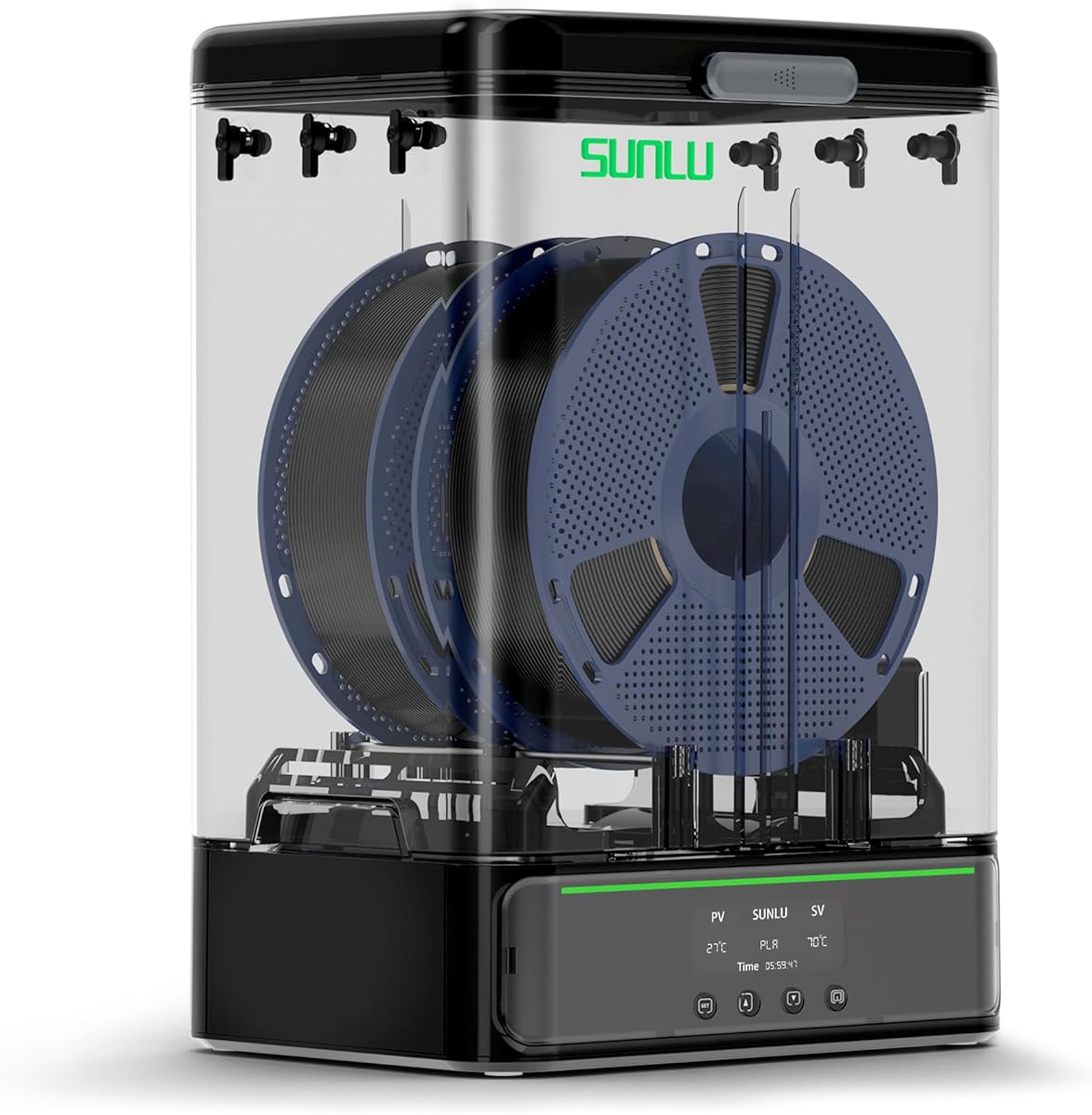
The SUNLU S2 delivers essential drying capabilities without a high price tag making it ideal for beginners.
We may earn a commission when you buy through this link, at no additional cost to you.
It heats quickly and keeps filament spinning for even drying while the large touch screen simplifies settings adjustments.
Though it lacks advanced features like dual chambers it reliably prevents moisture issues for standard prints.
Budget-conscious users who need a reliable dryer for occasional use should consider this model for its value.
Provides core drying functions at a price point accessible to most hobbyists.
Large touch screen makes setting temperatures and times intuitive.
We may earn a commission when you buy through this link, at no additional cost to you.
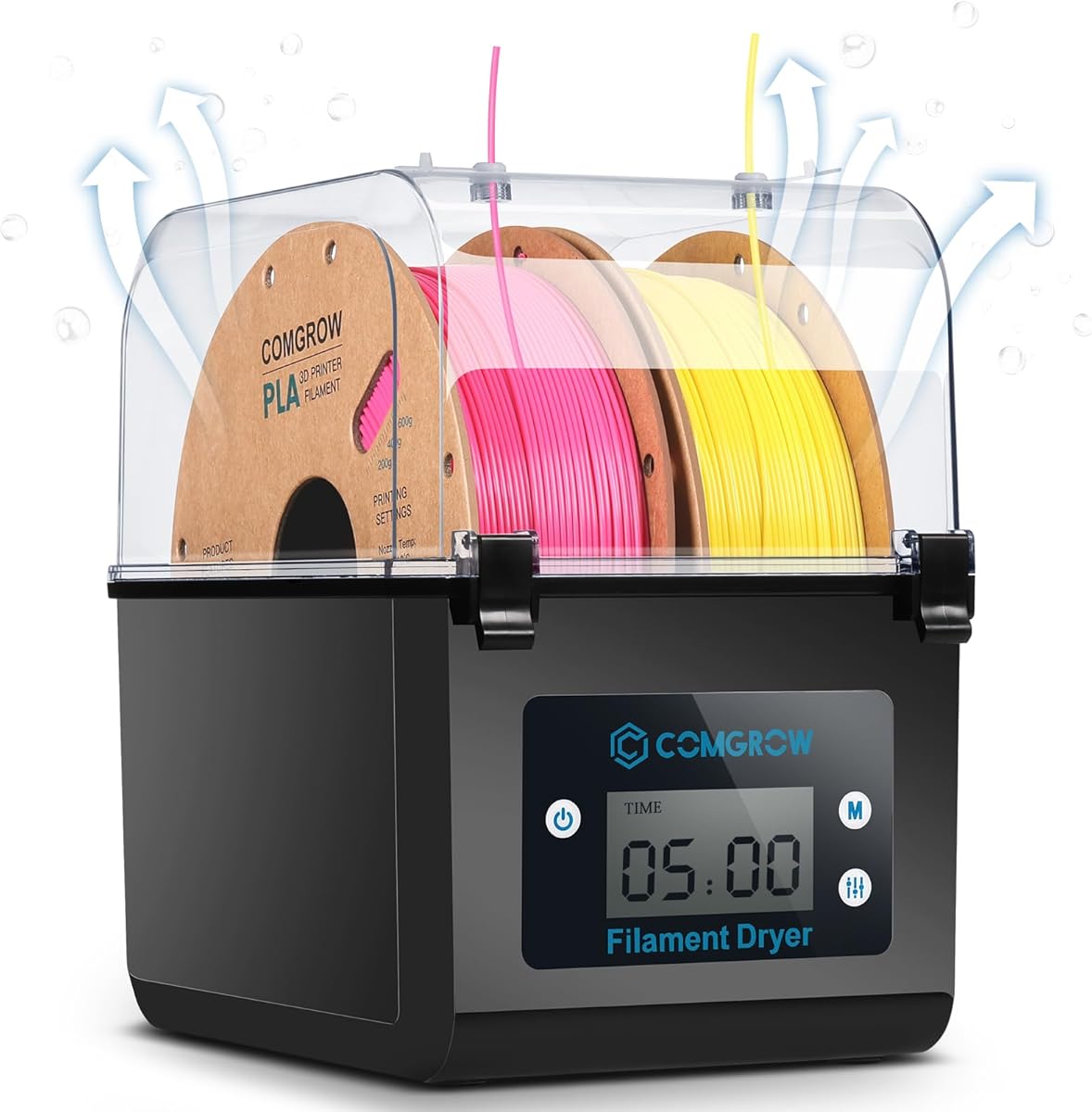
Comgrow dryer box offers a spacious interior for two rolls plus real-time monitoring for temperature and humidity levels.
We may earn a commission when you buy through this link, at no additional cost to you.
Its design keeps filament dry during printing and prevents issues like poor adhesion caused by dampness in humid areas.
The 50C max temperature might be too low for some advanced materials but works well for common filaments.
This box is a solid choice for home printers who need both storage and drying functionality in one unit.
Holds multiple spools for easy access after drying cycle finishes.
LCD screen shows environmental conditions to ensure optimal drying.
We may earn a commission when you buy through this link, at no additional cost to you.
The upgraded S1 Plus adds a fan to speed up moisture discharge which helps with stringing and clogging issues.
We may earn a commission when you buy through this link, at no additional cost to you.
It displays temperature and humidity clearly on a 2 inch screen allowing precise adjustments for different environments.
While the price is mid-range it offers good value for those needing faster drying times than passive heaters provide.
Users who print often with varying filament types will appreciate the flexible settings and quick cycle times.
Fan design circulates air to dry filament faster than static heaters.
Display screen provides easy access to all necessary monitoring data.
We may earn a commission when you buy through this link, at no additional cost to you.
Creality Space PI Plus uses a unique PTC heater for even drying and includes one-key settings for twelve filament types.
We may earn a commission when you buy through this link, at no additional cost to you.
The touch screen supports switching between Celsius and Fahrenheit making it convenient for users in different regions.
It offers a long 48 hour timer allowing extended drying without worrying about manual intervention during the process.
Those who want smart features and reliable performance for various composite filaments should consider this model.
Pre-defined presets remove guesswork when drying different material types.
360 degree hot air ensures consistent results across the entire spool.
We may earn a commission when you buy through this link, at no additional cost to you.
Polymaker offers a connected solution that lets you move from drying to storage without exposing filament to ambient moisture.
We may earn a commission when you buy through this link, at no additional cost to you.
A built-in hygrometer helps track conditions and ensures filament remains in optimal shape between print sessions.
The simple design lacks presets but relies on proven heating and sealing to protect materials effectively.
Users who value simplicity and effective moisture defense for professional materials will find this useful.
Transitions directly to storage keeping filament sealed after the drying cycle.
Combines heating and desiccants to maintain dry conditions over time.
We may earn a commission when you buy through this link, at no additional cost to you.
This upgrade features high PTC efficiency and a precision sensor to solve problems like drawing and clogging during printing.
We may earn a commission when you buy through this link, at no additional cost to you.
It requires no assembly and displays humidity and countdown timer on a simple screen for straightforward operation.
While the timer is shorter than some competitors it heats quickly enough for regular use cases.
Casual users who want effective performance without complex setup will appreciate this box.
Heats to 65C in 15 minutes to start drying immediately.
Display and knob make basic settings adjustment intuitive for all.
We may earn a commission when you buy through this link, at no additional cost to you.
This version of the SUNLU S4 emphasizes high capacity and consistency with three fans and a 350W heater.
We may earn a commission when you buy through this link, at no additional cost to you.
It supports four spools and eight exits making it suitable for larger workshops with multiple printers active.
The unit is large and heavy but this ensures stability and even performance during long drying cycles.
Users needing to dry large batches should choose this model for its capacity and build quality.
Three fans ensure consistent temperature across the entire interior space.
Eight exits allow feeding multiple printers from one centralized unit.
We may earn a commission when you buy through this link, at no additional cost to you.
The SP2 is designed to handle larger 3kg spools which saves money and time compared to buying smaller rolls.
We may earn a commission when you buy through this link, at no additional cost to you.
It heats to 70C in 15 minutes and includes desiccant containers to monitor humidity during the drying process.
The price is higher due to its size and features but it solves unique issues with bulk filament storage.
Those who buy bulk filament will find this unit essential for keeping large spools dry and ready.
Designed specifically to accommodate larger 3kg spools for bulk users.
Reaches optimal temperature quickly to minimize downtime before printing.
We may earn a commission when you buy through this link, at no additional cost to you.
Selecting the right dryer depends on your printing volume and the materials you use most often.
Higher wattage heaters warm up faster and maintain consistent temperatures which is crucial for materials like nylon.
Look for models with at least 200W if you frequently print with sensitive materials.
Determine how many spools you need to store or dry at once to avoid clutter.
Single spool units are fine for casual users while multi-spool options suit busy workshops.
Ensure the dryer can reach temperatures suitable for your specific filament types.
Standard PLA needs lower heat while advanced materials require higher settings to remove moisture.
A good seal prevents moisture from re-entering the unit after the drying cycle is done.
Silicone gaskets or locking latches are signs of effective moisture protection.
Screens that display real-time humidity help you track when the filament is ready.
Models with clear displays make it easier to adjust settings accurately.
Multiple exit holes allow you to connect the dryer to more than one printer.
Flexible tubing and good seals at the outlet prevent air leaks during printing.
Touch screens and preset options reduce the effort needed to set up drying cycles.
Simple interfaces ensure you can start drying without complicated manuals or settings.
Consider your desk space and whether the unit can remain stationary while in use.
Larger units offer more capacity but take up significant room.
Place the spool inside the dryer and ensure the exit tube is connected to your printer or sealed properly.
Set the temperature and timer according to the material specifications to avoid overheating or under drying.
Check the humidity monitor occasionally and clean any debris from fans to maintain consistent performance.
Yes especially if you work with hygroscopic materials like nylon or ABS that absorb moisture from air. Damp filament causes stringing and poor layer adhesion which a dryer effectively prevents by removing excess water before printing.
It depends on how damp the material is and the dryer wattage. Most models can dry 1kg spools in a few hours but some materials may need overnight cycles for best results.
Absolutely most dryers are designed to act as a spool holder during printing ensuring continuous feeding. This helps maintain dry conditions throughout the job for consistent print quality.
PLA generally dries well at 45 to 55 degrees Celsius. Higher temperatures are unnecessary and may warp the plastic. Always check manufacturer recommendations.
Use the built-in humidity monitor or rely on the timer. Once the timer finishes and humidity drops the filament should be dry. You may also hear less popping sound during the print.
Yes multi-spool dryers exist but ensure they have enough space to prevent tangling. If using a single-spool unit you may need to dry them sequentially for best results.
Most dryers have safety features like auto shutoff but it is wise to check the manual. Using a timer ensures the unit turns off automatically when drying is complete.
Regularly wipe down the interior and ensure the fan vents are free of dust. Check silicone gaskets periodically to maintain a tight seal against moisture.
We explored ten models ranging from budget-friendly options to high-end multi-spool systems to find the best solutions for 3D printing needs.
Prioritize heating efficiency and sealing quality to ensure your filament stays dry and your prints remain consistent.
Remember that prices change so check current listings to find the best value for your budget today.