
MAONO PS22 Lite USB Audio Interface for PC for Guitar & Vocals Streaming
4.2Editor score
24-bit/192kHz resolution
Dedicated instrument input
ProStudio routing software
This guide compares the top external sound cards for guitar to help musicians find the best interface for recording, streaming, and live performance needs.
Finding the right external sound card for guitar is essential for capturing your unique tone with clarity and precision. Whether you are a bedroom producer or a touring musician, the right interface ensures your instrument shines through in any mix.
We evaluated ten top-rated interfaces based on input quality, latency, software bundles, and build durability. Our comparison covers budget-friendly options and professional-grade units designed to meet diverse recording and streaming requirements.
Each pick highlights standout features like preamp quality, conversion rates, and included software tools. Prices and availability change frequently, so always verify current listings before making your final purchase decision today.
4.2Editor score
4.6Editor score

The table below provides a side-by-side comparison of all ten interfaces we reviewed. It highlights key specifications and core capabilities to help you quickly identify the model that fits your workflow.


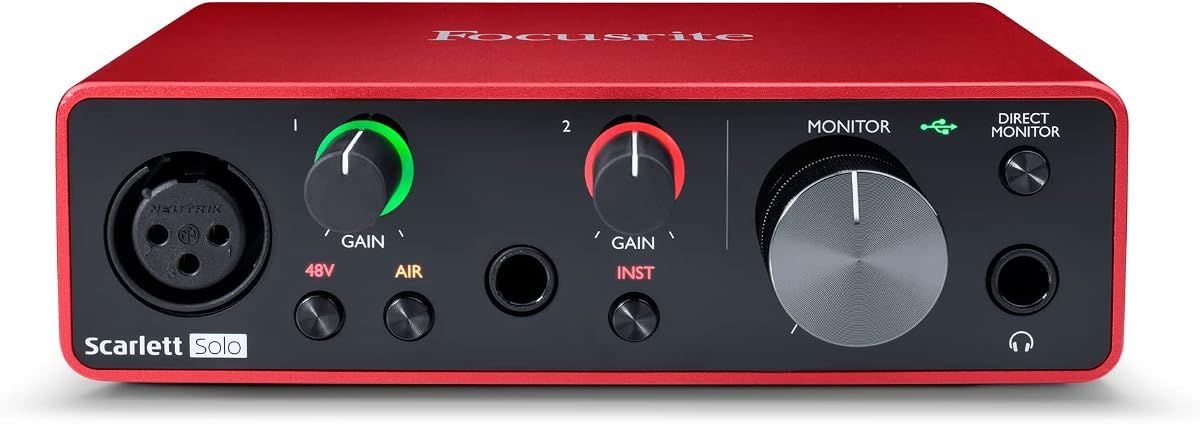
The Focusrite Scarlett Solo 3rd Gen is a top choice for guitarists seeking professional recording quality. It features high-performance converters that support up to 24-bit/192kHz resolution, ensuring your tracks retain all sonic nuances.
We may earn a commission when you buy through this link, at no additional cost to you.
Its standout feature is the Gain Halos, which visually indicate when your input levels are too high, preventing unwanted clipping. The switchable Air mode adds extra clarity to acoustic guitars, making your recordings sound polished and bright.
While it only has two instrument inputs, this limitation is acceptable for solo artists or small bands. The bundled software suite including Pro Tools Intro gives you everything needed to start producing music immediately upon setup.
This interface is ideal for beginners and intermediate musicians who want a reliable tool that grows with their skills. Its three-year warranty adds peace of mind for long-term studio use.
The high-performing mic preamps deliver transparent gain while Air mode enhances high frequencies for acoustic clarity.
Gain Halos glow red if your signal is too hot, helping you set optimal levels without guessing or distortion.
We may earn a commission when you buy through this link, at no additional cost to you.
The Fender Quantum HD 2 is a powerhouse designed for serious musicians and producers. Its 20×24 USB-C interface offers massive channel capacity alongside MAX-HD mic preamps for pristine instrument capture.
We may earn a commission when you buy through this link, at no additional cost to you.
Front-facing instrument inputs are optimized for transparent guitar recording, while dual re-amp outputs let you experiment with external gear. The included Fender Amp & FX Pack provides authentic tone shaping directly from your computer.
While the price is higher than entry-level units, the ADAT expansion and S/PDIF I/O make it future-proof for hybrid studio growth. This makes it an investment for those planning to scale up their recording capabilities.
This interface suits professional studios and power users who need high channel counts and advanced routing. The perpetual license for Fender Studio Pro adds significant value for mixing and mastering workflows.
Register your interface to unlock a full collection of authentic Fender amp models and effects for rich tone crafting.
The Auto Gain button instantly sets perfect recording levels, allowing you to start recording faster.
We may earn a commission when you buy through this link, at no additional cost to you.
The M-AUDIO M-Track Duo delivers impressive versatility for its price point. It features two combo XLR/Line/Instrument inputs that support both microphones and guitars, making it a flexible tool for creators.
We may earn a commission when you buy through this link, at no additional cost to you.
Its Crystal Preamps ensure optimal sound from microphones while the USB/Direct switch enables zero latency monitoring. This flexibility is crucial for live streamers and podcasters who need reliable audio capture.
While it may lack the advanced features of pricier interfaces, it covers all essentials without fuss. The included MPC Beats software provides essential production tools, giving you a complete starter package out of the box.
This interface is perfect for beginners and content creators who need a reliable audio interface. Its simple design and comprehensive I/O make it a solid choice for home studios on a budget.
The two combo inputs accept XLR mics, instruments, and line signals, giving you maximum recording versatility.
Switch between USB playback and direct monitoring to eliminate delay while recording your guitar tracks.
We may earn a commission when you buy through this link, at no additional cost to you.
The Fender AudioBox GO is designed for musicians who need studio quality on the go. Its ultra-compact 2×2 USB-C interface supports pristine 24-bit/96kHz converters for high-fidelity recording anywhere.
We may earn a commission when you buy through this link, at no additional cost to you.
A dedicated TS instrument input is optimized specifically for guitar and bass, ensuring you get the best tone capture. The bus-powered design means you can record from laptops or mobile devices without extra power cables.
While it has limited inputs, its small size makes it perfect for travel and mobile setups. The included Fender Studio app provides a range of authentic tones, making it a complete solution for guitarists.
This interface is ideal for travelers and bedroom producers who prioritize portability. Its simple plug-and-play operation and high-quality audio make it a reliable companion for capturing ideas on the move.
The dedicated TS input ensures transparent recording for guitars and bass without tone coloration.
No external power supply is needed, allowing you to record directly from your laptop or tablet.
We may earn a commission when you buy through this link, at no additional cost to you.
The MAONO PS22 Lite is a standout for content creators and streamers. Its high-resolution 24-bit/192kHz recording and 106dB dynamic range ensure your sound is clear and realistic.
We may earn a commission when you buy through this link, at no additional cost to you.
ProStudio routing software offers flexible channel management and loopback features essential for live broadcasting. The included ASIO drivers provide low-latency output, which is crucial for real-time performance monitoring.
While it is small and fits in your palm, it delivers a sound punch comparable to larger units. Its intuitive modes allow you to switch between recording and broadcasting quickly without complex setup.
This interface suits streamers and social media influencers who need versatile audio control. Its compatibility with macOS, Windows, and iPads makes it a convenient tool for multi-device workflows.
Control your live streams with virtual channels and loopbacks included in the bundled routing software.
ASIO drivers ensure minimal delay, giving you immediate feedback while you play and record.
We may earn a commission when you buy through this link, at no additional cost to you.
The Sound Blaster Play! 3 is a simple USB audio adapter that improves sound quality instantly. It supports 24-bit/96kHz resolution and requires no drivers to work out of the box.
We may earn a commission when you buy through this link, at no additional cost to you.
Downloadable software allows you to control audio enhancements and optimize profiles for different earphone brands. It is designed for general audio playback rather than professional music production.
While it lacks dedicated instrument inputs, it can serve as an output solution for guitarists using software amps. Its simple design makes it ideal for users who need better headphone output for their PC.
This adapter is perfect for casual users and gamers who want improved audio without complexity. Its plug-and-play nature ensures you can enhance your listening experience immediately without technical hurdles.
Downloadable control panel software provides powerful enhancements to optimize sound for your specific headphones.
Compatible with all analog headsets from mobile earbuds to studio-grade headphones via a single USB port.
We may earn a commission when you buy through this link, at no additional cost to you.
The StarTech 7.1 USB Audio Adapter transforms your computer into a multi-channel audio system. It supports up to 7.1 channels through a single USB port for rich spatial audio experiences.
We may earn a commission when you buy through this link, at no additional cost to you.
The digital adapter includes easy-to-use volume controls and mute buttons on the unit itself. It supports analog and digital audio outputs allowing you to connect speakers or headphones easily.
While it is designed for gaming and movies, its line-in and mic inputs allow basic recording tasks. However, its sampling rate is limited to 48KHz which may not suit high-fidelity music production.
This adapter is ideal for users seeking surround sound and basic audio upgrades. Its plug-and-play support in Windows systems ensures a hassle-free setup for immediate audio enhancement.
Access up to 7.1 channel audio for an immersive sound experience across games and multimedia content.
Built-in volume knobs and mute buttons let you adjust audio levels quickly without digging into settings.
We may earn a commission when you buy through this link, at no additional cost to you.
The Synido A10 delivers pristine resolution and zero-latency monitoring in a sturdy aluminum body. Its secure buckle-design connector ensures stable connections even when you are moving around.
We may earn a commission when you buy through this link, at no additional cost to you.
A unique feature is the wireless accompaniment playback, letting you stream backing tracks without cables. This makes it an excellent tool for practice and composition sessions while traveling.
Continuous power support via USB-C allows you to record while charging your phone or tablet. This prevents interruptions during long sessions when you rely on mobile devices for backing tracks.
This interface is perfect for modern musicians who value portability and convenience. Its design ensures that you can capture inspired takes effortlessly without worrying about battery life or tangled cables.
Stream tracks directly from one phone to another without cables, keeping your setup wireless and clean.
Charge your device simultaneously through USB-C so you never have to stop a recording session for power.
We may earn a commission when you buy through this link, at no additional cost to you.
The Cubilux CB5 is a versatile 5-in-1 audio hub that converts your USB port into multiple inputs and outputs. It captures crisp sound with precision up to 96 KHz/24-bit resolution.
We may earn a commission when you buy through this link, at no additional cost to you.
Its Hi-Res DAC can drive studio monitors up to 250 Ohm and deliver clean sound. The compact design requires no external power, making it perfect for on-the-go recording whenever inspiration strikes.
While the line-out jack and audio output jack cannot be used simultaneously, this is a minor limitation for most users. Multi-track recording is simplified by assigning independent device names to each interface.
This interface suits content creators who need a compact hub for mic and instrument inputs. Its ultra-low noise performance ensures your recordings remain clear and professional.
No external power source is needed, allowing you to record anywhere with just your laptop.
Integrated Hi-Res DAC ensures clean and pristine sound delivery even to high-impedance studio monitors.
We may earn a commission when you buy through this link, at no additional cost to you.
The Cubilux 7.1 USB Surround Sound Card offers high-fidelity audio in a durable aluminum alloy case. It supports sampling rates up to 384KHz for immersive listening experiences on popular streaming platforms.
We may earn a commission when you buy through this link, at no additional cost to you.
The full isolation housing ensures no-loss transmission of audio signals without static or ground noise. This makes it a reliable choice for users needing stable and interference-free audio connections.
While it is designed primarily for headphone output and surround sound, it includes line-in and mic inputs. Its plug-and-play nature ensures seamless compatibility with modern Windows and macOS systems.
This card is ideal for audiophiles and gamers who want high-resolution playback. Its compact design and aluminum build quality ensure long-term durability and superior performance in daily use.
Full aluminum alloy housing isolates electronic interference to ensure clean audio signal transmission.
Enjoy your favorite music with sampling rates up to 384KHz for unmatched sound quality.
We may earn a commission when you buy through this link, at no additional cost to you.
Selecting the right external sound card requires understanding your recording needs and connection options. This guide breaks down the essential factors to consider before you buy.
Ensure your interface has a dedicated instrument input with high impedance for passive guitars. Avoid using mic inputs directly for your guitar as this may cause signal loss or noise.
Look for combo XLR/TS inputs if you need flexibility to record both your guitar and a microphone simultaneously.
Low latency is critical for monitoring your guitar in real time. Look for interfaces with direct monitoring features or ASIO drivers to minimize delay.
Zero-latency monitoring lets you hear your processed tone without lag which is vital for recording tight takes.
Higher bit depth and sample rates like 24-bit/96kHz ensure your recordings capture every nuance of your performance. This prevents digital artifacts and preserves tone.
Professional converters allow you to mix and master your tracks with accuracy and clarity.
Many interfaces come with free DAWs and amp simulators that save you money. Check what software is included before purchasing a standalone license.
A good bundle can provide everything you need to start producing music immediately after unboxing.
If you travel or record outside your home studio choose a bus-powered unit that does not need an external power supply. Compact designs are easier to transport.
Consider devices that run on USB power from your laptop to simplify your on-the-go setup.
If you plan to grow your studio look for ADAT or S/PDIF inputs to add more channels later. This keeps your setup future-proof for adding instruments or mics.
Expansion capabilities let you upgrade your rig without replacing your core interface unit.
Sturdy metal or aluminum housing protects your gear from damage during transport. Plastic bodies may break easily if dropped.
A durable build ensures your interface survives years of touring and daily use without issues.
Verify that your interface works with your operating system whether it is Mac or Windows. Check driver availability and support.
Universal compatibility ensures you can connect your interface to multiple computers without compatibility headaches.
To start recording, connect your guitar to the dedicated instrument input using a standard 1/4 inch cable. Plug the USB connection into your computer and install any required drivers from the manufacturer.
Adjust the input gain knob while playing your guitar to ensure the signal peaks but does not clip. Use the monitoring knobs to balance your headphone mix between your dry guitar and the software playback.
Keep your interface away from humidity and heat to protect the internal electronics. Always unplug cables carefully without tugging on the wires to prevent connection damage over time.
You need a standard 1/4 inch instrument cable to connect your guitar to the interface. Most interfaces have an instrument input that accepts this directly without an adapter.
If your interface has phantom power you can use a condenser microphone for vocals. Always check the specs to confirm +48V power is available before purchasing.
ASIO drivers reduce latency significantly compared to standard drivers. This allows you to monitor your guitar in real time while recording with software effects.
Bus-powered interfaces draw power directly from your computer. This means you do not need to carry a bulky power adapter when you are on the move.
It depends on the number of inputs your interface has. Units with two instrument inputs allow you to record guitar and bass simultaneously.
Static can be caused by ground loops or long cables. Try shortening your cables and using a quality interface with good shielding to reduce interference.
We have explored ten exceptional options ranging from budget-friendly choices to professional-grade interfaces. Each provides unique benefits for capturing your guitar tone accurately.
Prioritize your specific needs like latency or portability before making a decision. The right fit ensures you enjoy your recording process without technical frustrations.
Always check current prices and availability on Amazon before purchasing to secure the best deal for your budget.