
Amico 12" Shutter Exhaust Fan
4.4Editor score
1282 CFM Airflow
Energy-Saving DC Motor
8-Speed Control
Maintaining optimal climate conditions is crucial for healthy plant growth. A reliable greenhouse fan ensures proper air circulation to prevent disease and regulate temperature effectively throughout the seasons.
We evaluated ten top-rated ventilation solutions based on airflow capacity, energy efficiency, and build quality. Our comparison highlights models suitable for various space sizes and specific growing requirements.
Each selection includes detailed performance metrics and real-world application notes. Please note that availability and pricing may vary over time, so verify current details before purchasing your unit.
4.4Editor score

4.6Editor score
4.7Editor score
As an Amazon Associate we earn from qualifying purchases.
This side-by-side comparison outlines the key specifications and performance capabilities of each selected ventilation unit to help you choose the right fit for your space.



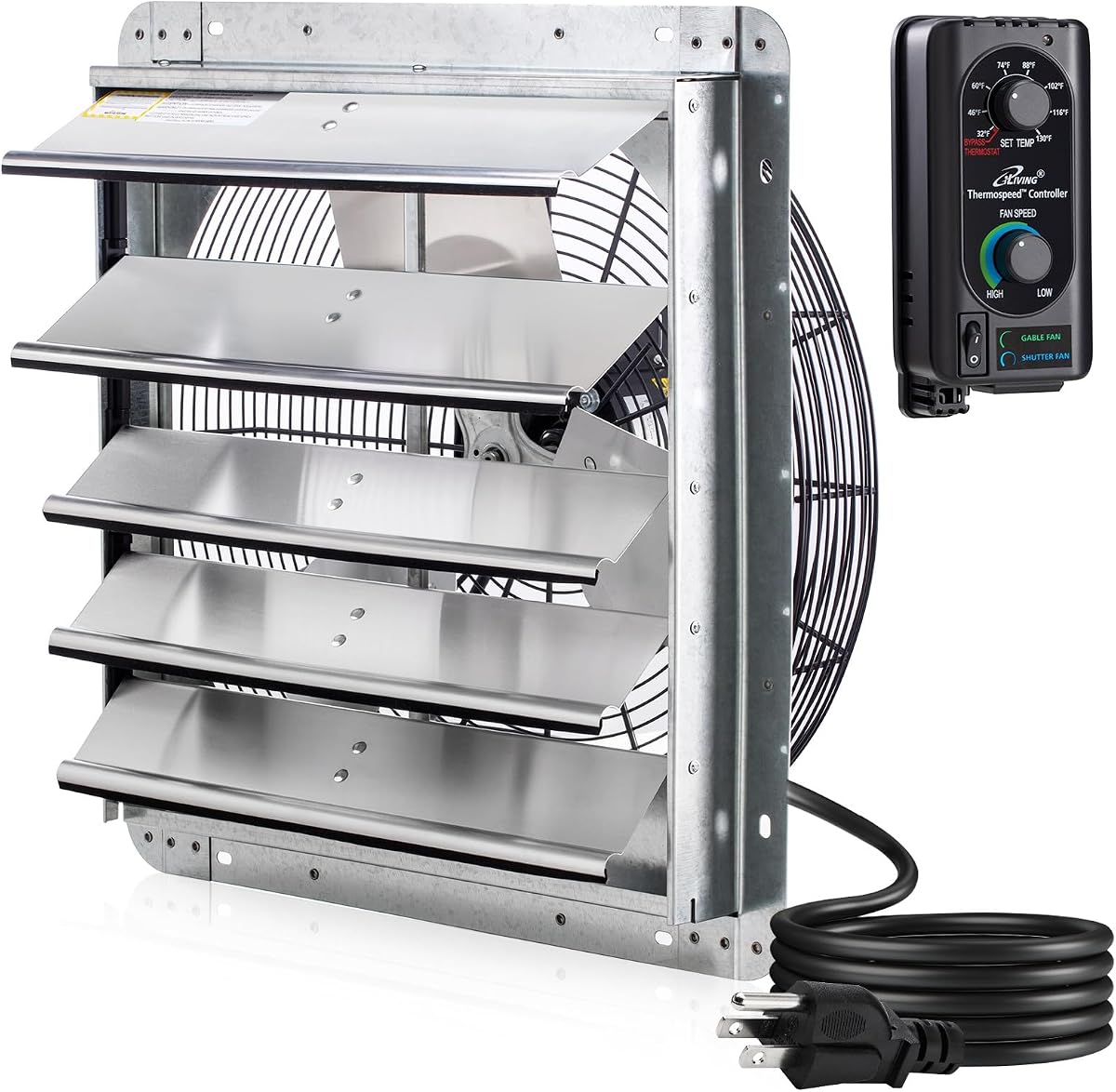
The iLIVING 12-inch exhaust fan stands out as a top performer with its robust airflow and intelligent control features. Its industrial-grade build ensures longevity in demanding greenhouse environments.
We may earn a commission when you buy through this link, at no additional cost to you.
Equipped with a variable speed controller and automatic shutters, this unit allows precise management of internal temperatures. The thermostat feature automates ventilation based on real-time thermal conditions.
While it consumes slightly more power than DC alternatives, the reliability and airflow consistency justify the trade-off. The galvanized steel frame resists corrosion effectively over time.
This fan is ideal for medium to large greenhouses requiring consistent air exchange. It provides a balanced mix of performance and durability for serious growers.
The included thermostat allows users to set specific temperature thresholds for automatic operation, ensuring optimal growing conditions without manual intervention.
Constructed with galvanized steel and aluminum shutters, this fan is built to withstand humidity and dust common in agricultural settings.
We may earn a commission when you buy through this link, at no additional cost to you.
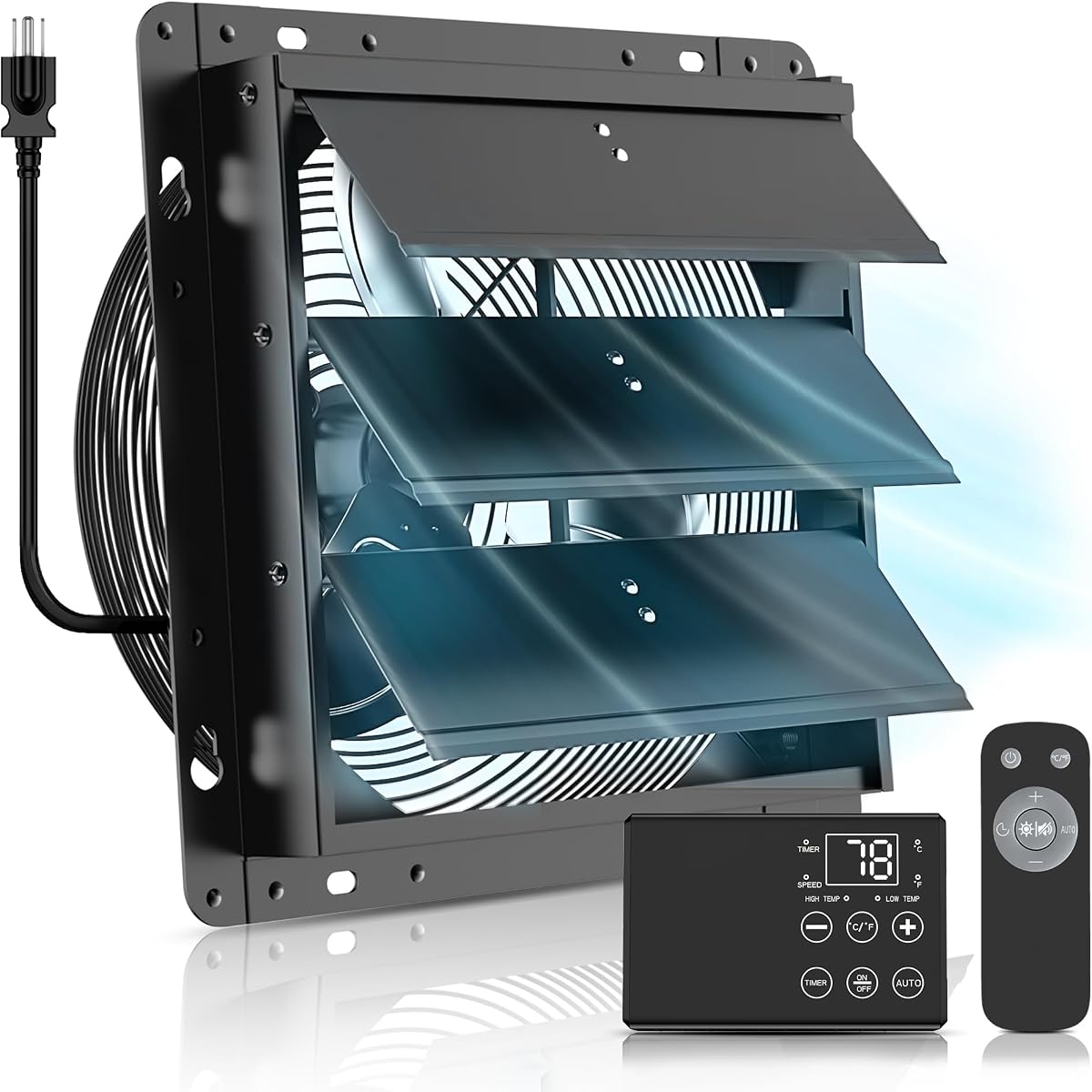
The Amico 12-inch exhaust fan delivers impressive airflow while maintaining energy efficiency through its advanced DC motor technology. It is a cost-effective solution for many growers.
We may earn a commission when you buy through this link, at no additional cost to you.
Featuring eight speed settings and a smart thermostat, it offers flexible control over air movement. The plug-and-play design simplifies installation significantly compared to hardwired units.
The motor operates quietly which is beneficial for environments where noise levels matter. Its weatherproof shutters protect against rain and pests when the fan is off.
For budget-conscious buyers needing strong ventilation, this model provides excellent value. It effectively manages heat and humidity in spaces up to 1600 square feet.
The 25W DC motor consumes up to 66% less energy than traditional AC fans while delivering powerful airflow for continuous operation.
Integrated thermostat functionality ensures the fan activates only when necessary to maintain set temperatures automatically.
We may earn a commission when you buy through this link, at no additional cost to you.
The iLIVING 18-inch exhaust fan is a powerhouse designed for large-scale greenhouse applications. Its ability to move air across vast spaces is unmatched in this category.
We may earn a commission when you buy through this link, at no additional cost to you.
With a coverage area up to 2600 square feet, this unit ensures uniform air distribution. The industrial-grade frame and direct drive motor promise long-term reliability.
It includes a thermostat for automated temperature regulation which reduces manual monitoring. The variable speed controller allows users to match airflow with specific environmental needs.
Growers with large facilities will appreciate the consistent performance and durability. It represents a premium investment for those prioritizing efficiency and capacity.
Moving 1736 CFM allows rapid removal of excess heat and humidity essential for maintaining plant health in large structures.
Permanently lubricated motors and galvanized steel construction ensure the fan performs consistently over years of heavy use.
We may earn a commission when you buy through this link, at no additional cost to you.
The VEVOR greenhouse air circulation fan boasts a massive 1800 CFM rating making it suitable for high-heat environments. It features an LCD panel for detailed control over settings.
We may earn a commission when you buy through this link, at no additional cost to you.
Users can select from ten different speed levels to customize airflow precisely. The ability to schedule air exchange cycles adds automation that benefits busy growers.
Despite its high performance potential, user feedback suggests some variability in quality or durability. It requires careful installation to ensure stable operation over time.
This unit is best for users needing extreme airflow capacity. While powerful, buyers should weigh the lower rating against the impressive technical specifications.
The LCD interface allows users to set specific temperature and humidity thresholds for automated activation and deactivation.
Designed for both ceiling and wall mounting, this fan can be positioned to optimize air distribution across diverse layouts.
We may earn a commission when you buy through this link, at no additional cost to you.
This 8-inch shutter exhaust fan is designed for smaller greenhouses or specific zones within larger facilities. It provides strong airflow for its size with convenient remote control.
We may earn a commission when you buy through this link, at no additional cost to you.
The thermostat ensures the fan runs only when needed which helps save energy. Its compact footprint makes it ideal for areas with limited wall space.
Quiet operation is a key feature allowing it to blend into the background. The plug-and-play setup means no specialized electrical skills are required.
For small to medium spaces needing targeted ventilation, this is a practical choice. It balances functionality with affordability effectively.
A 66ft remote allows users to adjust settings from anywhere in the greenhouse without physical access to the unit.
The smaller diameter reduces structural load and requires less wall cutting compared to larger models.
We may earn a commission when you buy through this link, at no additional cost to you.
The dual grow tent fan system offers consistent directional airflow without the failure risks of oscillating mechanisms. It is designed specifically for indoor plant growth environments.
We may earn a commission when you buy through this link, at no additional cost to you.
Featuring two independent fans, it allows for broader coverage across different plant rows. The clip-on design makes it easy to mount on poles or shelves.
IP54 waterproofing ensures reliability in humid conditions typical of indoor gardens. Low noise levels make it suitable for residential spaces.
For hydroponics or tent growing, this system provides stable air movement. It helps simulate natural wind conditions beneficial for stem strength.
The oscillation-free design prevents mechanical jams and ensures consistent air direction for targeted plant coverage.
Adjustable clamps fit various pole sizes allowing flexible positioning to optimize air distribution.
We may earn a commission when you buy through this link, at no additional cost to you.
This VEVOR 12-inch exhaust fan delivers solid performance with a sturdy steel housing that resists deformation. It is a cost-effective option for general ventilation needs.
We may earn a commission when you buy through this link, at no additional cost to you.
The automatic louvers help protect the interior when the unit is off. Variable speed settings allow adjustment of airflow to match current conditions.
Built with an AC motor, it offers reliable operation though it may consume more power than DC alternatives. Low noise ensures it does not disturb nearby activities.
Growers looking for a reliable medium-range fan will find this appealing. It provides a balance of power and affordability for most standard greenhouse setups.
Automatic shutters close tightly when the fan is off to prevent rain and debris from entering the structure.
The steel housing ensures the unit maintains shape and function even under heavy usage or high humidity.
We may earn a commission when you buy through this link, at no additional cost to you.
The Amico 10-inch exhaust fan uses a highly efficient 13W DC motor to reduce energy costs significantly. It is designed for those prioritizing electricity savings.
We may earn a commission when you buy through this link, at no additional cost to you.
Nine speed levels provide granular control over ventilation intensity. The remote control adds convenience allowing adjustments from a distance without accessing the wall.
Power-off memory saves user settings ensuring no need to reconfigure after outages. Its quiet operation makes it suitable for sensitive environments.
For small to medium spaces where energy efficiency is paramount, this is a top contender. It combines performance with modern energy-saving technology effectively.
The DC motor technology consumes drastically less electricity than traditional AC units leading to long-term cost reductions.
Wall-penetrating remote allows adjustments without physical interaction with the unit itself.
We may earn a commission when you buy through this link, at no additional cost to you.
The VIVOSUN AeroWave E6 fan is designed for smaller grow tents or seedling areas needing precise air circulation. It features automated oscillation to cover a wider area.
We may earn a commission when you buy through this link, at no additional cost to you.
Smart integration allows control via mobile apps or connected devices for automation. The low noise level ensures it does not disrupt sleep or work.
IP54 rating ensures durability in humid conditions. The clip design is robust enough to hold securely on poles without slipping.
This model is perfect for hobbyists needing smart features. It offers modern convenience in a compact package suitable for indoor gardening.
Compatible with GrowHub systems for centralized control of temperature and humidity automation.
Oscillation focuses airflow on target areas reducing hot spots and ensuring even plant exposure.
We may earn a commission when you buy through this link, at no additional cost to you.
This dual clip fan system is engineered for consistent airflow in seedling or small growing spaces. It offers multiple speed settings to suit different plant needs.
We may earn a commission when you buy through this link, at no additional cost to you.
The corrosion-resistant clips ensure stable mounting on various surfaces. USB power allows it to be integrated into simple power setups.
Quiet operation makes it suitable for home grow tents. Its waterproof rating ensures longevity in humid grow environments.
For early growth stages or small setups, this system provides necessary air movement. It is an affordable solution for basic ventilation needs.
Adjustable speeds allow gentle airflow that strengthens stems without damaging delicate new growth.
Dual fans allow strategic positioning to eliminate dead zones in small tents.
We may earn a commission when you buy through this link, at no additional cost to you.
Selecting the right fan involves understanding your space size and airflow needs.
Measure your greenhouse volume and match it with a fan's CFM rating. Higher CFM ensures better temperature regulation and air exchange in larger spaces.
Always choose a fan with a CFM rating that exceeds your minimum requirements to handle peak heat effectively.
Exhaust fans remove hot air through walls while circulation fans distribute air internally. Using both often yields the best climate control results.
Select exhaust fans for heat removal and circulation fans for reducing humidity and disease risk.
DC motors consume significantly less electricity than AC motors. While costlier upfront, they save money on utility bills over time.
Prioritize DC motors if the fan will run continuously for extended periods to reduce energy costs.
Thermostats and humidity controls automate ventilation based on real-time conditions. Smart features allow remote adjustments which improve convenience.
Look for automatic controls to maintain consistent environments without constant manual monitoring.
Greenhouses are humid and dusty environments that demand robust materials. Galvanized steel frames resist corrosion and ensure longevity.
Choose fans with weatherproof shutters to prevent rain and pests from entering when the unit is off.
Decibel ratings indicate how loud the fan operates. Lower noise levels are essential for residential areas or environments where peace is needed.
Aim for fans with noise levels below 60 dB for comfortable operation around people or livestock.
Plug-and-play models simplify setup by avoiding hardwiring. However, permanent wall units may offer more stability and long-term safety.
Assess your electrical access and choose between plug-in or hardwired units based on your facility's wiring capabilities.
Prices vary based on size motor type and features. Balancing cost with performance ensures you get value for your investment.
Avoid the cheapest options if they compromise on critical features like thermostats or motor quality.
Install the fan at a height that promotes uniform air circulation throughout your grow space. Ensure all wiring meets local safety standards to prevent electrical hazards.
Regularly clean the fan blades and shutters to remove dust and debris. Accumulated dust can reduce airflow and cause overheating over time.
Check the thermostat calibration annually to ensure accurate temperature readings. Replace any worn-out gaskets or seals to maintain a tight seal when the fan is off.
Calculate your greenhouse volume in cubic feet and divide by the number of air exchanges needed per minute. Typically, one full air exchange per minute is sufficient. For a 1000 cubic foot space, you would need approximately 1000 CFM.
A thermostat automates ventilation by turning the fan on only when temperatures exceed a set limit. This saves energy and ensures consistent climates. It is highly recommended for greenhouses that face extreme temperature fluctuations.
Yes, many modern DC fans are designed with waterproof ratings like IP54 or higher. These protect the internal components from moisture. Always verify the IP rating before installation in damp environments.
You should ideally use both for optimal results. Exhaust fans remove excess heat and humidity from the top of the greenhouse while circulation fans prevent stagnant air pockets where mold can develop.
Quality fans usually operate between 50 and 60 decibels. Some premium DC models run as low as 40 dB. If noise is a concern, look for models specifically labeled as low-noise.
Plug-and-play fans use standard outlets and require no special wiring. However, larger wall-mounted units may need hardwiring by a licensed electrician to handle higher power loads safely.
It is best to clean your fan blades and housing at least once a month during active growing seasons. Dust buildup reduces efficiency and can lead to motor strain.
High-quality motors can last over ten years with proper maintenance. DC motors generally last longer than AC motors due to fewer moving parts and less friction during operation.
The ideal fan depends on your specific greenhouse size and budget. Models like the iLIVING and Amico options offer excellent balances of power and efficiency for most users.
Prioritize durability and automation features such as thermostats to ensure your plants thrive without constant monitoring. Energy-efficient DC motors are worth the investment for long-term savings.
Always check current specifications and availability before purchasing to ensure compatibility with your space. Proper ventilation is key to a healthy and productive growing environment.