
Urban Worm Soil Thermometer
4.6Editor score
Five inch stainless steel stem
Color coded tick marks for quick checks
Designed specifically for worm bins
This guide compares the top digital soil thermometers for accurate temperature readings to optimize plant health, composting, and gardening success in any
Finding the right digital soil thermometer helps you monitor root zone conditions accurately for healthier plants and better composting results every single season.
We compared ten top rated models based on probe length, display clarity, waterproof ratings, and additional features like pH or humidity sensing for versatile gardening.
Each pick shows key strengths and trade offs so you can choose the best tool for your garden size, budget, and specific monitoring needs today.
4.6Editor score

4.7Editor score

4.2Editor score
The following table provides a side by side overview of all ten featured models highlighting their core specifications and unique selling points for easy comparison.




The YAMRON 4-in-1 Soil Moisture Meter stands out as a versatile tool for gardeners who need more than just temperature data to care for their plants effectively.
We may earn a commission when you buy through this link, at no additional cost to you.
Its ability to measure moisture pH sunlight and temperature in one device makes it a comprehensive solution for optimizing growing conditions indoors and outdoors alike.
While the rotating head is a thoughtful design feature that reduces back strain you should be careful not to force the probe into very dry or compacted soil.
This meter is ideal for hobbyists who want a single device to monitor multiple aspects of plant health without needing separate tools for each measurement type.
Tracking moisture pH light and temperature together helps you understand how these factors interact to affect plant growth and watering needs significantly.
The forty five degree rotating head allows you to read values comfortably without bending over deeply which is especially helpful during extended garden sessions.
We may earn a commission when you buy through this link, at no additional cost to you.
The Luster Leaf 1625 is a straightforward digital thermometer designed specifically for gardeners who need reliable soil temperature readings before planting seeds or transplants.
We may earn a commission when you buy through this link, at no additional cost to you.
Its simplicity is its greatest strength as it eliminates the confusion of extra features and focuses solely on delivering accurate temperature data when you need it most.
Gardeners who primarily need to know when the soil is warm enough for specific crops will find this tool sufficient without paying for unnecessary additional sensors.
Consider this model if you want a no fuss temperature only device that fits easily into a pocket or toolbox for quick checks throughout the gardening season.
By concentrating on a single measurement type this device ensures consistent and reliable temperature readings that are critical for successful seed germination.
Its small form factor makes it easy to carry around the garden so you can check multiple planting spots quickly without bulk or weight.
We may earn a commission when you buy through this link, at no additional cost to you.
This 7-in-1 Digital Soil Tester Kit expands beyond basic temperature and moisture to include EC and TDS functions which are valuable for serious growers monitoring nutrient levels.
We may earn a commission when you buy through this link, at no additional cost to you.
The inclusion of fertility metrics helps you understand soil health more deeply so you can adjust fertilization schedules based on actual data rather than guesswork.
While the extra features require a bit more learning to interpret the large screen and clear symbols make it accessible even for users who are new to soil testing.
Opt for this kit if you want a comprehensive tool that covers nutrient content alongside standard metrics to support scientifically driven plant care decisions.
EC and TDS readings give insight into dissolved salts and nutrients helping you avoid over fertilizing or under feeding your plants effectively.
The large LCD with backlight ensures you can read all seven parameters clearly even in low light conditions or under dense foliage.
We may earn a commission when you buy through this link, at no additional cost to you.
The Reotemp K83B1 combines a robust twelve inch stainless steel probe with a practical digital composting guide making it an exceptional value for gardeners focused on soil health.
We may earn a commission when you buy through this link, at no additional cost to you.
Its high rating reflects the build quality and usability of the unit which stands up to regular use in compost piles and garden beds without corrosion or damage.
Although it uses a traditional dial rather than a digital screen the long probe allows you to measure temperatures at depth where decomposition or root activity occurs.
This model is highly recommended for composters and traditional gardeners who prioritize durability and accurate deep soil readings over digital convenience.
The twelve inch stem allows you to measure temperature deep within the soil profile or compost pile where biological activity is most intense.
The free digital composting guide provides expert instructions to help you manage your compost pile efficiently for maximum nutrient production.
We may earn a commission when you buy through this link, at no additional cost to you.
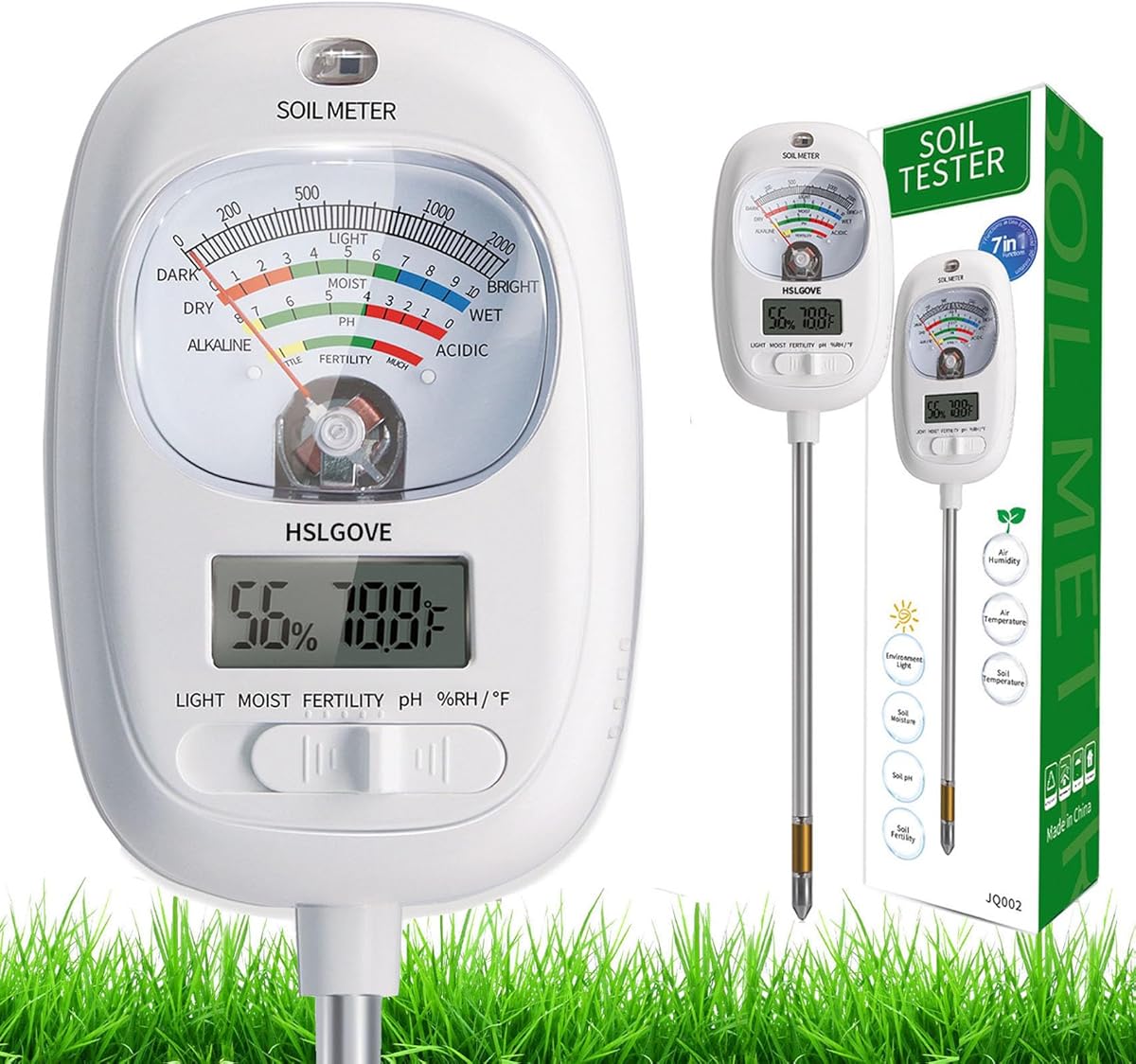
The HSLGOVE Soil Test Kit is unique because it measures both soil and air conditions allowing you to compare microclimate differences that affect plant stress and growth.
We may earn a commission when you buy through this link, at no additional cost to you.
Its patented dual dial design integrates analog soil readings with a digital LCD for air temperature and humidity providing a holistic view of the growing environment.
The three metal probe construction ensures durability in varied soil types while the clear LCD screen helps you monitor humidity levels which are critical for indoor plants.
Choose this kit if you want to track environmental conditions comprehensively to diagnose issues related to humidity or temperature fluctuations alongside soil quality.
Tracking air temperature and humidity alongside soil metrics helps you identify when indoor plants might need more ventilation or moisture.
The three metal probe construction is designed for long term use and resists corrosion even in moist soil conditions over time.
We may earn a commission when you buy through this link, at no additional cost to you.
The Urban Worm Soil Thermometer is a specialized tool designed for vermicomposting enthusiasts who need to keep worm bin temperatures within a specific safe range.
We may earn a commission when you buy through this link, at no additional cost to you.
Its five inch stainless steel stem is perfect for penetrating compost layers without disturbing the worms too much while providing quick visual feedback via color coded zones.
The green yellow and red marks make it easy to see at a glance if the bin is too hot or cold without needing to interpret exact numbers.
This is the most practical and affordable choice for anyone managing a worm bin who wants a dedicated tool that understands worm temperature preferences.
The color coded tick marks eliminate the need to read specific numbers giving you an instant understanding of whether conditions are safe for worms.
The five inch stem reaches the active zone in most bins without being too long which helps prevent damaging the delicate worm ecosystem.
We may earn a commission when you buy through this link, at no additional cost to you.
The ECOWITT WN34BS is a wireless soil temperature sensor that allows you to monitor conditions remotely via a mobile app or computer without walking to each bed.
We may earn a commission when you buy through this link, at no additional cost to you.
Its wireless transmission range is impressive and supports up to eight channels so you can scale your monitoring system across a large farm or garden easily.
While it requires a separate gateway to access live data the email alerts and graphing features make it worth the extra investment for serious growers.
Choose this sensor if you value convenience and want to receive alerts when temperatures drop below safe levels without checking the garden physically every day.
Connect the sensor to a gateway to view live temperature data on your phone allowing you to track changes from anywhere in your home.
Support for up to eight channels means you can monitor different zones independently giving you precise data for every part of your garden.
We may earn a commission when you buy through this link, at no additional cost to you.
This Digital Soil EC Meter is designed for users who need precise electrical conductivity readings to manage salt content and nutrient levels in professional agricultural settings.
We may earn a commission when you buy through this link, at no additional cost to you.
The automatic temperature compensation ensures that EC readings remain accurate regardless of soil temperature fluctuations which is essential for maintaining consistent fertilization schedules.
The IP67 waterproof rating protects the corded sensor from harsh weather making it suitable for long term outdoor deployment in fields or greenhouses.
Invest in this meter if you require professional level accuracy for nutrient management and are willing to perform periodic calibration for best results.
Accurate EC data helps you prevent salt buildup in the soil which can harm root health and reduce plant growth significantly.
The automatic temperature compensation feature adjusts readings based on current soil heat ensuring reliability across different seasons and times of day.
We may earn a commission when you buy through this link, at no additional cost to you.
The EDGEVEIL Wireless Meter allows you to monitor plants from a distance with a signal range of up to three two eight feet which is helpful for large yards.
We may earn a commission when you buy through this link, at no additional cost to you.
The triple probe TDR technology ensures that moisture readings are stable and consistent so you can trust the data even in varying soil conditions.
Being able to leave the probe in place reduces root disturbance and allows you to track trends over time without repeatedly digging into the soil.
This system is perfect for busy gardeners who want to check moisture and temperature from their couch or office without leaving their desk.
With a range of up to three two eight feet you can monitor outdoor beds and indoor plants from a comfortable location inside your home.
Leaving the probe in the soil means you do not disturb the roots and can rely on consistent data for every reading cycle.
We may earn a commission when you buy through this link, at no additional cost to you.
This 7-in-1 Soil Meter features an extra large split display that makes reading data easier for seniors or users with limited mobility who need high visibility.
We may earn a commission when you buy through this link, at no additional cost to you.
The five probe system is designed to deliver faster and more precise data compared to older meters with fewer contact points for better overall accuracy.
Built from corrosion resistant materials it is designed to withstand tough outdoor conditions on farms or gardens without degrading quickly over time.
Consider this model if visual clarity is your top priority and you want a tool that can cover many parameters in one easy to read package.
The split HD display uses large digits and a clear layout to ensure that you can read all parameters without straining your eyes.
Using five metal probes instead of two or three significantly improves data precision and speed for pH moisture and temperature readings.
We may earn a commission when you buy through this link, at no additional cost to you.
Selecting the right digital soil thermometer requires considering several key factors to ensure you get the accuracy and features you need for your gardening style.
The length of the probe determines how deep you can measure temperature which is vital for compost piles or deep rooted plants that grow below surface layers.
A longer probe such as twelve inches allows you to reach root zones that shorter probes cannot access ensuring more representative temperature data for larger plants.
Digital displays with backlighting are easier to read in low light or dense foliage compared to analog dials that may rely on reflected light.
Look for large screens with clear digits if you have vision challenges or garden in shaded areas where seeing small markings is difficult.
Some models include pH moisture light or humidity sensors which can reduce the number of separate tools you need to carry around the garden daily.
Decide if you need only temperature or a multi function kit based on whether you also want to monitor soil chemistry or moisture levels.
An IP65 or IP67 rating ensures the device can withstand rain and accidental splashes without internal damage which is critical for outdoor use.
Choose a corrosion resistant stainless steel probe if you will be testing in wet or chemically active soil environments regularly over time.
Wireless models allow you to monitor temperatures remotely via an app which is helpful for checking conditions without stepping outside constantly.
Consider if your setup includes a gateway and whether you need alerts for freezing or heat stress before damage occurs to sensitive plants.
Battery powered units are convenient but you should check if the device alerts you to low power so you do not miss critical temperature readings.
Some advanced models may require proprietary batteries or frequent replacement so factor in long term maintenance costs when comparing options.
Insert the probe into moist soil at least three to five inches deep for accurate readings and avoid forcing it into dry compacted ground which may damage the sensor.
Wait about ten to fifteen seconds for the display to stabilize before recording the temperature and ensure the probe is fully inserted to get a true reading.
Store the device in a dry place when not in use and clean the probe gently with water to remove dirt and prevent corrosion over time.
Soil temperature affects seed germination rates and root development so knowing the exact temperature ensures you plant seeds when conditions are optimal for growth.
Check soil temperature daily during planting seasons and before transplanting to ensure conditions remain stable and favorable for your specific crops.
Yes many models are designed for compost piles and provide essential data on microbial activity and decomposition efficiency to help manage your pile effectively.
Most plants prefer soil temperatures between sixty five and seventy five degrees but specific crops like tomatoes or peppers may require warmer ground to thrive.
Many models on this list include moisture sensors but some focus only on temperature so check the product specifications before purchasing if you need both metrics.
Digital models often provide more precise readings and easier visibility but high quality analog thermometers can also be reliable if used correctly.
We reviewed ten diverse models ranging from simple temperature only devices to comprehensive multi function kits to help you find the perfect fit for your needs.
Prioritize probe length and display readability if you want to ensure you get accurate data without straining your body or eyes during regular garden checks.
Remember to verify current pricing and availability before buying since prices change frequently and stock levels may vary depending on the retailer.