
SNAP CIRCUITS Beginner SCB-20 STEM Electronics Toy
4.7Editor score
For ages 5 to 9
Simple childproofing
Lighted fan included
This guide compares the top circuit boards for kids featuring STEM kits with hands-on projects, safety features, and educational value to help parents choose
Circuit boards for kids offer a hands-on way to learn electronics without soldering. These kits use snap-together parts to build real working projects safely. They spark curiosity in engineering and logic while keeping playtime engaging and screen-free for young learners.
We compared ten top-rated kits based on project variety, ease of use, and educational value. Each product was evaluated for safety, component quality, and alignment with STEM learning goals. This list covers options for different ages and skill levels to suit every child.
Each pick shows unique features like voice control, QR codes, or specific project types. Ratings reflect real user feedback on durability and fun. Prices and availability can change quickly, so please check current listings before purchasing to ensure you get the best deal.
4.7Editor score

4.8Editor score

4.4Editor score
The following table provides a side-by-side view of all ten kits. It highlights key specs like project count, component numbers, and age ranges to help you quickly identify the right fit for your child learning needs.




The SNAP CIRCUITS Jr. SC-100 is a top rated kit with a 4.8 rating. It introduces kids to electrical engineering safely with over 100 projects. The color coded pieces snap onto a grid without soldering.
We may earn a commission when you buy through this link, at no additional cost to you.
This kit excels with its simplicity. Kids build gadgets like a flying saucer using 29 parts. The instruction book is colorful and detailed. It has won multiple awards for educational value.
Some may find the grid simple compared to modular boards. Batteries are not included. However these are minor trade-offs for the ease of use and durability it offers young learners.
Ideal for ages 8 and up who want to start electronics. It builds foundational skills in circuitry. This is the best choice for a first kit that keeps kids engaged.
Parts snap together easily without tools.
Trusted by educators and parents for learning.
We may earn a commission when you buy through this link, at no additional cost to you.
This kit offers 500+ QR guided projects for deeper exploration. It includes five function modules like fan and projector. The blocks lock securely without wires for easy reuse.
We may earn a commission when you buy through this link, at no additional cost to you.
It encourages logical thinking through progressive activities. The modules bring light and sound into experiments. A storage case helps keep parts organized. It is designed for screen free learning.
Users note to check connections firmly before use. Adult supervision is needed for small parts. These are standard safety considerations for kits in this category.
Great for kids 8 and up ready for more steps. It combines tech with hands on play. Consider this if your child enjoys structured challenges.
QR codes unlock hundreds of guided projects.
Fan and music modules enhance the experience.
We may earn a commission when you buy through this link, at no additional cost to you.
This kit supports over 1200 projects with 66 parts. It teaches core circuitry concepts through play. The numbered color coded pieces snap securely onto a grid. It is recognized with awards for quality.
We may earn a commission when you buy through this link, at no additional cost to you.
Kids build toys like a flying saucer easily. The manual provides a clear guide for assembly. It is suitable for a wide age range. The design avoids soldering for safety.
With so many parts organization is key. It might be overwhelming for very young starters. However the value in learning hours is significant.
Perfect for ages 6 and up who love building. It fosters creativity and problem solving. Choose this for long term educational value.
Over 1200 projects to explore.
Snap grid prevents loose wires.
We may earn a commission when you buy through this link, at no additional cost to you.
This kit includes a Bluetooth speaker and levitation module. It has 66 components for over 1200 experiments. The manual is 67 pages full color. It teaches current flow and circuit basics.
We may earn a commission when you buy through this link, at no additional cost to you.
A plug in design simplifies setup. Kids explore series and parallel circuits intuitively. The manual guides from basic to advanced projects. It is suitable for classroom or home use.
Batteries are not included with the kit. You must turn off power to change parts. These are standard safety practices for electronics kits.
Great for ages 5 to 12 with variety. It supports early science education. Consider this for interactive audio and light features.
Bluetooth speaker adds sound to circuits.
67 page color guide ensures success.
We may earn a commission when you buy through this link, at no additional cost to you.
This beginner kit is safe for children ages 5+. It features extra childproofing for younger engineers. A lighted color changing fan is included. The manual has age appropriate diagrams.
We may earn a commission when you buy through this link, at no additional cost to you.
It has 21 unique projects for early learning. Kids learn about switches and circuits. The pieces snap together easily. It helps build planning and troubleshooting skills.
The project count is lower than other kits. Small parts require supervision for toddlers. These are expected for entry level educational toys.
Best for ages 5 to 9 starting out. It offers amazing value for the price. Ideal for a first introduction to electronics.
Designed specifically for ages 5 to 9.
Colorful manual helps understanding.
We may earn a commission when you buy through this link, at no additional cost to you.
The Arcade kit lets kids build over 20 games. It includes 36 pieces for 200+ projects. You can write your own LED message. It features fun sounds and lights.
We may earn a commission when you buy through this link, at no additional cost to you.
This kit keeps kids busy all year round. It builds a love of circuitry. The grid system is structured like blocks. Combine with other kits for more.
More complex than beginner kits. Batteries are not included. These are standard for mid range electronics kits.
Perfect for ages 8 and up who like gaming. It makes learning interactive. Great for a holiday or birthday gift.
Build working arcade style games.
Engineer your own spinning message.
We may earn a commission when you buy through this link, at no additional cost to you.
This kit includes over 120 fun projects. It has QR code video instructions for ease. The components are designed for safety. You can make a light show or copter.
We may earn a commission when you buy through this link, at no additional cost to you.
The manual is easy to follow. Videos help visualize steps. It won the Toy Association award. The wires snap securely to components.
Wire connections take more time than blocks. It requires patience for setup. This is typical for kits with more wires.
Great for ages 8 to 12. It sparks interest in electricity. Consider this for visual learners.
QR codes link to clear video steps.
Build a sound system to amplify voice.
We may earn a commission when you buy through this link, at no additional cost to you.
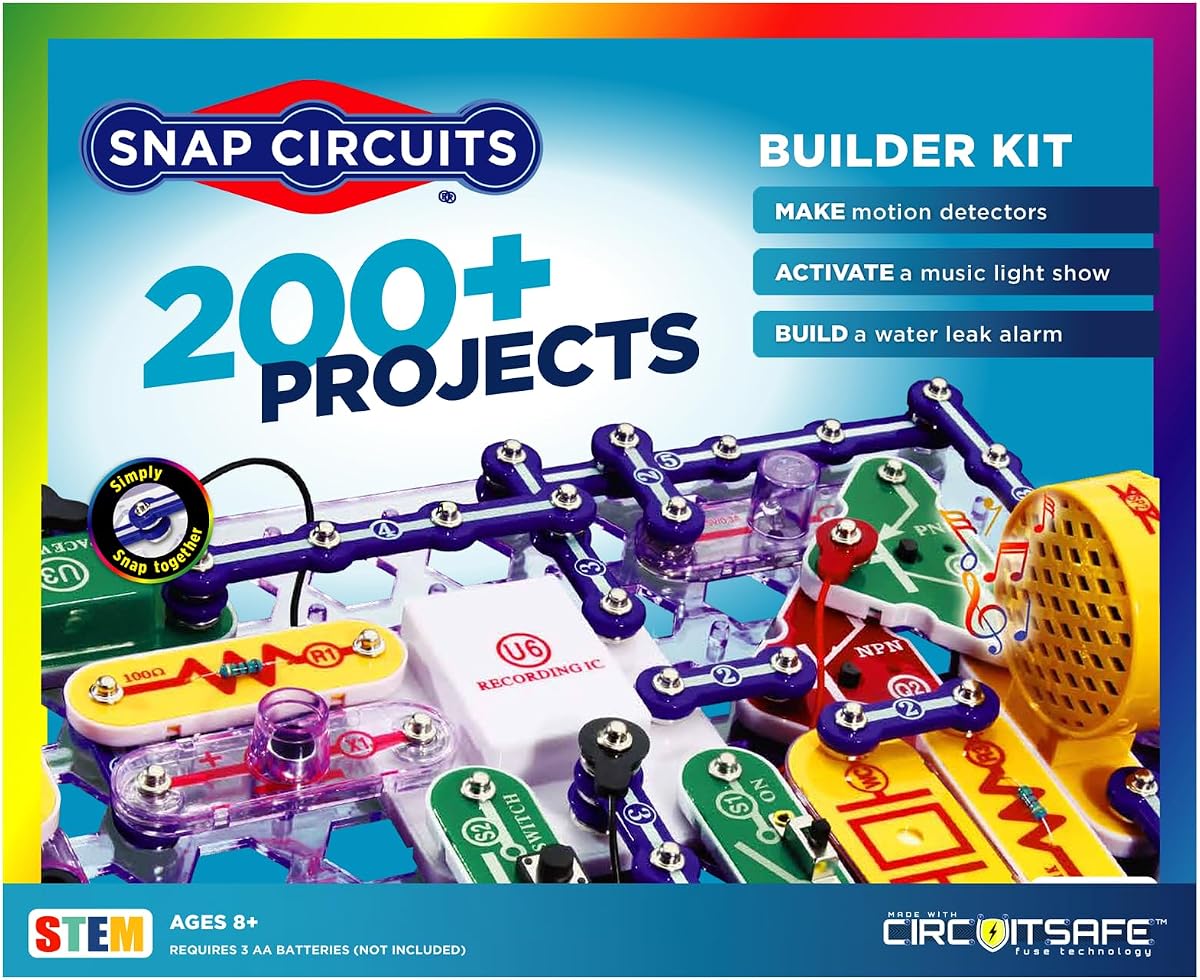
This classic kit builds over 200 projects. It includes 40+ pieces like burglar alarms. You can play electronic games with friends. The numbered color coded pieces snap onto the grid.
We may earn a commission when you buy through this link, at no additional cost to you.
It keeps kids busy learning. Combine with other kits for more. It is award winning and trusted. No tools are required for assembly.
Some parts are standard across the line. Batteries must be purchased separately. These are normal for this brand.
Suitable for ages 8 and up. It is a versatile educational tool. Available exclusively on Amazon.
Traditional Snap Circuits quality and trust.
Build doorbells and alarms quickly.
We may earn a commission when you buy through this link, at no additional cost to you.
This kit features smart voice control for projects. It covers 120+ STEM projects. A full-color manual guides building. The parts are low voltage and child safe.
We may earn a commission when you buy through this link, at no additional cost to you.
Kids can command circuits with voice. It fosters critical thinking skills. The child-safe design ensures security. Powered by AA batteries.
It has 28 snap parts which is fewer. Batteries are not included. This is standard for the category.
Ideal for ages 8 to 13. It turns play into tech adventure. Consider this for voice features.
Responds to commands to run motors.
Low voltage components for security.
We may earn a commission when you buy through this link, at no additional cost to you.
This kit explores lights, sounds, and magnetism. It includes over 25 experiments. A 64 page manual supports assembly. It features AM/FM radio and flying ball.
We may earn a commission when you buy through this link, at no additional cost to you.
Junior scientists enjoy a sensory experience. There are touch and magnetic controls. It teaches real-world applications. Parental supervision is recommended for setup.
Fewer projects than large kits. Wires are used instead of blocks. This is a design choice for specific learning.
Suitable for ages 8 to 12. It consolidates STEM into one lab. Good for a focused science center.
Explores touch, sound, and magnetism.
Build and test AM/FM radio.
We may earn a commission when you buy through this link, at no additional cost to you.
Selecting the right circuit board kit depends on age, interest level, and safety needs. This section outlines key factors to consider.
Kits vary from age 5 to 13. Younger kids need simpler parts and fewer steps. Older kids may prefer complex modules like voice control. Check the recommended age on the box.
Match the kit age to your child experience level.
Some kits offer 20 projects while others have 1200+. More projects mean longer engagement. Look for variety like sound, light, and motion. This keeps curiosity alive over time.
Choose a kit with enough projects to sustain interest.
Most kits use snap together blocks or wires. Blocks are easier and faster for beginners. Wires allow deeper customization. Decide based on your child patience and dexterity.
Start with snap blocks for ease and success.
Look for low voltage and no-solder designs. Some kits include childproofing like larger connectors. Ensure components do not heat up. Safety certifications add trust.
Prioritize kits with certified safe components.
Clear manuals with diagrams help success. Some offer video QR codes for visual help. Step-by-step guides reduce frustration. Check if the manual is full color.
Good instructions make learning smoother and faster.
Best kits teach concepts like series circuits. Look for awards or STEM endorsements. Educational value grows with age. This supports school or home learning goals.
Pick kits that teach core engineering principles.
Strong parts withstand repeated use. Check if the storage case is included. Loose connectors can break. Durable kits save money long term.
Ensure parts are solid and storage is provided.
Features like voice control or Bluetooth add fun. These modern touches engage tech savvy kids. But basic kits may be simpler. Balance tech with core learning.
Optional features enhance fun but are not required.
Start by reading the manual fully. Connect all pieces firmly to avoid errors. Check power connections before activating. This prevents frustration and ensures safety.
After each session, store parts in the case. Keep batteries removed if unused. Clean components with a dry cloth. This prolongs the kit life.
Encourage kids to try challenges. Use the manual to guide complex builds. Ask questions to deepen understanding. This fosters critical thinking and creativity.
Yes, most kits use low voltage and snap parts. They avoid soldering for safety. Always supervise small parts. Follow the manual for power use.
Most require AA or AAA batteries which are not included. Check the product page. Buy alkaline batteries for best performance. Remove them when not in use.
Beginner kits start at age 5. Complex kits suit 8 to 13. Check the packaging age. Choose based on dexterity and interest.
No, most kits are tool free. Parts snap together directly. Some use wires which also need no tools. This makes setup easy.
Yes, larger kits have 1200+ projects. They cover advanced concepts like Bluetooth. Start simple and build up. This supports growth over time.
Yes, they are designed for STEM goals. They teach engineering and problem solving. Many have awards for education. They support school curricula.
We reviewed ten top kits like the SNAP CIRCUITS Jr. and Science Kits. Each offers unique value for different ages and interests.
Prioritize safety and instruction quality when buying. Match project count to your child patience and budget.
Prices and stock change quickly. Please check current listings before purchasing to ensure the best deal and availability.